
Four lessons Trump can learn from Trump amid his Reflecting Pool fiasco
Plus: The next Winter Olympics logo is a mountain illuminated by light

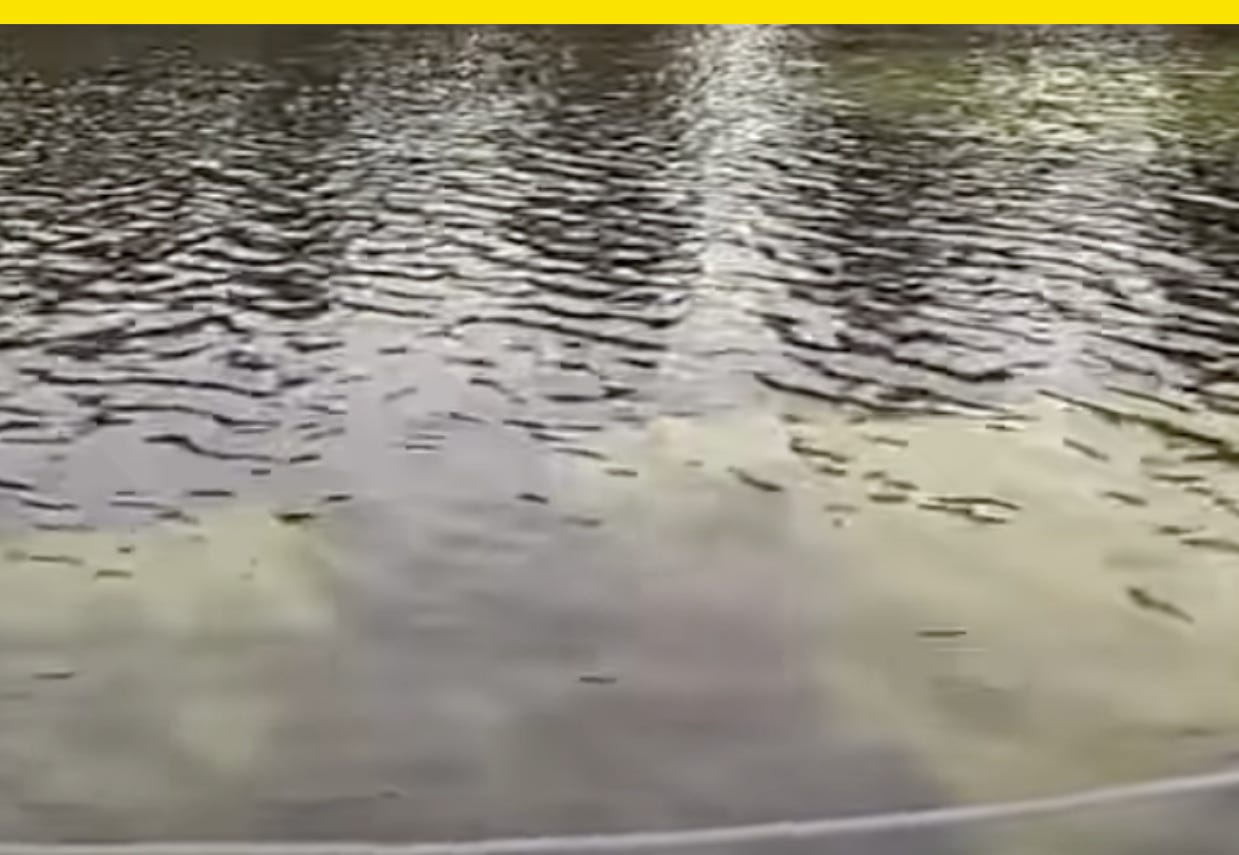
It was supposed to be his new Wollman Rink.
President Donald Trump framed his renovation plans for the Lincoln Monument Reflecting Pool as a common-sense repair for a perpetually leaky pool that Democrats just couldn’t fix, not unlike his framing for renovations at a Central Park skating rink 40 years ago.
Back then, Trump delivered repairs to the deteriorating skating rink under budget and ahead of schedule, blamed government inefficiency for not being able to do it earlier, and told the story in his first book The Art of the Deal. Wollman Rink was a success and part of Trump’s origin story.
The Reflecting Pool, which is going to be drained again, isn’t turning out the same way, and in fact, Trump’s failures are revealing the skills he showed as a real estate developer that he seems to have forgotten as president. It turns out Trump could learn a thing or two from Trump.
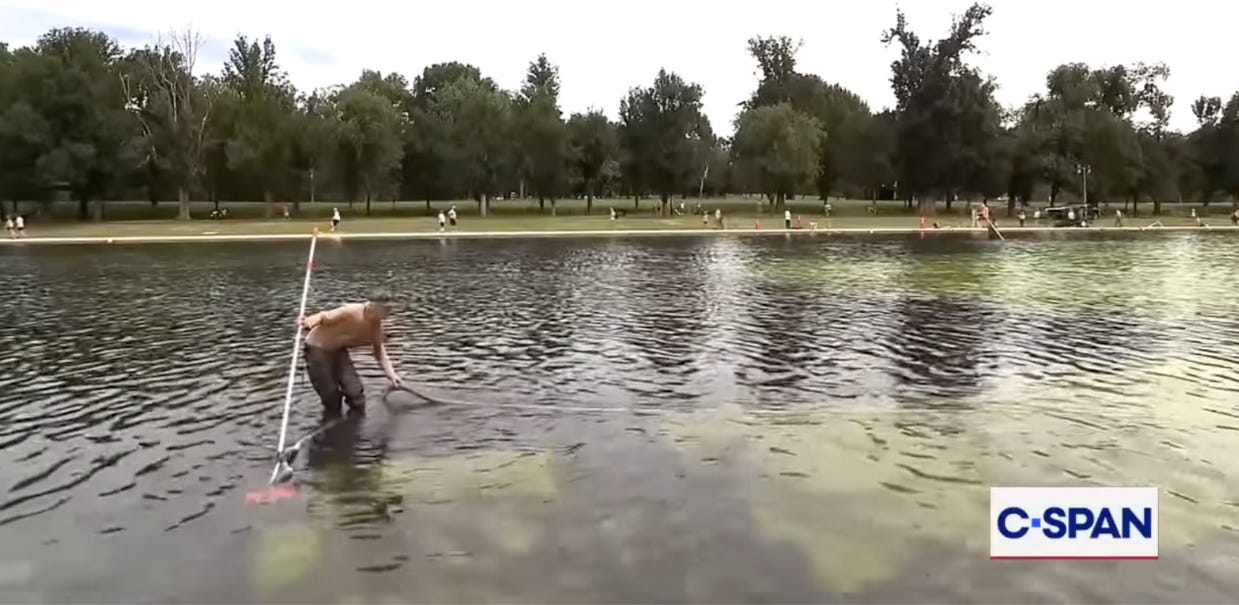
Like the Reflecting Pool, New York City’s Wollman Rink suffered from leaks. It opened in 1950, but plans for repairs in the 1970s were put off due to the city’s fiscal crisis, and it closed in 1980 for years after its floor buckled. The city’s efforts to repair the rink were plagued by problems, and Trump offered to rebuild the rink 40 years ago this month. He did, and it opened in November 1986 $750,000 under budget and a month early.
Four decades on, Trump’s attempt at pulling off a similar stunt with Reflecting Pool isn’t working. Here’s four lessons from Trump’s Wollman Rink project that help explain why:
Get permission. Trump reached an agreement with the city to repair Wollman Rink. Today, he’s making decisions about redesigning Washington, D.C., unilaterally, bypassing laws and processes meant to prevent any one president from playing SimCity with our nation’s capital every four years on the taxpayer’s dime. The nonprofit Cultural Landscape Foundation filed a lawsuit with the Interior Department Monday accusing the renovations of breaking the law by not consulting experts or the public.
Seek experts. Trump sought professionals who knew what they were doing for Wollman Rink, even if it meant looking abroad. “Since I knew absolutely nothing about building rinks, I set out to find the best skating-rink builder I could,” he wrote in The Art of the Deal, and he hired a Canadian firm out of Toronto. In contrast, for the Reflecting Pool, Trump claimed he knew a guy who’s done swimming pools to do the job, but a company owned by a donor got the gig in a no-bid contract. It reeks of out-and-out corruption, not a competitive process to find someone who will do the best job.
Try not putting your name on it. Trump’s tendency to name things after himself started early, with Trump Tower in 1983 and Trump Plaza in 1984. Two years later, though, Wollman Rink, which is named the Wollman family who funded its construction, opened without rechristening itself the Trump-Wollman Rink or some such nonsense. It was a public city rink, after all. Today, Trump is the most unpopular president in modern U.S. history, yet he can’t help himself in plastering his name and face on everything, negatively polarizing his projects. While Trump hasn’t suggested renaming the pool after himself (yet), he has made it all about himself.
Narrative is everything. Trump understood the storytelling value of going up against a city government that couldn’t get the job done on Wollman Rink. Now Trump is the state, and the narrative of his Reflecting Pool renovation is one of hubris and corruption. He’s falsely claimed former Presidents Barack Obama and Joe Biden spent sums they didn’t spend to unsuccessfully repair the pool, and his own repair job now needs its own repair job. Trump said he was repainting the basin from a neutral gray chosen to maximize reflection to “American Flag Blue,” but the pool quickly became algae green. They arrested a U.S. Olympian. Ducks are dying. The administration’s story about alleged vandalism isn’t adding up. All of these omens are bad.
Trump said his success with Wollman Rink embarrassed New York City’s then-Mayor Ed Koch. Forty years later at the Reflecting Pool, he’s embarrassing himself.



The next Winter Olympics logo is a mountain illuminated by light
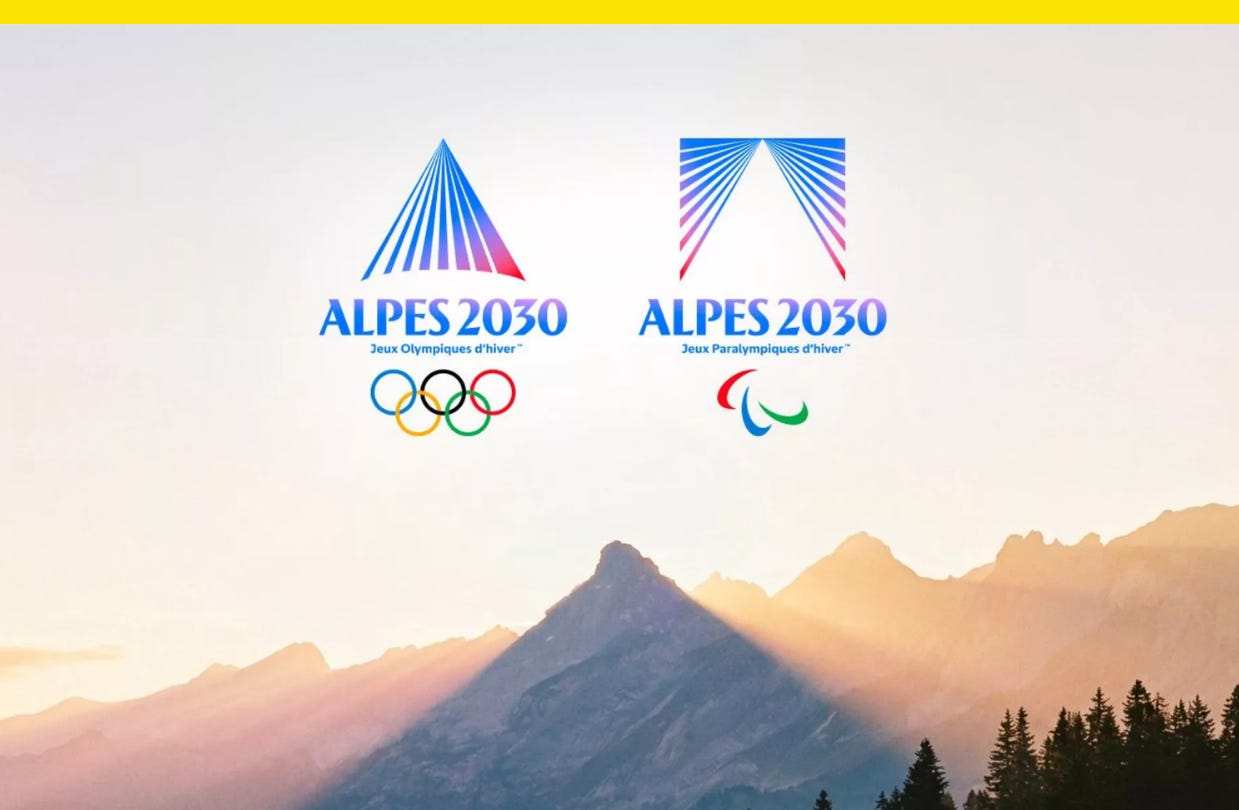
The 2030 Olympics will be held in the French Alps, and the logos for the Games, unveiled last week, use triangular mountain shapes to set the scenes.
The logos for the next Winter Olympic and Paralympic Games, which organizers are now calling “Alpes 2030” (instead of their old name “French Alps 2030”), were designed by a team led by the Games’s director of image and brand Mathieu Sakkas. They’re built around the idea of the meeting of rays of light and mountain peaks.
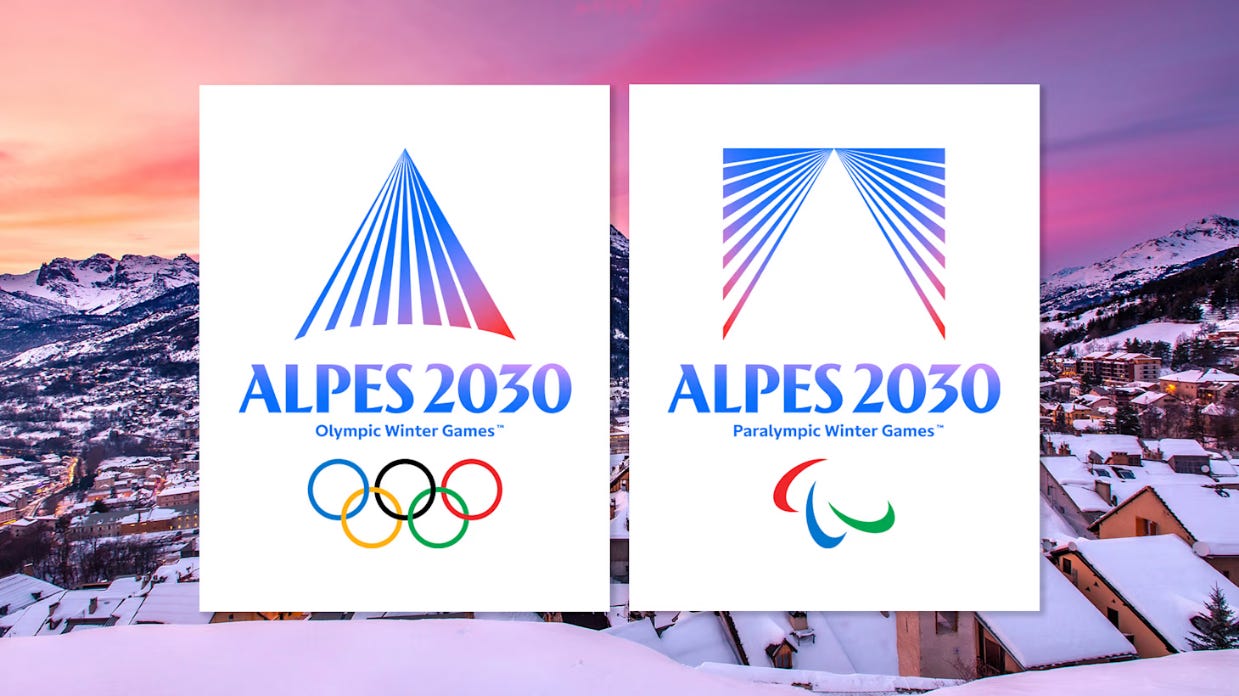
After the 2024 Paris Games became the first to use the same logo for the Olympics and Paralympics, Alpes 2030 is going back to dual logos, and they’re taking a complementary approach. Both logos use the same stripe effect and gradients, and one logo could fit into the other. For the Olympics logo, lines of increasing width from left to right give the shape a sense of perspective.
“Together, they embody our ambition: to give Olympism and Paralympism the same place, strength and visibility,” Alpes 2030 organizing committee president Edgar Grospiron said in a statement.
The French Alps don’t have their own Matterhorn, the Swiss Alps mountain with its distinctive, recognizable peak, so the generic triangle shapes works to evoke a generic mountain.

The color palette was inspired by the idea of ice and light, when the sun hits a snow-capped mountain. There’s midnight blue and azure blue on the dark end, and warm red and pink were chosen to represent alpenglow, the phenomenon when a reddish glow appears on the horizon opposite a rising or setting sun.
The typeface for the Games was also designed by Sakkas, the director of image and brand, and type specimen shown in a sizzle real show two sets of italics that lean backwards and forwards, allowing the text to match the slants of the lines in the logos.
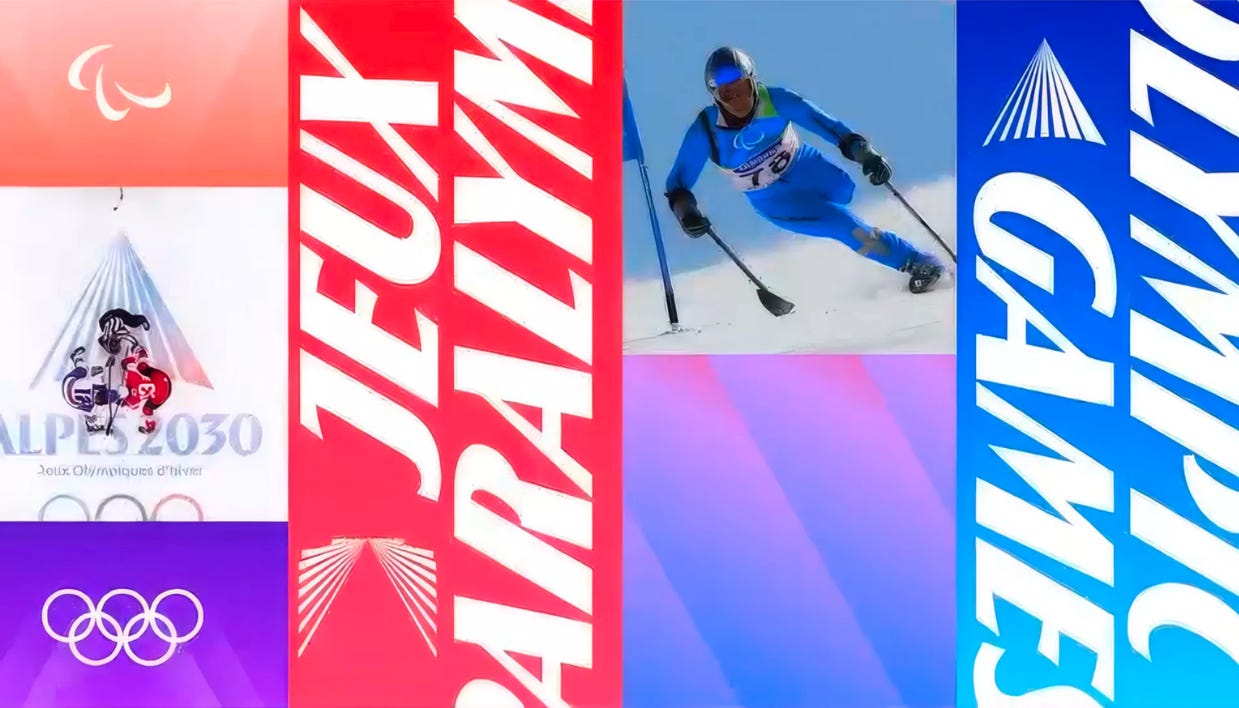
As the Olympics move away from awarding hosting duties to single cities towards naming regions instead, like Milan-Cortina 2026 and Utah 2034, its logos aren’t meant to symbolize just one city.
“This choice reflects a clear ambition: to move beyond a simple geographical representation and create a symbol capable of embodying both the Olympic and Paralympic Games,” Grospiron, the organizing committee president, said at the unveiling, according to the French branding agency Grapheine.
The logo lays the groundwork for a larger, coherent visual identity for the Games built on lines, gradients, and light. The logos here are less about taking us to one specific place than they are about evoking a feeling and a moment: the magic of golden hour in the Alps.
Have you seen this?
Trump’s new plane. The jet Qatar gifted to President Donald Trump has been painted and Trump’s planning on using it for a future presidential library. Meanwhile, former President Barack Obama opened his presidential library, and while there’s no Air Force One, Christina Aguilera did sing at the opening, which is actually cooler. [Whig by Hunter Schwarz]
I’m a Jon Ossoff rally truther. Candidates generally compete in the attention war nowadays by going long and somewhat unrehearsed, and Ossoff is currently running a gorgeous but hermetically sealed 2012-era production in the middle of all of it. [Chaotic Era]
Photos show Trump’s name removed from Kennedy Center facade. New photos of the Kennedy Center show Trump’s name has been taken down from the building’s facade after a monthslong court battle and the recent addition of a tarp blocking public viewing of the removed signage. [NBC News]
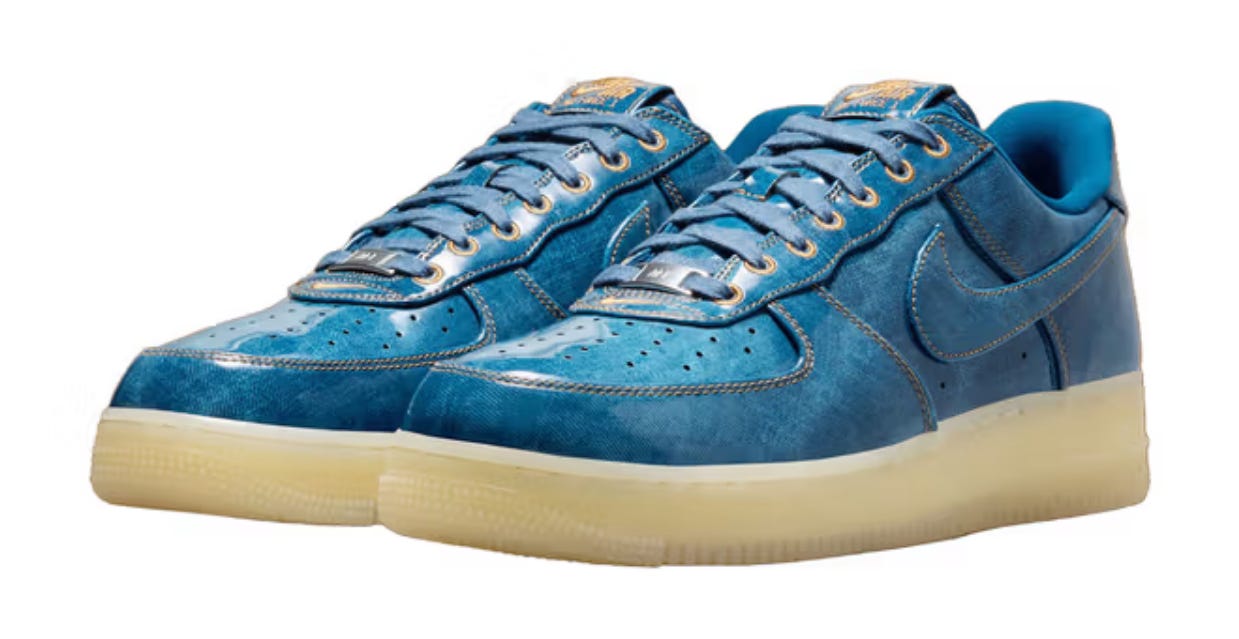
Nike’s Air Force 1 Low “Patent Demin” seals coastal blue denim beneath a glossy finish. Rather than replacing denim with patent leather or treating them as separate design elements, the “Patent Denim” build layers the gloss directly over the fabric, allowing the denim’s natural weave and the darker shading around the heel and side panels to show through. [Hypebeast]

“Trump learn” 🤣🤣🤣🤣