
There’s a reason the Lincoln Reflecting Pool is the color that it is
Plus: Why Trump’s ICE rebrand to NICE wouldn’t help its public image

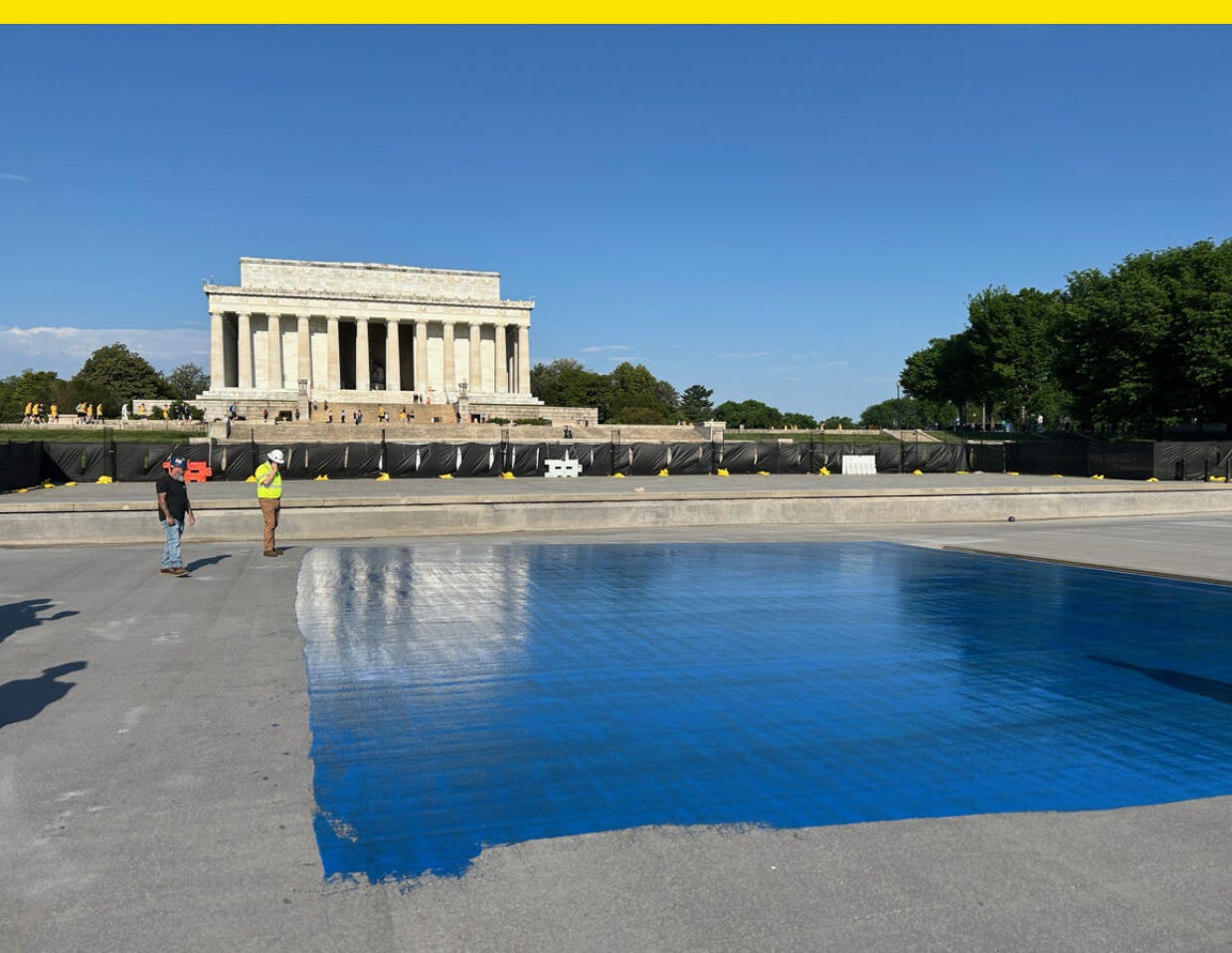
President Donald Trump’s plans to redesign the Lincoln Memorial Reflecting Pool could make it less reflective.
The Mar-a-Lagoification of our nation’s capital continues apace. After the foiled shooting Saturday at the White House Correspondents’ Dinner, Trump and his allies said that was further reason to build his ballroom, while on Friday, Trump posted photos on his social network showing the Lincoln Memorial Reflecting Pool getting refurbished with a new coat in a different color. For now, the memorial looks more like a municipal swimming pool
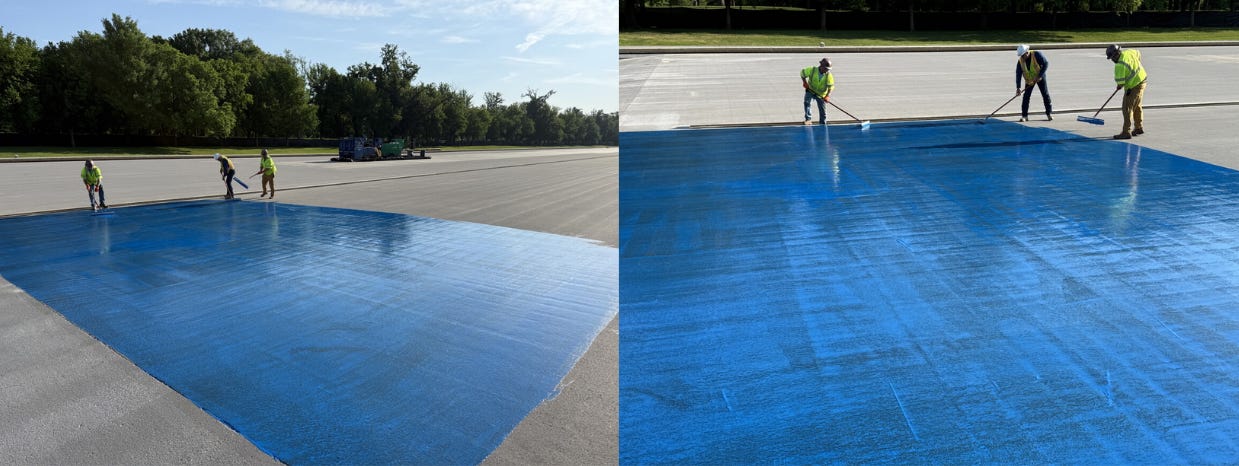
In photos Trump shared to his site, workers in bright yellow safety vests apply what appears to be blue liquid epoxy or rubberized pool coating to the empty pool. “It’s essentially a pool surface, but it’s industrial-grade pool,” Trump said unprompted last week during a White House event on drug prices in which he claimed he had a bigger crowd at the Reflecting Pool than Martin Luther King, Jr.
“Over the years as a developer I’ve probably built more than 100 swimming pools,” Trump said. “You’re going to end up with a beautiful, beautiful Reflecting Pool.”
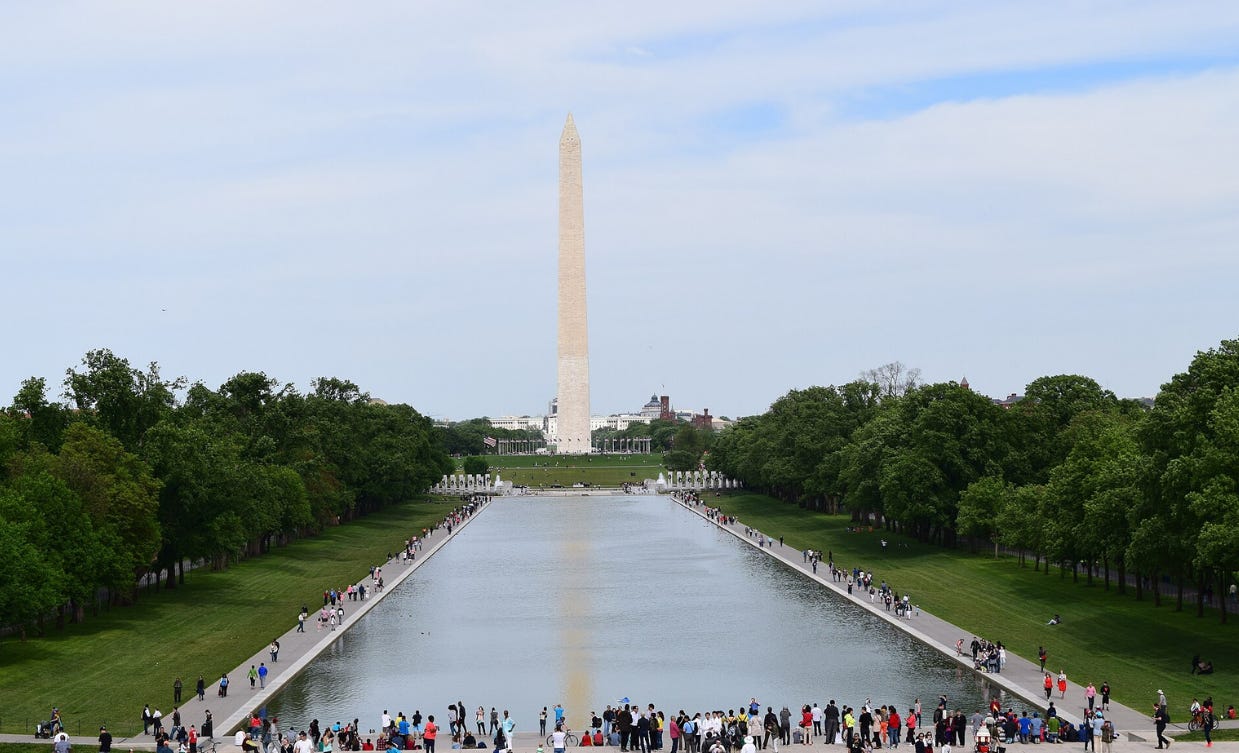
The Reflecting Pool was designed by architect Henry Bacon and originally opened in 1923 with an asphalt and tile bottom, according to the Trust for the National Mall. Over time, the pool sank roughly a foot because it was built without pilings, and it lost about 600,000 gallons weekly from cracks and leaking. The pool was completely rebuilt in 2012 with a water supply system that pulled water from the Tidal Basin and filtered it. The bottom of the restored pool was tinted a neutral gray so it’d be more reflective.
Trump wants to make the pool blue, which Charles A. Birnbaum, president of the Cultural Landscape Foundation, told the Washington Post “risks reading more like a large lap pool than the solemn and hallowed visual and spatial connection between the Washington Monument and the Lincoln Memorial.”
It could be worse. Trump said he originally wanted a turquoise color for the pool, “like in the Bahamas” (not to mention like at the pool at Mar-a-Lago), but his contractor suggested “American flag blue” instead. A resort-style turquoise pool would be ill-suited for the National Mall. If the new color is true to the U.S. flag, though — Old Glory Blue, or Pantone 282C — it will at least be dark.
Regardless of the finished look after work is completed, a larger issue will still stand. As with his tearing down of the East Wing, Trump’s top-down approach to redesigning Washington’s public spaces and federal buildings disregards federal law and degrades norms.
Tearing down and rebuilding the White House every four to eight years would be imprudent. Even Americans who’d prefer a U.S. capital city that looks like Palm Beach should be alarmed by the precedent taking shape if the president can tear down buildings or redesign monuments unilaterally.



Why Trump’s ICE rebrand to NICE wouldn’t help its public image
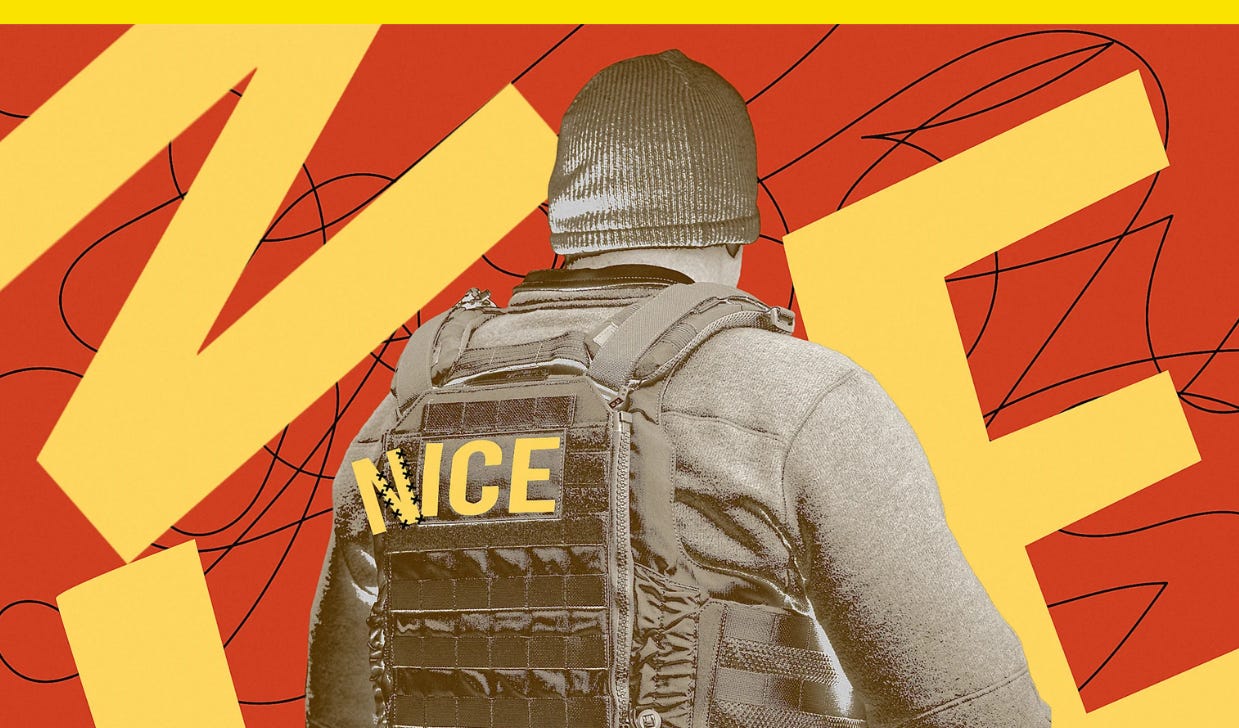
President Donald Trump’s latest idea to rebrand a government agency could give one of his most disliked policies a much more pleasant-sounding name. That might not work out as planned, though.
Trump shared a social media post on Sunday highlighting a woman’s suggestion that he rename U.S. Immigration and Customs Enforcement, or ICE, as National Immigration and Customs Enforcement, or NICE, “so the media has to say NICE agents all day every day.”
“GREAT IDEA!!! DO IT. President DJT,” Trump wrote.
The proposed rename goes against trend for Trump, who wants to formally rename the Department of Defense the Department of War. Trump’s branding instincts in office are toward toughness, not softness.
Public opinion about ICE is firmly hardening against it, which may be why the name change seems so obvious and smart. Nearly 6 in 10 Americans disapprove of how ICE handles its job, according to a UMass poll released on April 1, and Fox News polling shows the agency’s disapproval rising from 41% in 2018 to 58% today. But giving the agency a friendly backronym likely wouldn’t be a quick fix.
An alphabet soup of names
The U.S. government is filled with acronyms, and officials increasingly turn to backronyms, or acronyms that are reverse engineered because of what they’ll spell out. No one loves them more than Congress.
About 10% of bill and resolution names introduced in Congress over a two-year period were backronyms, according to a 2022 review by The Atlantic, and the proportion of backronyms in bill names has risen in every Congress since at least 2001.
There was the $2 trillion pandemic stimulus and relief legislation called the Coronavirus Aid, Relief, and Economic Security Act (CARES Act) in 2020, and the Creating Helpful Incentives to Produce Semiconductors and Science Act (CHIPS and Science Act) that funded semiconductors and other priorities in 2022.
With a little creativity, a piece of legislation with a name as long as a Fall Out Boy song title becomes a short, handy piece of storytelling in cable news chyrons and tweets.
Backronyms are a messaging tool that turns an otherwise bureaucratic-sounding collection of letters into a bumper-sticker-type slogan. But not all of them are honest. While some backronyms are corny or clever, others are designed to misdirect or manipulate, wrapping unpopular legislation in the flag.
The USA Patriot Act, or Uniting and Strengthening America by Providing Appropriate Tools Required to Intercept and Obstruct Terrorism Act, passed weeks after the 9/11 attacks in 2001 and expanded the surveillance state, while the SAVE Act, or Safeguard American Voter Eligibility Act, is a voter suppression bill that’s currently stalled in the Senate.
Why a “nice” rebrand is a bad idea
Renaming ICE to NICE might attract more negative attention to the agency, says Brian Christopher Jones, a senior lecturer at the University of Liverpool who’s studied topics such as acronyms and misleading PAC names.
“I wonder whether this particular backronym, NICE, would open the agency up to potentially even more criticism than before,” he says, noting the Patriot Act has been criticized for its name.
The turn in public opinion against ICE was spurred on by footage of its agents being the opposite of nice, and the proposed new name would only further draw attention to behavior that’s dissonant with the backronym.
The name of the U.K.’s own NICE, which stands for National Institute for Health and Care Excellence, hasn’t stopped people from disparaging it, says Jones, who also questions whether the new name in the U.S. would turn off the people the agency is trying to attract to work there.
“I’m not so sure if law enforcement personnel would think the same about working for an agency called NICE,” he says.
Trump could try renaming the agency, but actually making ICE nice will take more than just a cutesy acronym.
This story was first published in Fast Company.
Have you seen this?
A royal visit. What a scary weekend. I’m so glad no one was hurt after shots were fired at Saturday’s White House Correspondents’ Dinner. The world needs more peacemakers and it starts with you and me. King Charles is in the U.S. this week for his first state visit as monarch, and I have some suggestions for where he should go. [Whig by Hunter Schwarz]
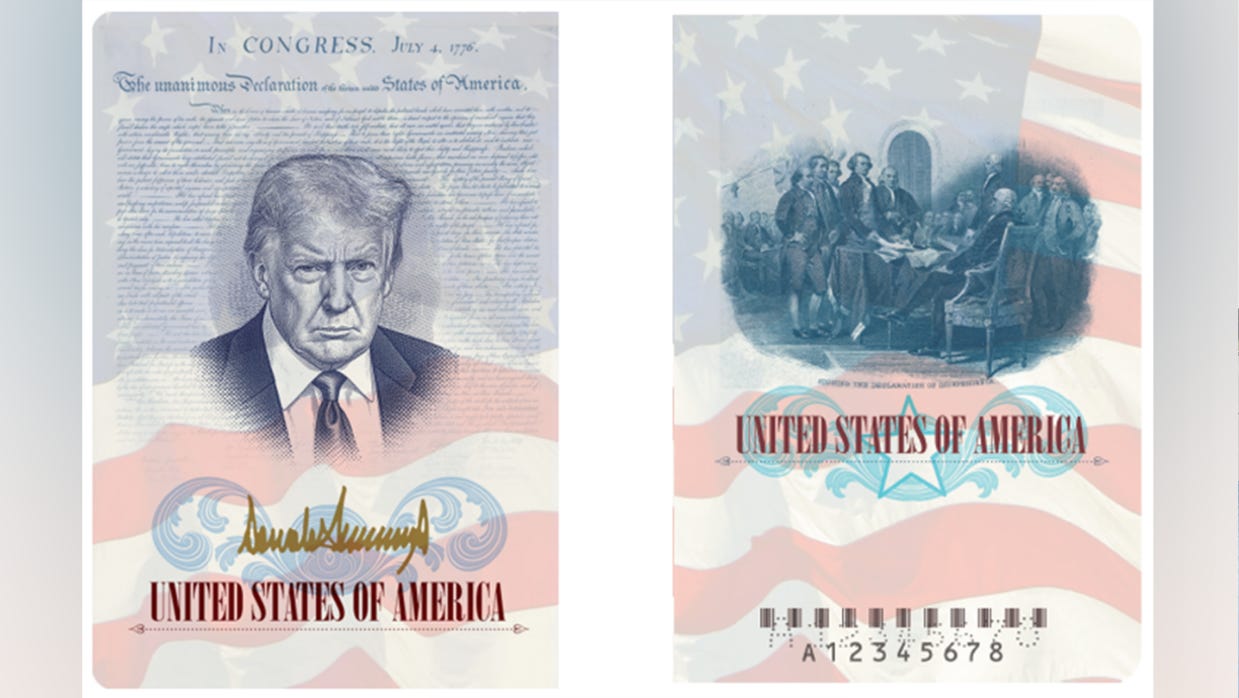
State Dept. finalizing plans to put Trump picture on U.S. passports. The redesign is ostensibly part of a larger celebration of the 250th anniversary of American independence. [The Bulwark]
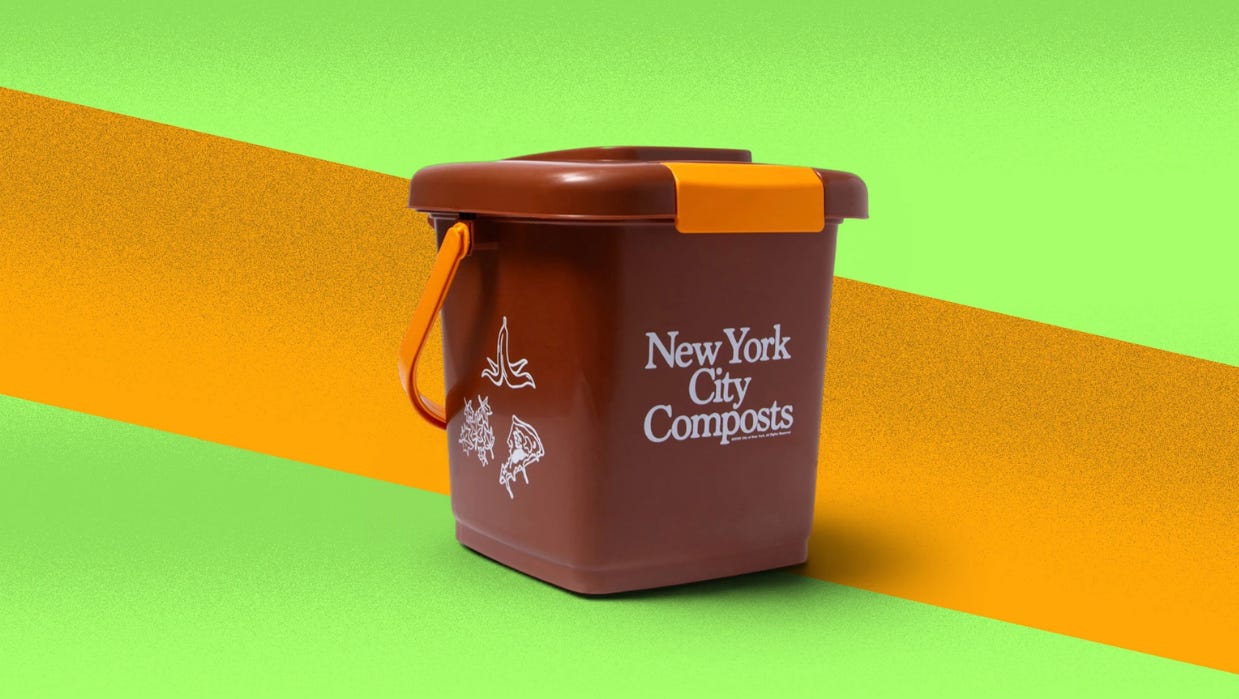
New York City’s iconic compost bin gets a cool kids makeover. In collaboration with the Department of Sanitation, Only NY reimagined NYC’s curbside compost containers. [Fast Company]
James Comey indicted over seashell photo that officials said threatened Trump. A federal grand jury has returned an indictment charging former FBI Director James Comey over an Instagram photo he posted of seashells, which allies of President Donald Trump portrayed as a threat. [NBC News]

The reasons for the White House upgrades are (I) Security, including from drone attacks, and (II) Ability to host large events onsite, which currently can only happen in one hotel in the entire city (which clearly ties back to security). The objections are completely petty, and I’d think people would be embarrassed to be so upset by it after months and months of nonstop news coverage. After all, the lawsuit against it was filed by a “dog walker upset by the change to scenery”.