Why the flamingo has become a handy, new protest symbol
Plus: Inside the proposed design for a new Penn Station

Save the flamingos.
The Trump family is no stranger to absurdist, animal-based protest to make a larger point. In President Donald Trump’s first term, there was an orange rat inflatable at some protests that the creators made to ridicule him, while during term two, some protesters have worn frog suits to look purposefully ridiculous.
Now, at demonstrations in Albania over a luxury development there that Trump’s oldest daughter and son-in-law are connected to, the flamingo has become a symbol of protest, though it’s for a literal and not just figurative reason. A foreign Trump family development has inspired species-specific environmental activism with the flamingo, and there’s hardly a creature more camp. A group of flamingos is called a flamboyance.
Some 3,000 flamingos and other wildlife live across from Sazan Island on the Adriatic Sea, where Ivanka Trump and Jared Kushner are developing a more than $1 billion luxury resort. Environmental activists say no environmental assessments have been done for their project so close to a feeding area for flamingos, Dalmatian pelicans, and endangered Mediterranean monk seals, per Courthouse News.
Environmental concerns aren’t the only knocks from critics against the project being developed by Kushner’s private equity firm Affinity Partners. There are concerns that the land wasn’t acquired by Kushner’s firm transparently, and protesters are also expressing discontent with the country’s Socialist Party government and Prime Minister Edi Rama, according to the BBC.
The flamingo has made a handy symbol to express all of that. It’s a charismatic species.
The Elton John of birds, flamingos don’t even have to show off like a peacock, they’re just naturally pretty like that, and the bird’s feathers get their pink color because of their diet of algae and brine shrimp. The flamingo makes for a good flagship species, or a single species that conservation groups use to center their efforts around, like “save the whales.” It’s done in hopes it will have an umbrella effect for other species too, but there’s disagreement over whether the single-species approach biases conservation efforts towards species that are cuddly or cute.
Studies have found these charismatic species attract more funding and create emotional resonance, and conservation and nature magazines tend to feature mammals and birds on their covers over invertebrates, fish, amphibians, or reptiles. It’s little wonder protesters in Albania have gravitated to a colorful bird.
In Albania, the flamingo has taken on the role of the flagship species in protests not just to protect the bird and other wildlife near Sazan Island, but to represent wider grievances against the resort proposal and government. In posters and social media posts, they call it a “Flamingo Revolution.”



Inside the proposed design for a new Penn Station
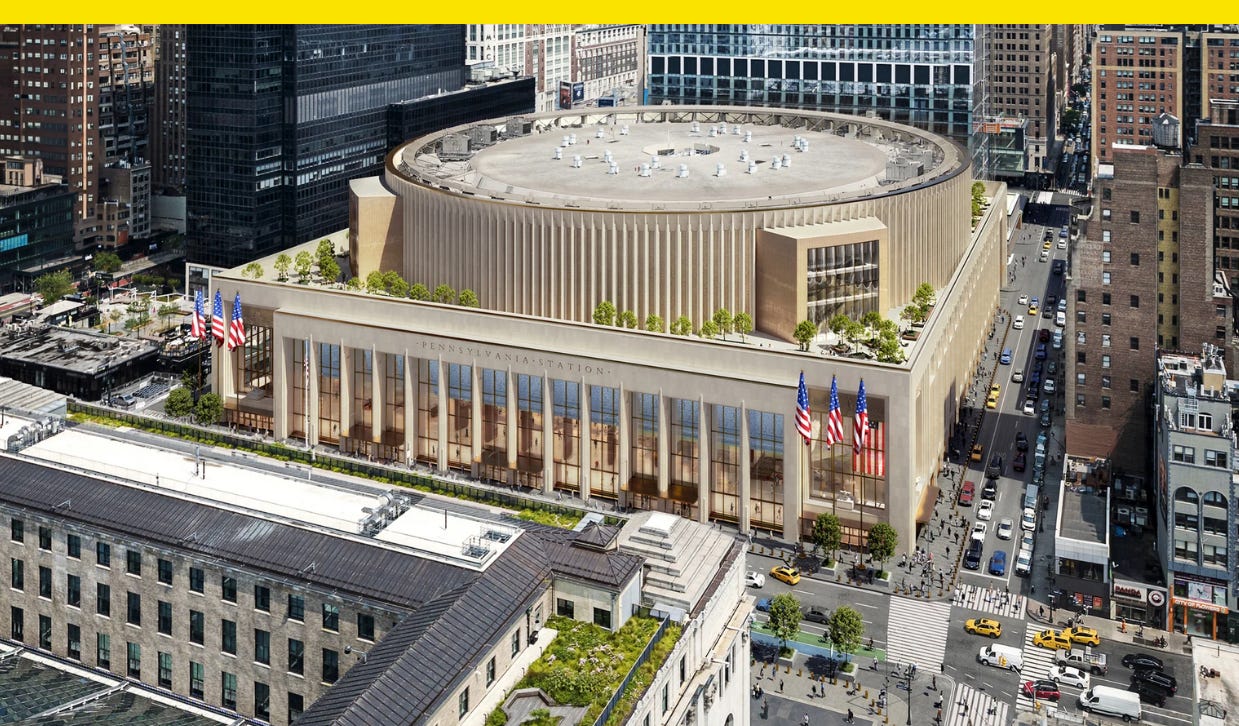
The architectural firm behind plans to remake New York City’s Penn Station unveiled its design on Monday, and renderings show a station that’s meant to be bigger, brighter, and more welcoming to the public.
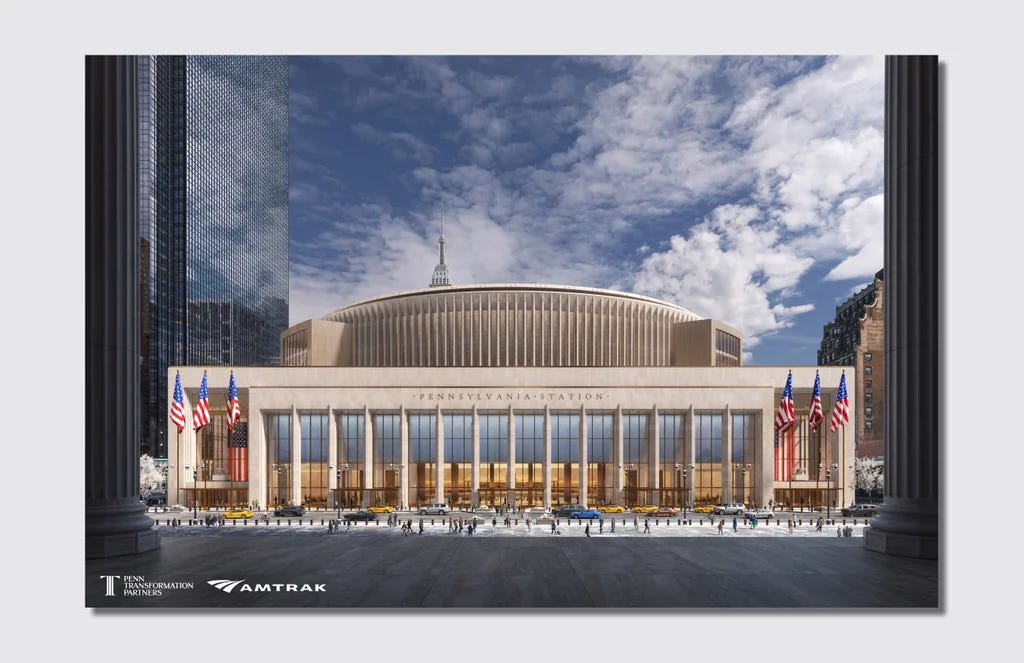
The design, which leaked last month before its formal reveal, would encase the circular form of Madison Square Garden with a classical-style, square-shaped station that’s designed to let light in. Inside, narrow walkways would be expanded and low-slung ceilings raised. Architects estimate the redesigned platforms will reduce egress time by more than a minute.
More details about the plans reveal a design blends a modern classical look with retro-inspired art deco forms that architects looked to for inspiration. The ceiling in the main hall is decorated as a map of Manhattan streets with a clock hanging in the middle where Penn Station is located on the map, and as a callback to the clock that was once displayed in the main concourse of the old Penn Station. The New York City skyline is depicted in decorative reliefs in the main entry space, and four original eagle statues from the original Penn Station would be placed at the building’s corner entries. Architects are using the original station’s foundations as much as possible.
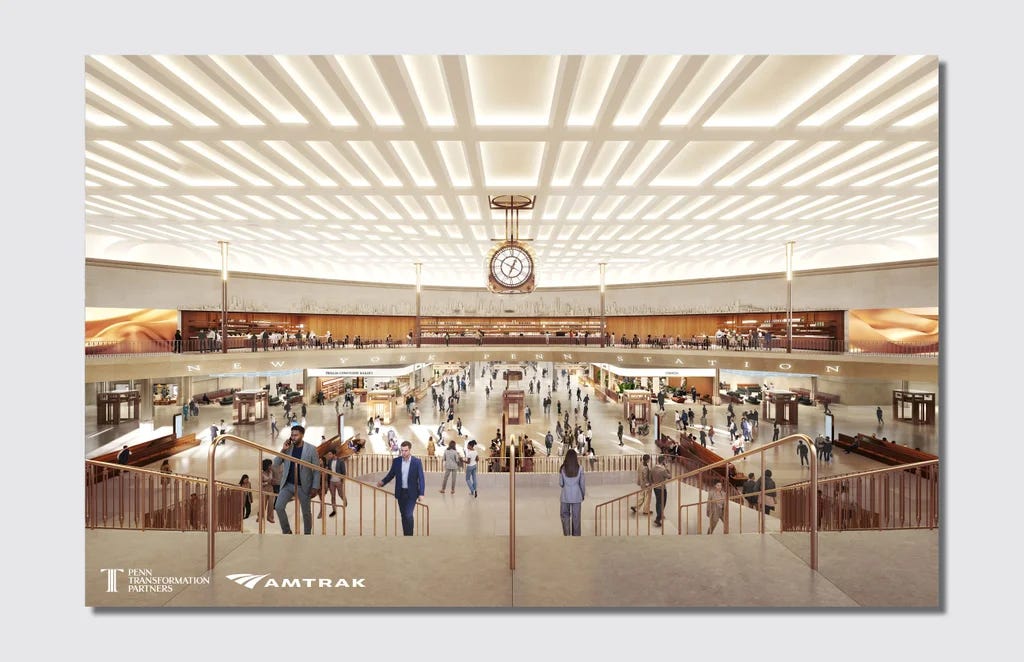
“This is geeky but it’s really important because building new foundations at Penn when a train’s coming in every three minutes during the day is incredibly complicated and costly,” Vishaan Chakrabarti, the lead design architect and founder of PAU, said during a press conference. “So we’re trying to reuse and recycle foundations wherever we can.”
One entrance features a large display showing Trump’s name and a presidential seal. Criticism over it, Chakrabarti said, is “much ado about nothing.”
“This couldn’t be more commonplace. Federal buildings everywhere have presidential seals,” he said.
PAU and HOK are leading the architectural plans, and they worked with developers Halmar and Skanska and other partners including Severus Associates, ME Engineers, Lerch Bates, HNTB, and CBRE. Pentagram was named as the agency behind the station’s way finding, signage, and graphic design, and L’Observatoire would do the lighting design.
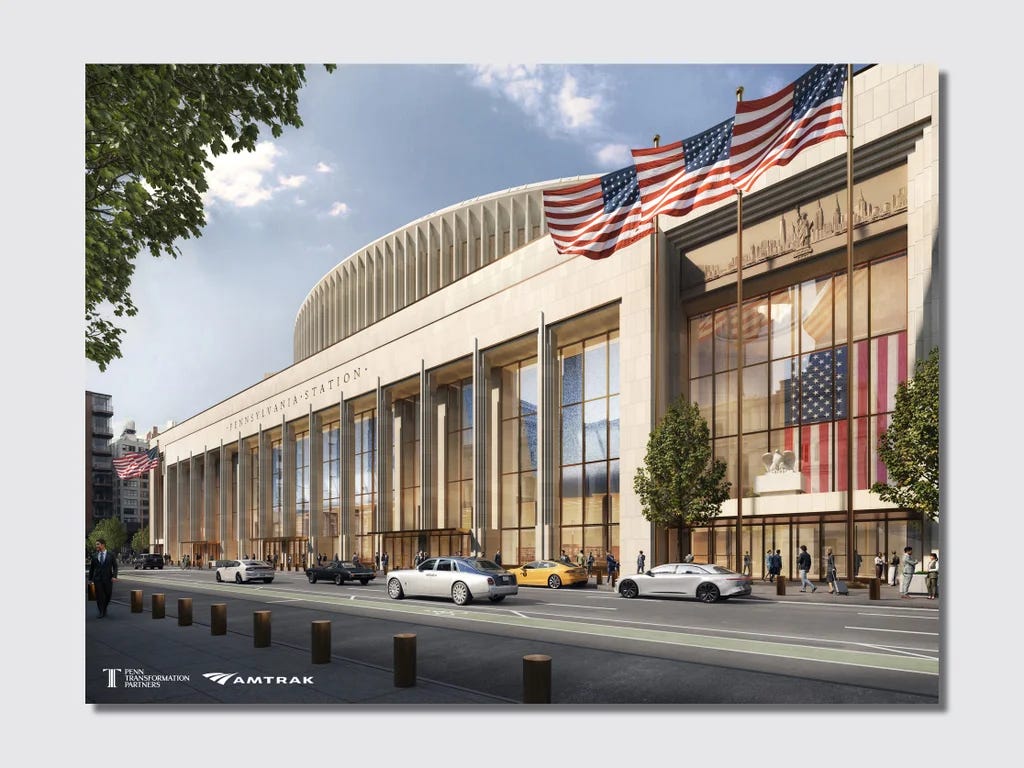
The proposed plan calls for removing the Infosys Theater at Madison Square Garden and turning that space into a grand entrance. In addition, there would be loading space inside for trailers so they no longer have to unload on the sidewalks outside. Sidewalks would be widened outside the station, creating what designers hope is a new public space.
“We think about how architecture and the city engage constantly,” Vishaan said.
The proposal is estimated to cost somewhere between $7 billion to $8 billion and be paid through federal grants and loans.
“There will be no fare hike to pay for this project, that’s not going to happen,” Andy Byford, special advisor to the Amtrak Board, said.
Byford denied the procurement process for the project was corrupt after elected officials including Rep. Jerrold Nadler (D-N.Y.) said it lacked transparency. Byford said the finalist design was selected from four letters of interest that were whittled down to three.
“This was without question the best technical proposal of the three they received,” Byford said.
This story first appeared in Fast Company.
Have you seen this?
Who knew Hunter Biden was a natural-born poster? The former first son can’t stop tweeting, and some of it is funny. Plus: Mariah Carey released a Pride collection. [Whig by Hunter Schwarz]
Top White House historian says Trump’s UFC fight would have “repulsed” Founding Fathers. Edward Lengel, chief historian of the White House Historical Association during Trump's first term, said hosting “a vicious and violent sport” “sullies the image of this country.” [HuffPost]
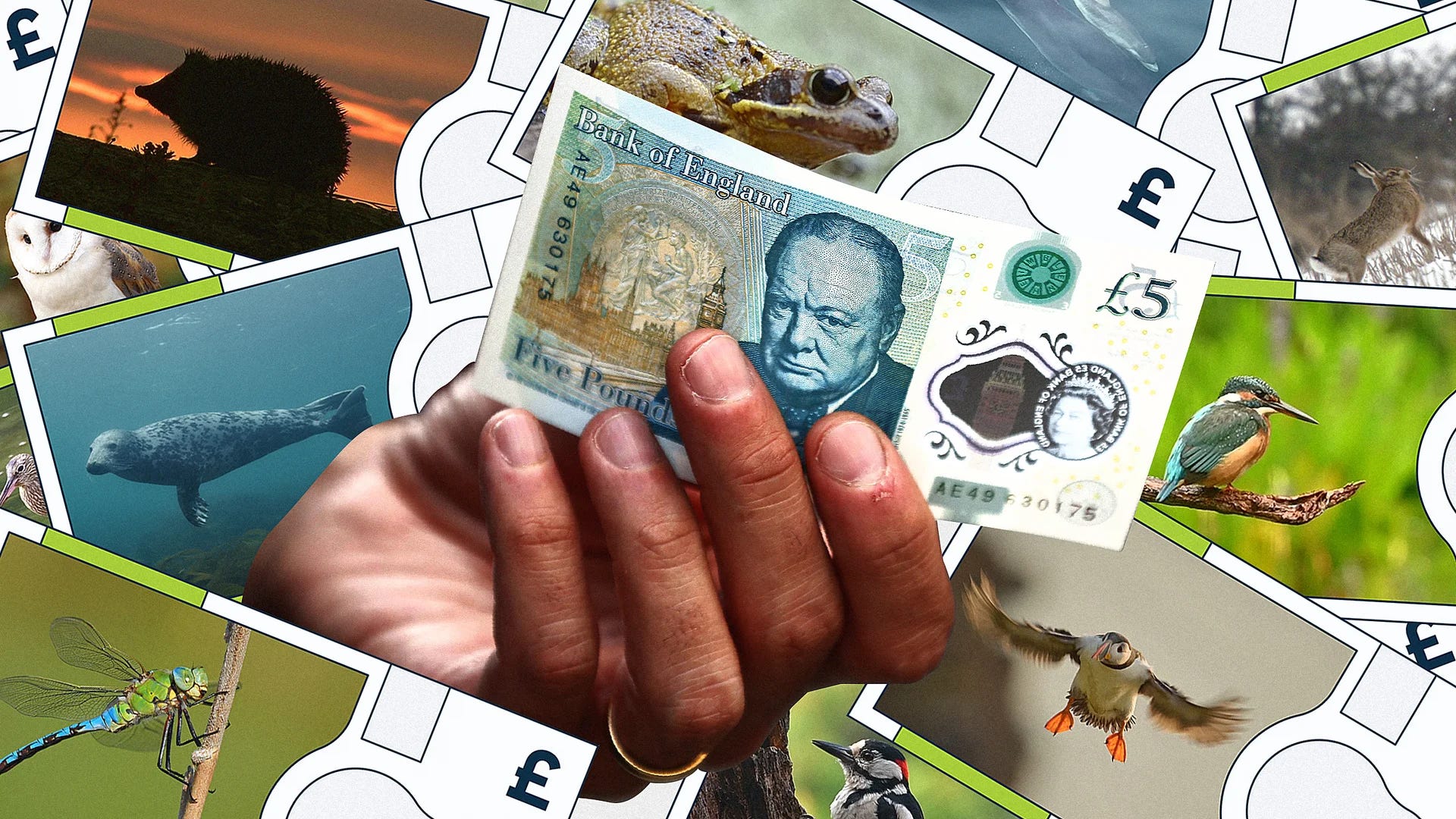
The U.K.’s next banknotes might feature cute foxes and prismatic butterflies. Following a public consultation last year, the Bank of England has decided its next series of £5, £10, £20, and £50 bills will feature wildlife instead of historical figures. The financial institution is letting the public vote on which creatures will star on the paper currency. [Fast Company]