One small town used A.I. for a new logo. Here's what happened next.
Plus: How do you brand the campaign of a “warm body” for Congress?

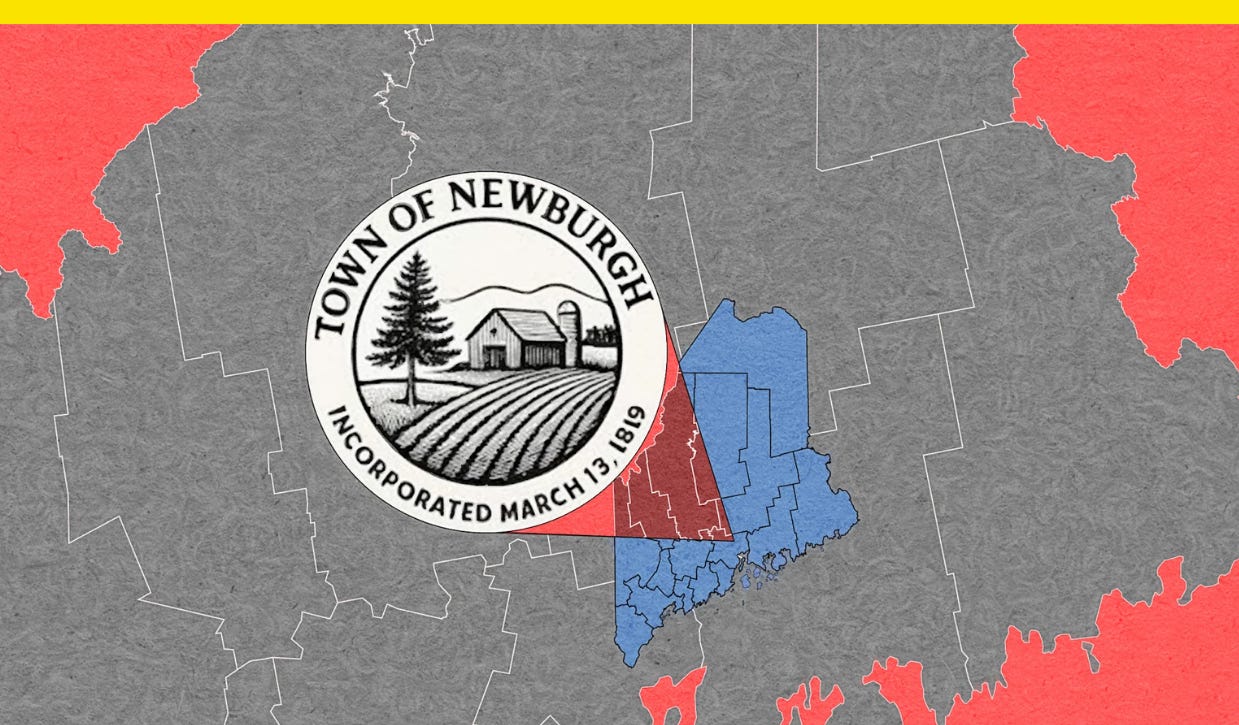
After proposing a new design for its municipal logo on Facebook, one tiny Maine town faced backlash in the comments section when it admitted the mark was generated by A.I. The post and page are now private.
Newburgh, Maine, population 1,520, is some 25 miles from the coast, just outside Bangor. In its Facebook post late last month, the town didn’t hide the fact that its proposed farm-theme logo was A.I.-generated, and even asked for feedback.
“It’s time to update our town logo that we use on our letterhead,” the post read, according to Bangor Daily News. “This is what AI and I came up with as I am no artist. Also, attached is what our old logo looked like. We wanted to know thoughts on the new design and if it represents Newburgh.”
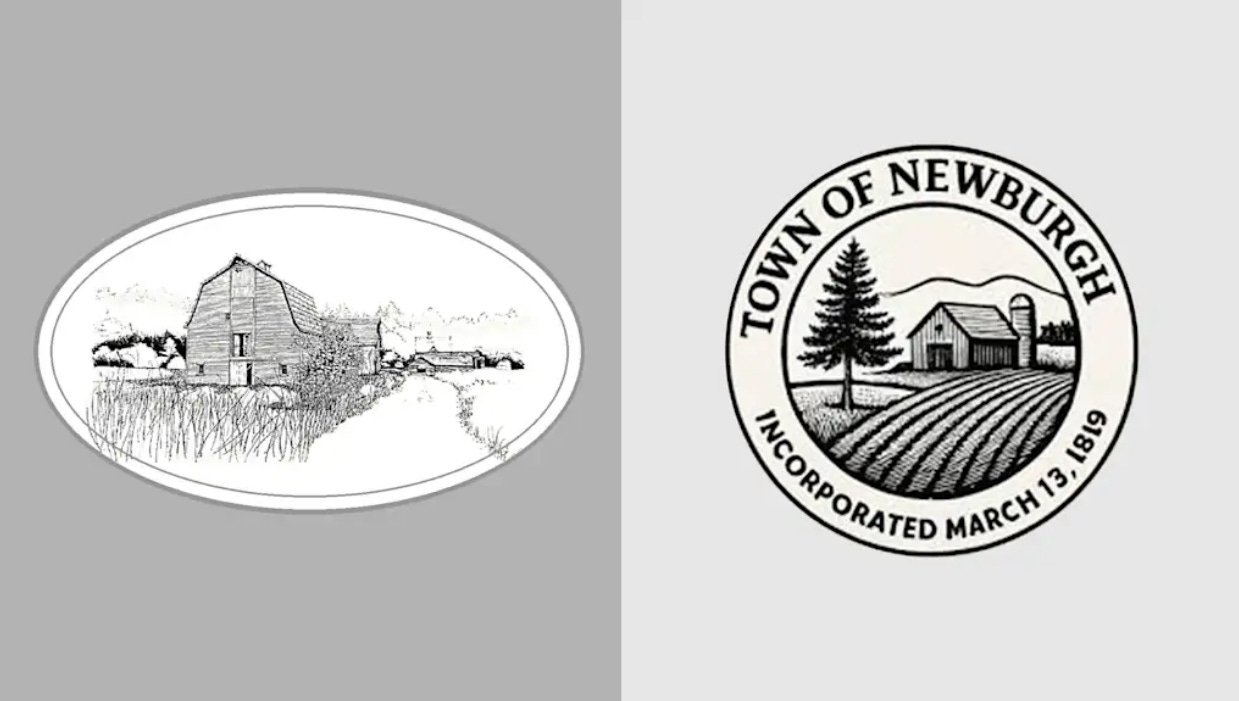
The logo shows a farmhouse with a silo inside of a round seal with hills in the background. In the foreground, there are rows of crops and a pine tree, a longtime Maine symbol. The A.I. authorship of the logo is obvious in text written along the bottom, where the two number 1s in “1819” are upside down and the letter I in “Incorporated” is a number 1.
Residents from the small town were not happy. David Aston, who lives in Newburgh and owns the nearby Timber Hearth Tattoo Co., offered to design a logo for the town.
“I think it’s important for local governments to go human-made because it reinforces the importance of design and art as a human endeavor that’s just as important as the other functions of government,” he tells me.
The A.I. logo was a take on Newburgh’s current logo, an illustration of a farmhouse that’s too detailed to look good when shrunken down. On town letterhead, the current farmhouse mark appears along with Word Art-style text in a concave shape that writes out its year of incorporation. It looks dated, and the town is well intentioned to consider a new logo.
Redesigning town or city logos is inherently fraught, though, since everyone has an opinion about graphic design, especially when it’s about where they live. When it comes to winning over the public, using A.I. is likely to make the process even harder.
A Pew Research Center survey released in March found nearly 40% of U.S. adults believe data centers are “mostly bad” for the environment and home energy costs.
That’s especially true in Maine, where growing backlash culminated in the first statewide ban on data centers in the U.S. The ban, passed by state lawmakers in April, lasts more than a year and covers data centers that surpass a certain size.
Representatives for Newburgh didn’t respond to a request for comment, but taking into account the small size of the town staff and government (its town manager, for example, serves as clerk, treasurer, tax collector, registrar of voters, and general assistance administrator), it’s perhaps not surprising they might turn to A.I. for logo ideas.
Graphic design experience is not a requirement for public service, and not every municipality has the budget or resources for design-forward government services. Still, the blowback in Newburgh is instructive.
Getting public input was smart, and what town officials found was that for many residents, an A.I. design doesn’t represent them. When it comes to branding the places we call home, a human touch is key.
This story was first published in Fast Company.



How do you brand the campaign of a “warm body” for Congress?
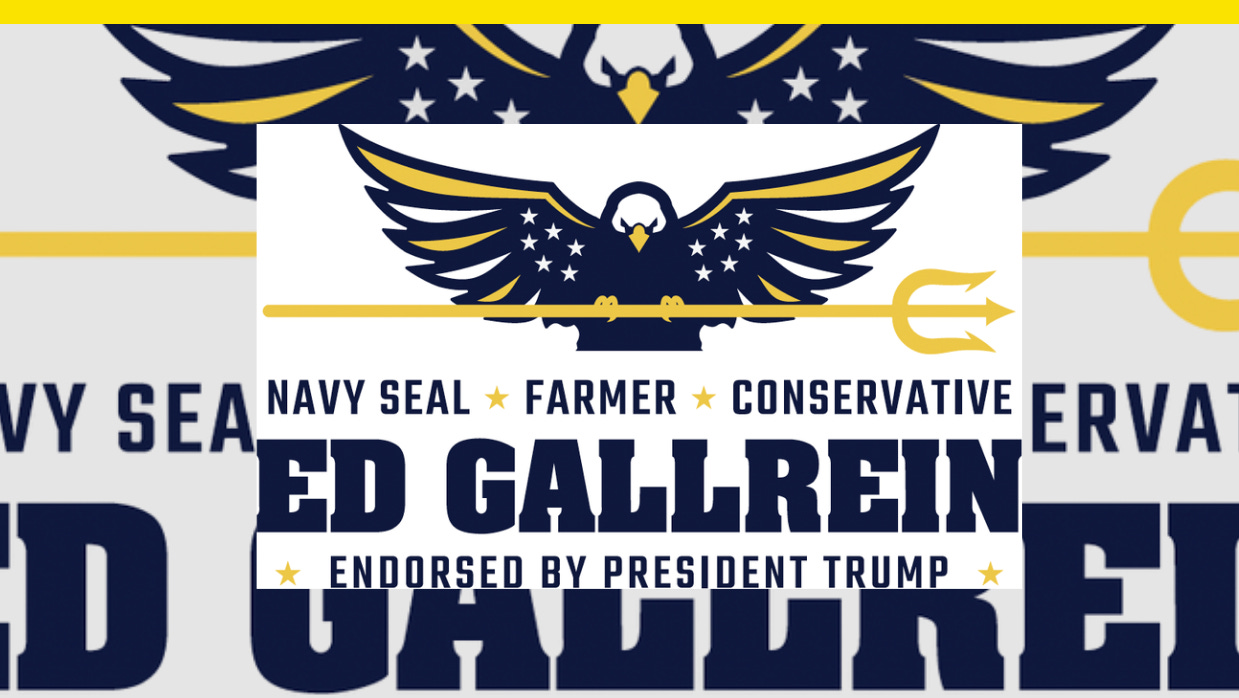
The most important part of Kentucky Republican and congressional candidate Ed Gallrein’s campaign logo is the tagline, “Endorsed by President Trump.”
Gallrein is a U.S. Navy veteran recruited to primary the libertarianism Rep. Thomas Massie (R-Ky.), and he uses a logo that looks like the mascot for G League NBA team. A blue-and-gold bald eagle holds a triton in its talons as a symbol representing Gallrein’s service as a Navy SEAL, but the Trump endorsement really is the whole ball game here.
Gallrein’s candidacy is part of a wider effort by Trump to punish fellow Republicans he’s deemed insufficiently loyal, and so far he’s on a roll.
All five of Trump’s endorsed candidates for Indiana’s General Assembly won their races earlier this month, and Sen. Bill Cassidy (R-La.), one of the few remaining Republicans who voted to convict Trump of inciting an insurrection in 2021, lost his primary Saturday. Massie is Tuesday’s target. He co-sponsored the Iran War Powers Resolution and bill to release the Epstein files, as well as voted against Trump’s One Big Beautiful Bill Act since it adds to the deficit.
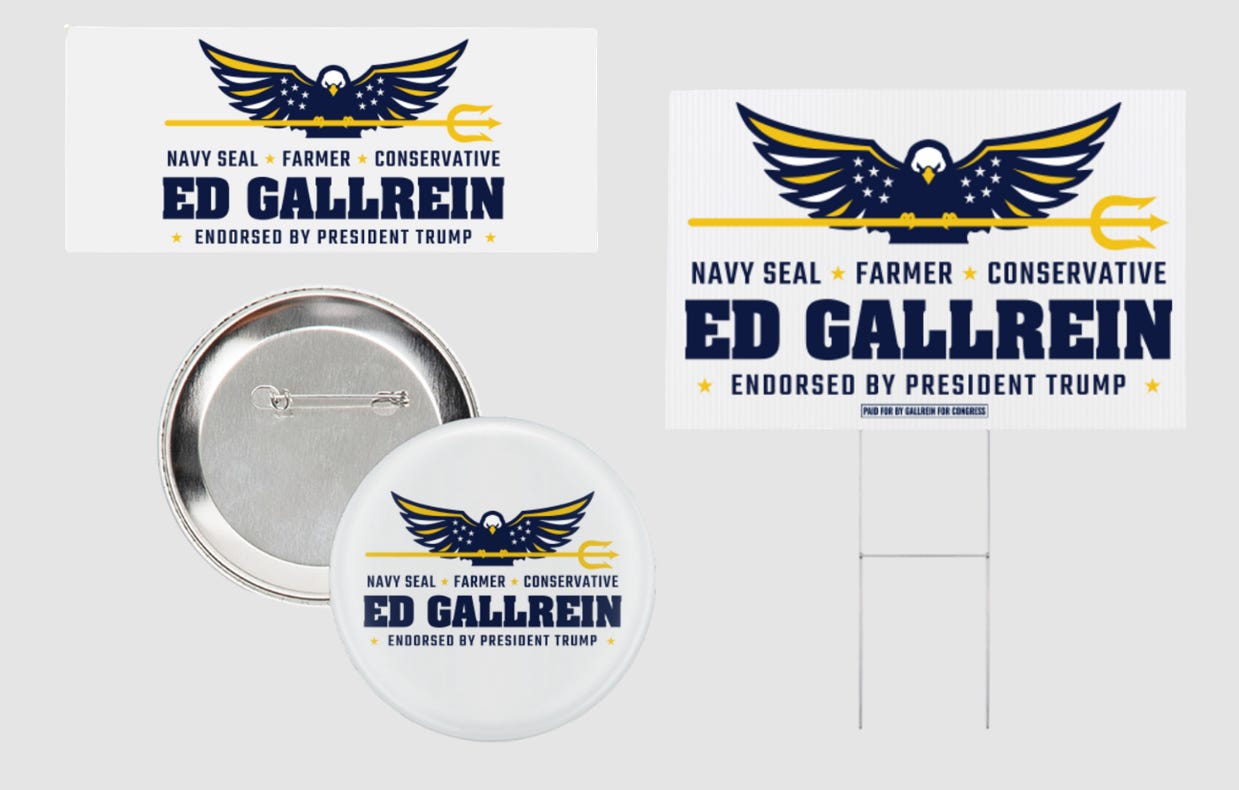
Trump once called Gallrein a “warm body” (“Give me somebody with a warm body to beat Massie, and I got somebody with a warm body, but a big, beautiful brain and a great patriot,” Trump said in March), and the candidate’s campaign advertising, branding, and merchandise center on Trump’s backing.
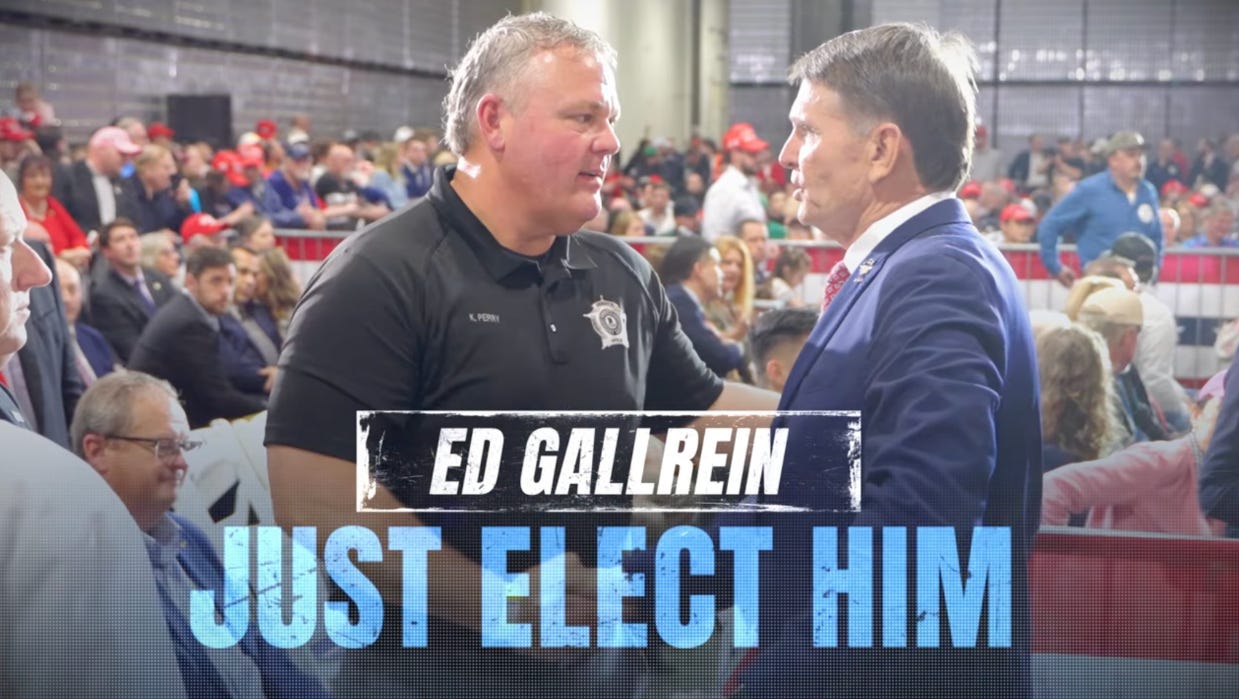
The Gallrein campaign’s $25 “You’re Fired Thomas Massie” shirt shows Trump’s face on the front, and his ad “Complete and Total Endorsement” clips Trump’s praise of the candidate’s firm handshake and look. “He is central casting,” Trump says over B-roll of Gallrein shaking a cop’s hand. “Just elect him.”
While Gallrein has made Trump’s support part of his branding, Massie is keeping close to the president even as his adherence to conservatism over Trump is central to his appeal. One Massie commercial that started airing in the campaign’s final week opens with an old picture of Massie and Trump posing together with thumbs up for a photo, and the narrator calls Gallrein woke and “a Trump traitor.”
Trump’s never been more unpopular nationally than he is now, but among Republican Party primary voters, his endorsement still matters. It shows in this one U.S. House race. The Republican Party is Trump’s party.
Have you seen this?
You won’t believe what Michelle Obama just said about Trump voters. The former FLOTUS doesn’t want liberals pigeonholing Trump voters. Plus: Guess which Beyoncé song has been inducted into the Library of Congress? [Whig by Hunter Schwarz]
Everyone’s running anonymous political accounts now. Operatives on both sides of the aisle are using anonymous social media brands to boost their preferred candidates, drop opposition research, and amplify messaging. [Chaotic Era]
Here’s what I told the DNC autopsy. The report may never see the light of day—so the Harris campaign’s head of digital offers his candid breakdown of what worked, what failed, and what Democrats have yet to learn. [The Bulwark]
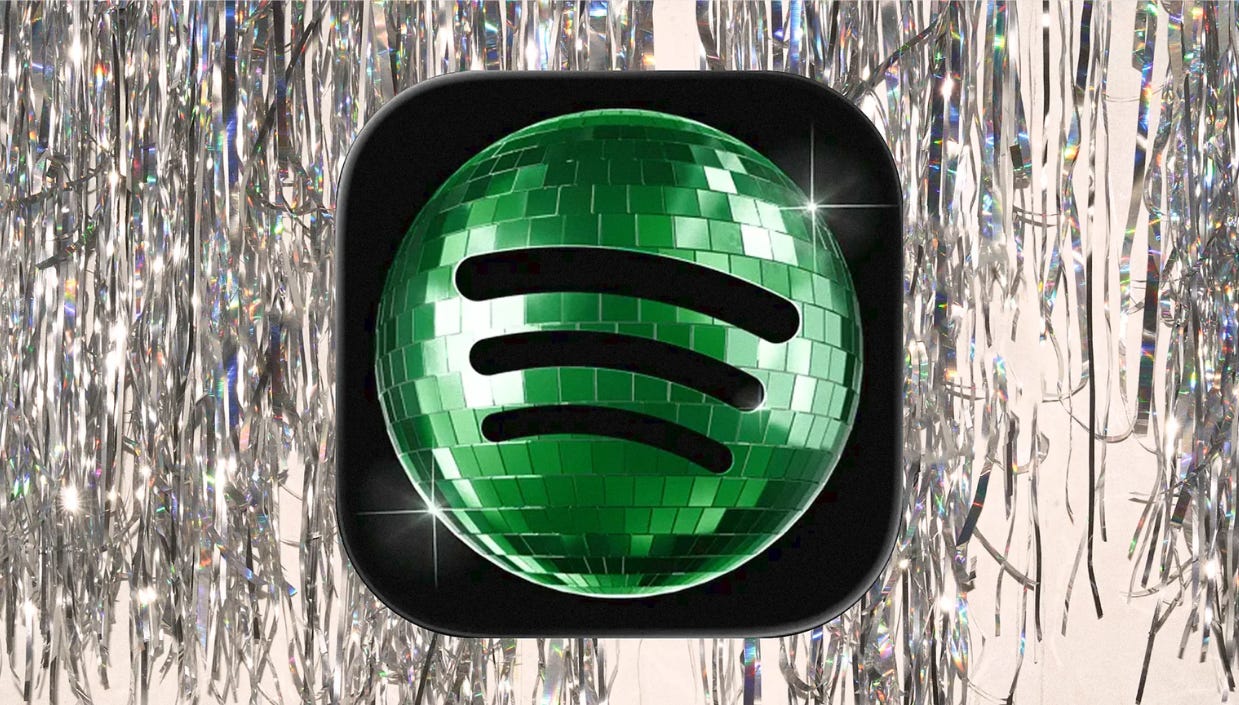
Relax! Spotify was never going to keep its disco logo. The music-streaming giant went full “discomorphism” for its 20th anniversary logo. The internet didn’t approve. [Fast Company]