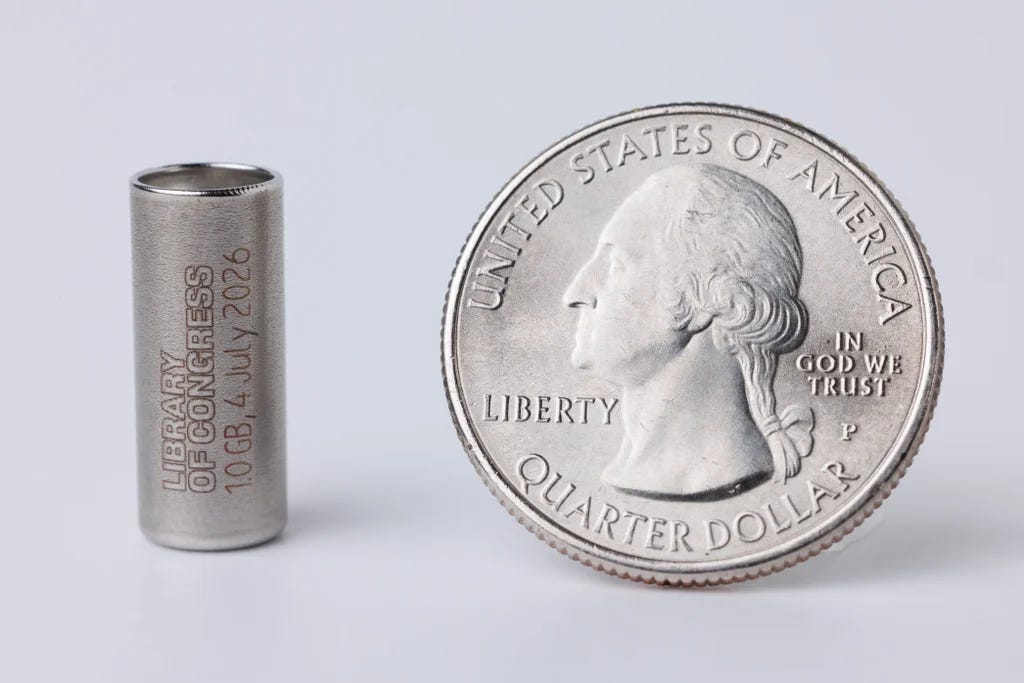
How the Library of Congress shrunk down U.S. history small enough to fit in a vial
Plus: Why the New York Knicks logo has lasted so long

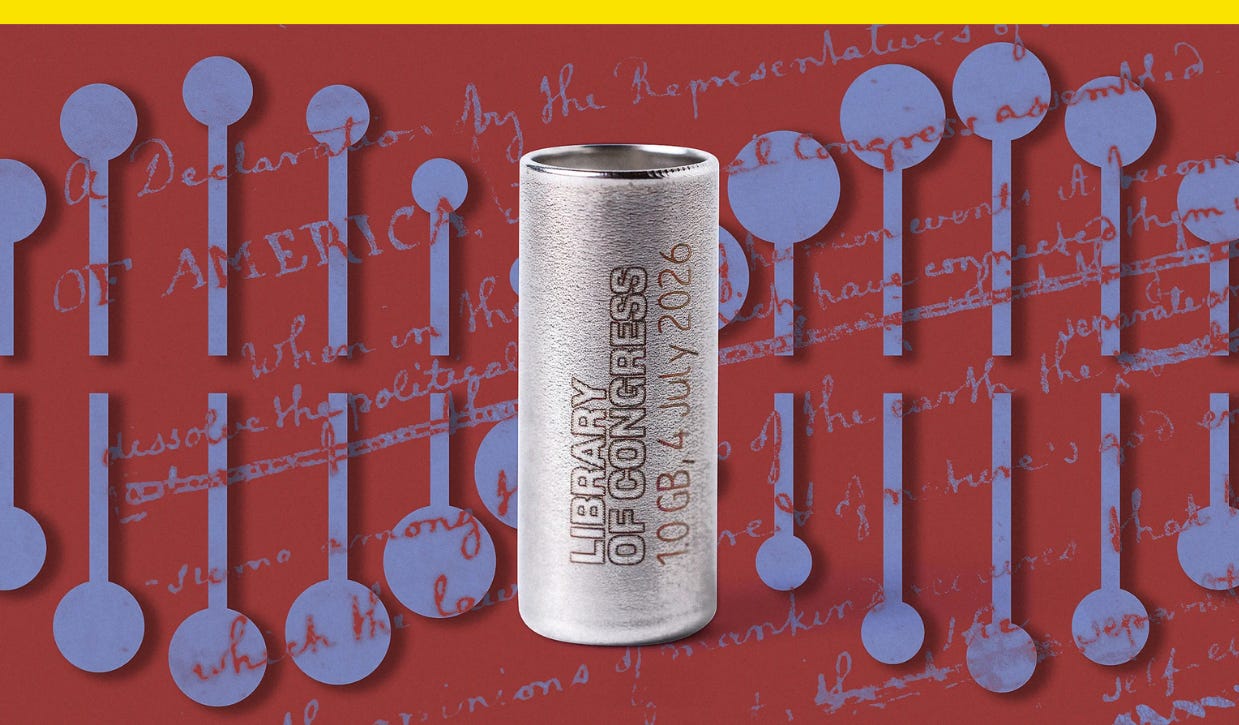
To save on space, the Library of Congress is packing what would otherwise be pages and pages worth of documents and other media from U.S. history into a single vial for the nation’s time capsule marking 250 years since the founding. The method that makes it possible is synthetic DNA.
The storage technique uses artificial DNA molecules like a hard drive by converting data sequenced in 0s and 1s, the binary language of computers, into As (adenine), Cs (cytosine), Gs (guanine), and Ts (thymine), the bases that make up a DNA molecule.
It’s not biological in any way, but it does use DNA structure to pack data more densely than other storage methods, and it lasts far longer than paper would. For a time capsule that’s not supposed to be open until 2276, it’s a smart way to preserve history for the long run.