America's official time capsule was designed to last another 250 years
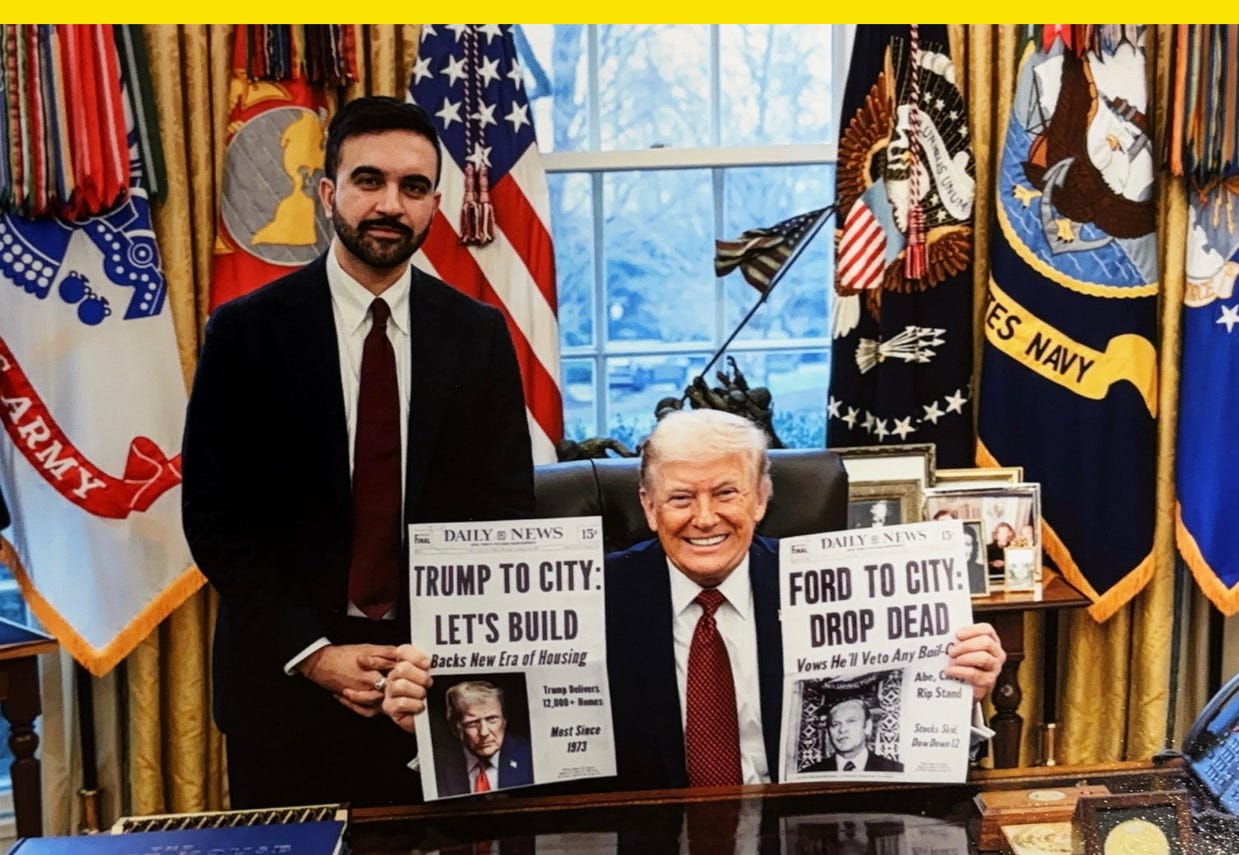
Plus: A badly Photoshopped newspaper front page is all it really take to flatter Trump

Time capsules are designed to be resilient by nature. But no time capsule has survived as long as designers hope “America’s Time Capsule” will.
The time capsule, designed for the semiquincentennial of the U.S. founding, is being created by America250, the nonpartisan, congressionally mandated group organizing commemorations for this year. The plan is to bury the time capsule underground in Philadelphia at Independence National Historical Park on July 4, and for it to be opened in another 250 years, in 2276.
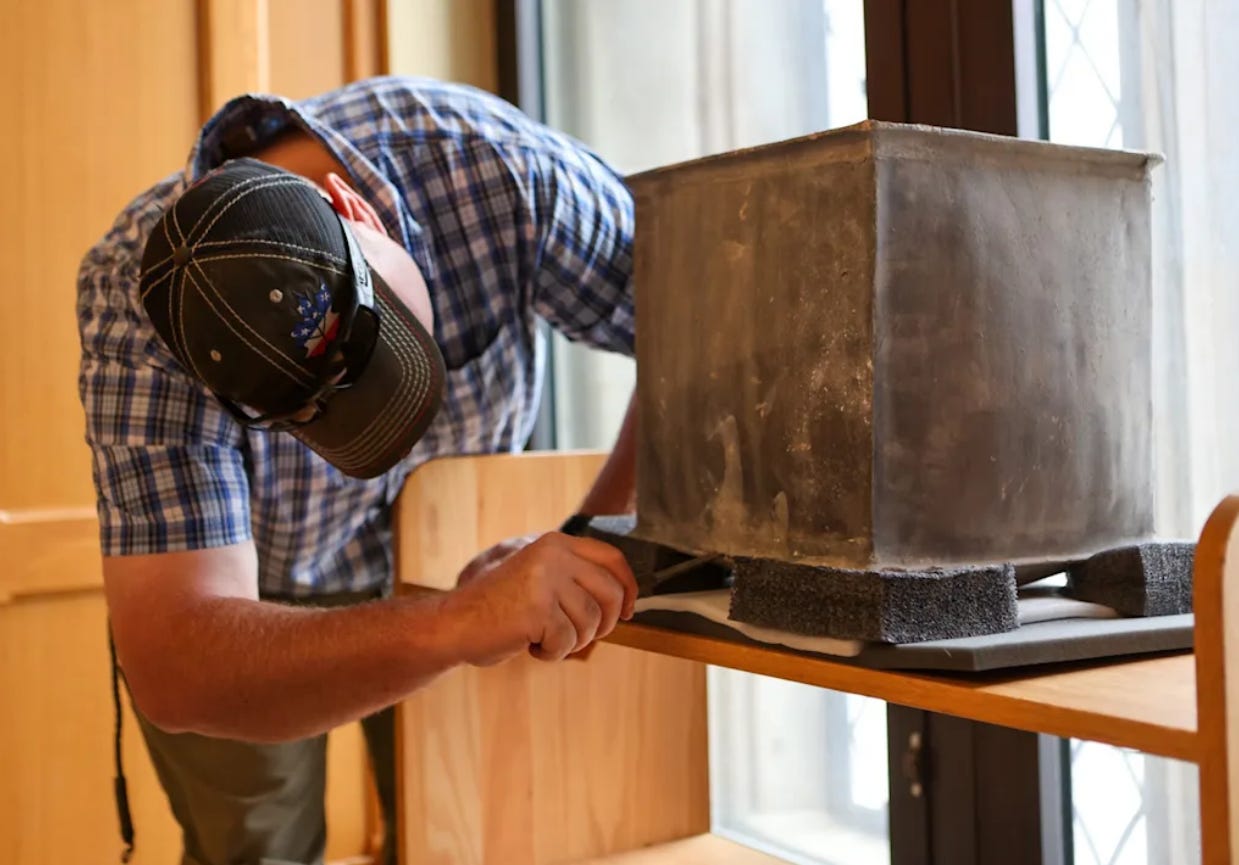
The problem is time capsules, which are typically buried underground, and exposed to the elements, don’t really last that long. “We’ve unburied some time capsules that are more than 200 years old and the contents haven’t fared well,” says Tom Medema, a special advisor and project manager for the time capsule, during a press conference Wednesday.
When a time capsule is buried in a building cornerstone, or stored in a climate-controlled space as is the Bicentennial time capsule (it’s stored on a shelf in the National Archives), it’s easier to preserve whatever is inside. Outside, though, it’s exposed to the elements and could get wet and deteriorate.
“The biggest risk to a time capsule is water,” says Jacob Ricker, an engineer for the National Institute of Standards and Technology, or NIST, a Commerce Department agency that standardizes weights and worked on the time capsule.
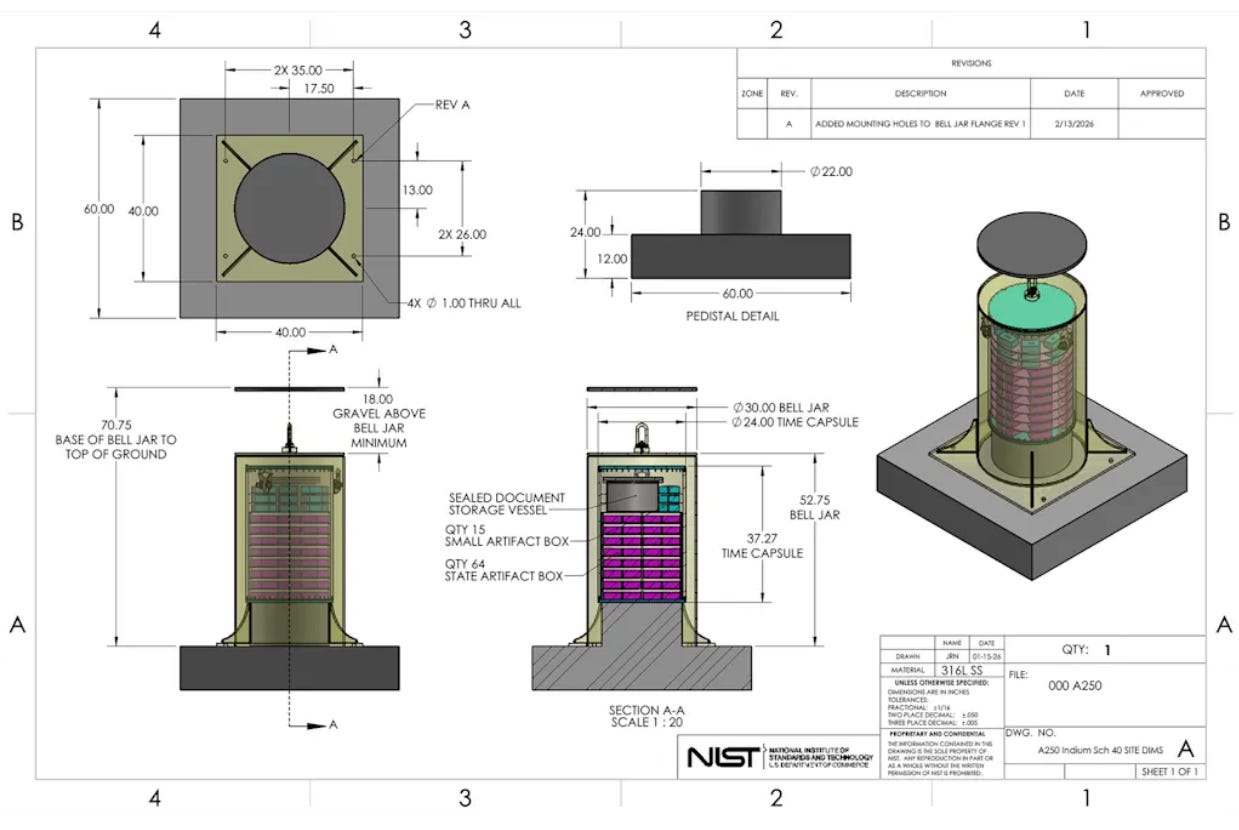
The design team is taking several precautions to ensure the time capsule remains protected from water. They made the 36-inch-tall vessel tubular to reduce structural vulnerabilities. The capsule has three inner layers that lock in its contents and protect them from outside elements, followed by an outer stainless-steel finish that covers the entire time capsule.
Inside, design decisions were both functional and organizational. A metal bell jar cover creates an air pocket. There are also stacks of interior shelves that will eventually house things like a flag, items from the 2026 Rose Parade, and submissions from all 50 states, five territories, and Washington, D.C. Paper documents — its most delicate contents — will be secured inside an inner chamber.
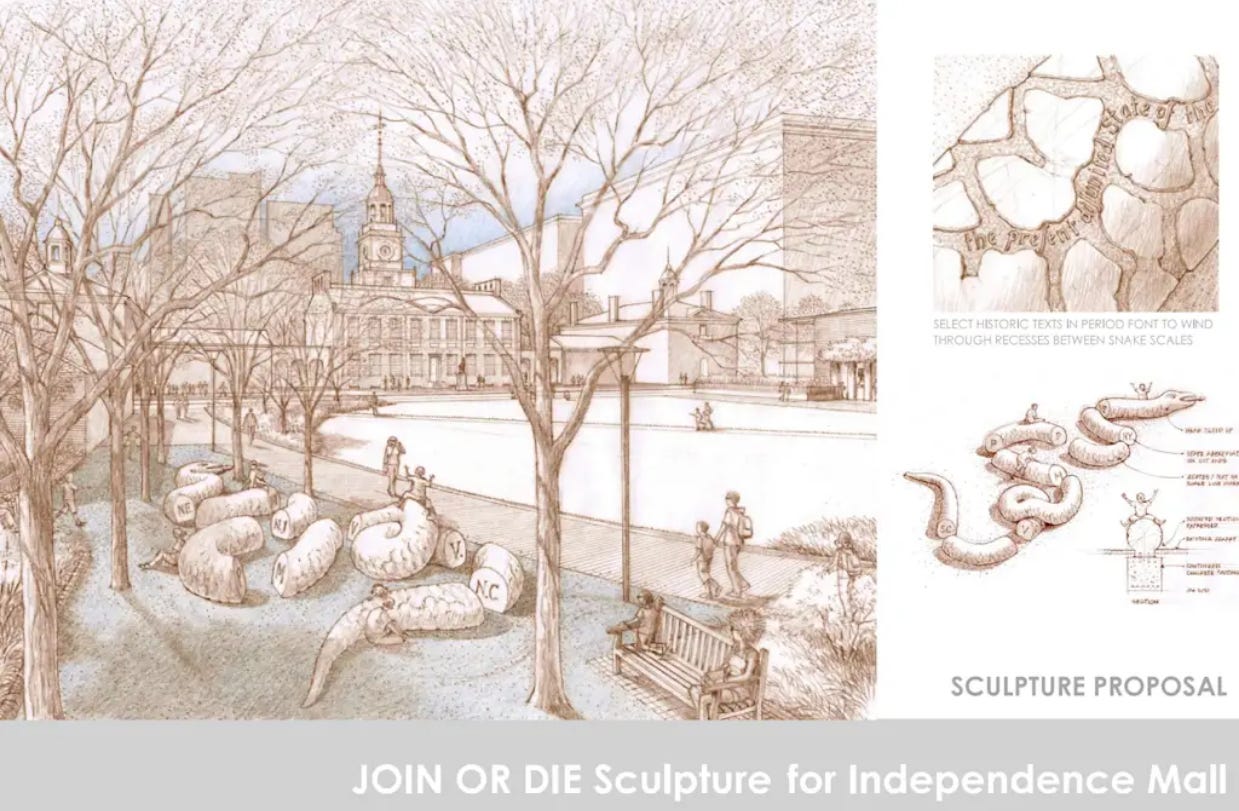
Earlier plans for the time capsule imagined it embedded in a 46-foot-long sculpture of Benjamin Franklin’s 1754 “Join or Die” political cartoon showing a snake made up of pieces representing the then-British colonies. The sculpture is expected to be completed this fall. Organizers, however, determined that for longevity’s sake, it would be better to bury the time capsule underground.
Independence National Historical Park is about 30 feet above sea level, so rising sea levels shouldn’t be a problem for 250 years, Ricker says, but the time capsule was also designed to withstand flooding.
“Because we’re underground, we do get rain and things like that and it is possible that the burial area could get flooded with water. Our design is accounting for that,” he says. “So it shouldn’t see water, even if we get torrential rains or anything like that, which would flood the burial site. It should be 100% sealed just with that outer shell.”
NIST scientists helped develop the time capsule alongside preservation experts at the Library of Congress and in coordination with the National Park Service, America250 says. A replica will be displayed at the White House Visitor Center, however, time to see the real thing is limited: the actual time capsule will be briefly displayed in early July in Philadelphia before it’s buried.
This story was first published in Fast Company.
The profanity in this flippin’ Senate campaign ad shows us a whole effing lot about how peeved primary voters really are
Swearing like a sailor sums up how many feel about the state of things, but does it actually move voters?
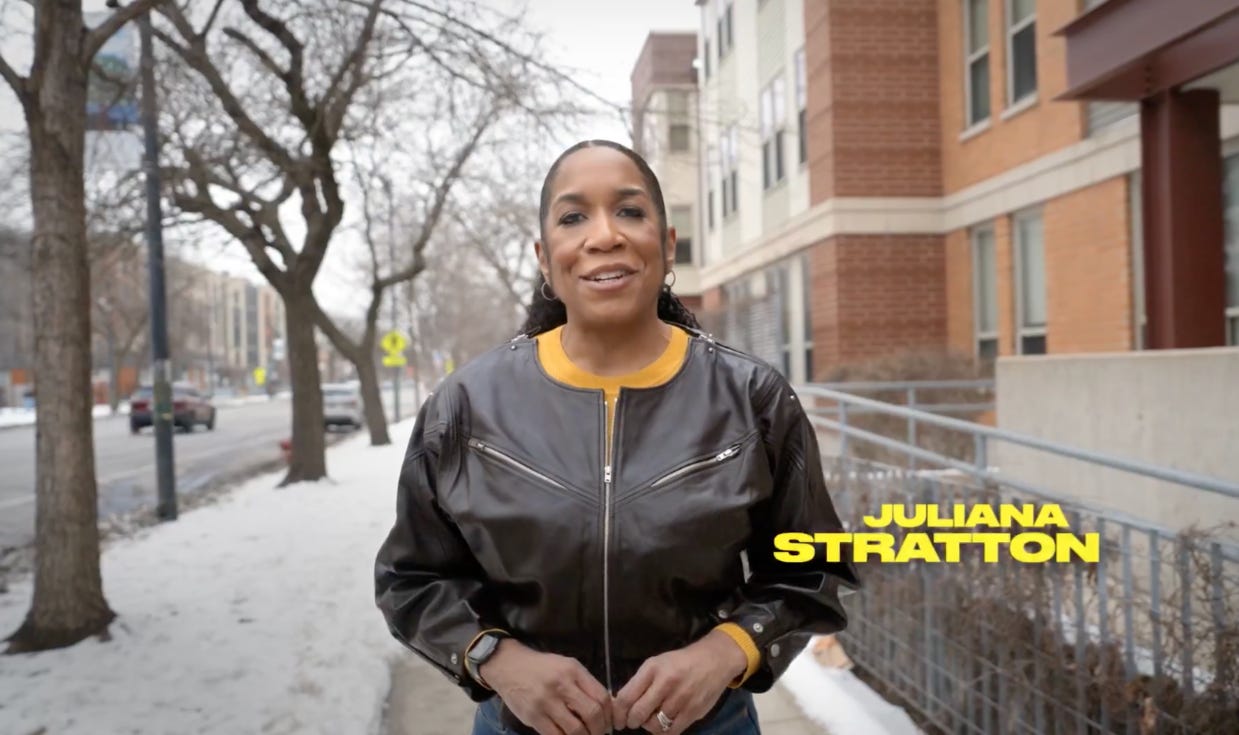
Well, frick, if this doesn’t say something salty about the state of today’s political discourse, I don’t know what does: there’s both a clean and explicit version of Illinois Lt. Gov. and U.S. Senate candidate Juliana Stratton’s (D) first television campaign ad “They said it” because there’s so many doggone f-bombs in it.
In the explicit version of the 30-second ad that Stratton posted online earlier this month, six people including Sen. Tammy Duckworth (D-Ill.) say a curse word directed at President Donald Trump that’s unprintable in a family newsletter but starts with the letter f and rhymes with duck. A censored version with six bleeps will air on TV, the campaign says.
“F**k Trump. Vote Juliana,” people in the ad say. Stratton herself keeps it PG, as does Illinois Gov. J.B. Pritzker, who endorsed her and also appears in the ad. “They said it, not me see,” Stratton, a former state lawmaker, says when introduced on camera.
The spot is an attention play at a time when rage powers partisan politics, and it’s just the latest example of the coarsening of our national political conversation that, let’s be honest, starts at the top with a president who could use some soap in his mouth. Fewer than four in ten Illinois residents approve of Trump, per Morning Consult polling, so the attitude Stratton channels in her ad will no doubt resonate widely, but even then, whether or not it will actually move voters seems like a crapshoot.
From “Let’s Go Brandon” to “FDT,” it’s not clear votes are actually moved by profanity. About two-thirds of U.S. adults believe cursing out loud in public is “never” or “rarely acceptable,” according to a Pew Research Center survey released last year, and recents candidates who ran ads with eff-the-president messages haven’t fared well, even when the president they’re attacking is really friggin’ unpopular.
A badly Photoshopped newspaper front page is all it really takes to flatter Trump
The font’s not right and the line spacing is off, but Mayor Mamdani gets it.