That's not a defect, this hat for America 250 was actually designed that way
Plus: How Maine Democrats are retrofitting their campaign logos

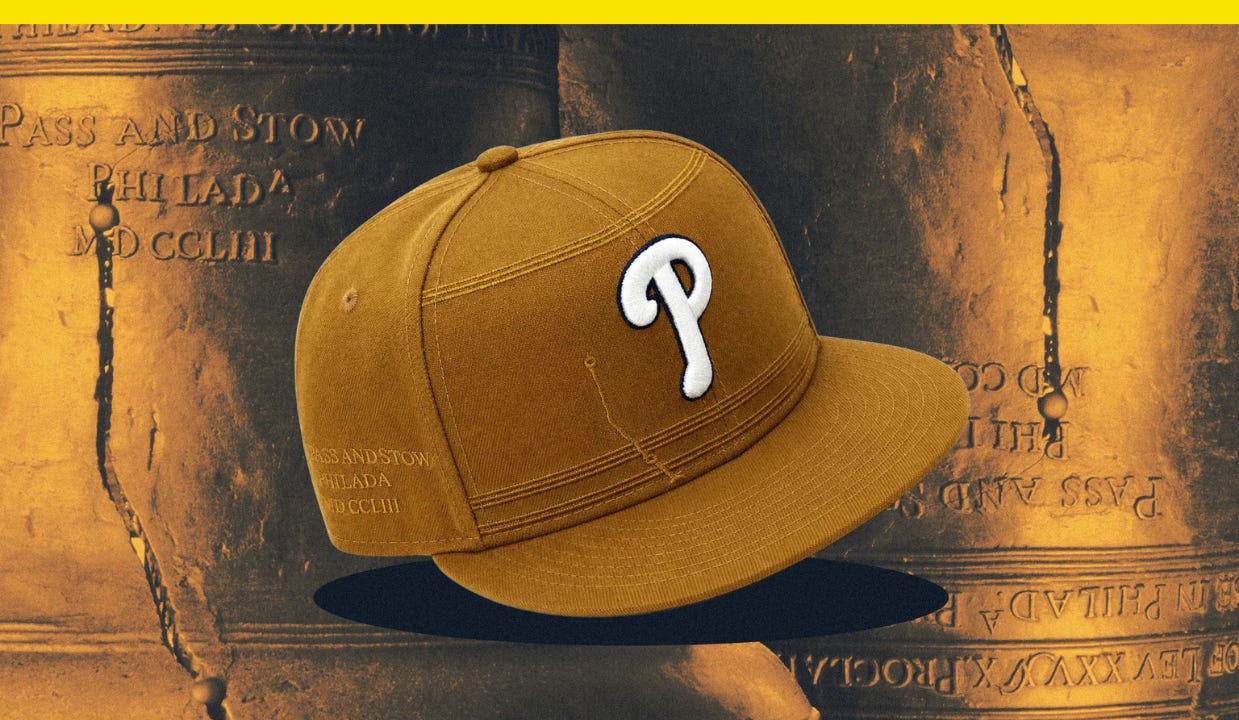
At first, it looks like something went wrong during the production of a new cap for the Philadelphia Phillies.
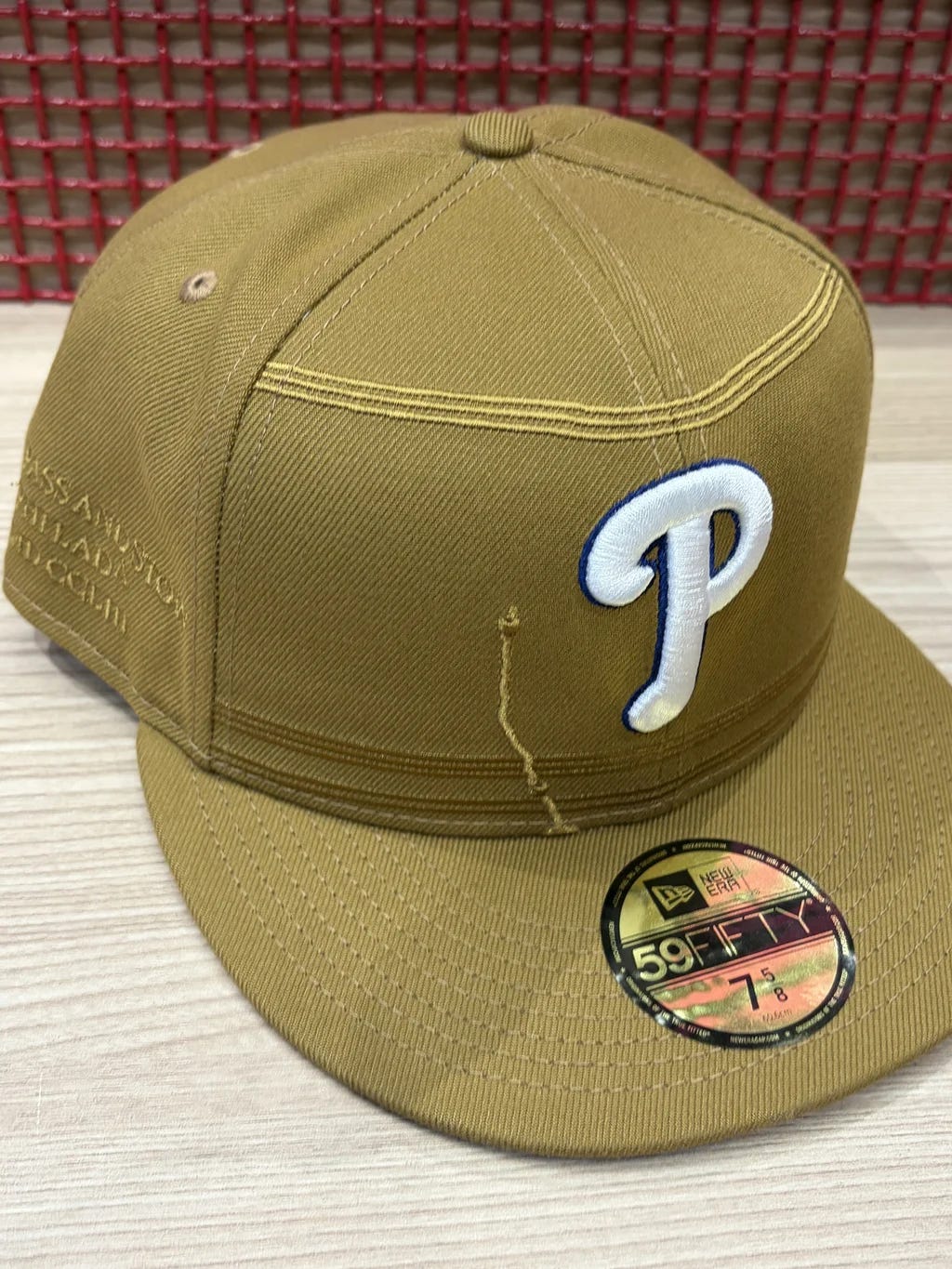
The tan hat shows the team’s script letter P logo in white, but just to the logo’s left, a jagged stitching line scribbles its way up and to the side, with two small dots embroidered at the top of the line and near the bottom. On one side of the cap, there’s a jumble of words and letters that don’t immediately make sense.
You might wonder, Did the hat factory’s embroidery machine hallucinate in the middle of the job? And then it strikes you, like a clapper strikes a bell: The seemingly haphazard stitching is not a defect. It’s a historical reference to the most famous bell in the MLB team’s hometown.
New Era designed the custom Liberty Bell-inspired Phillies caps specifically for the 2026 MLB All-Star Game played this week at Citizens Bank Park in Philadelphia, the cradle of liberty where the Declaration of Independence was signed 250 years ago this month. Available exclusively at the Phillies Store for the All-Star Game celebrations, New Era tells me the hats were already sold out on the eve of the big game.
“New Era led a design lab with the Phillies, and this cap design emerged from that process,” says John Mackowiak, a spokesman for New Era.
The Liberty Bell got its name beginning in 1835 from abolitionists who adopted it as a symbol in their fight to end slavery, and exactly when it got its famous crack is lost to history, but it had to be recast twice. It often rang out on national events, like the signing of the Constitution, and following the deaths of Benjamin Franklin, Alexander Hamilton, Thomas Jefferson, and George Washington, according to the National Constitution Center.
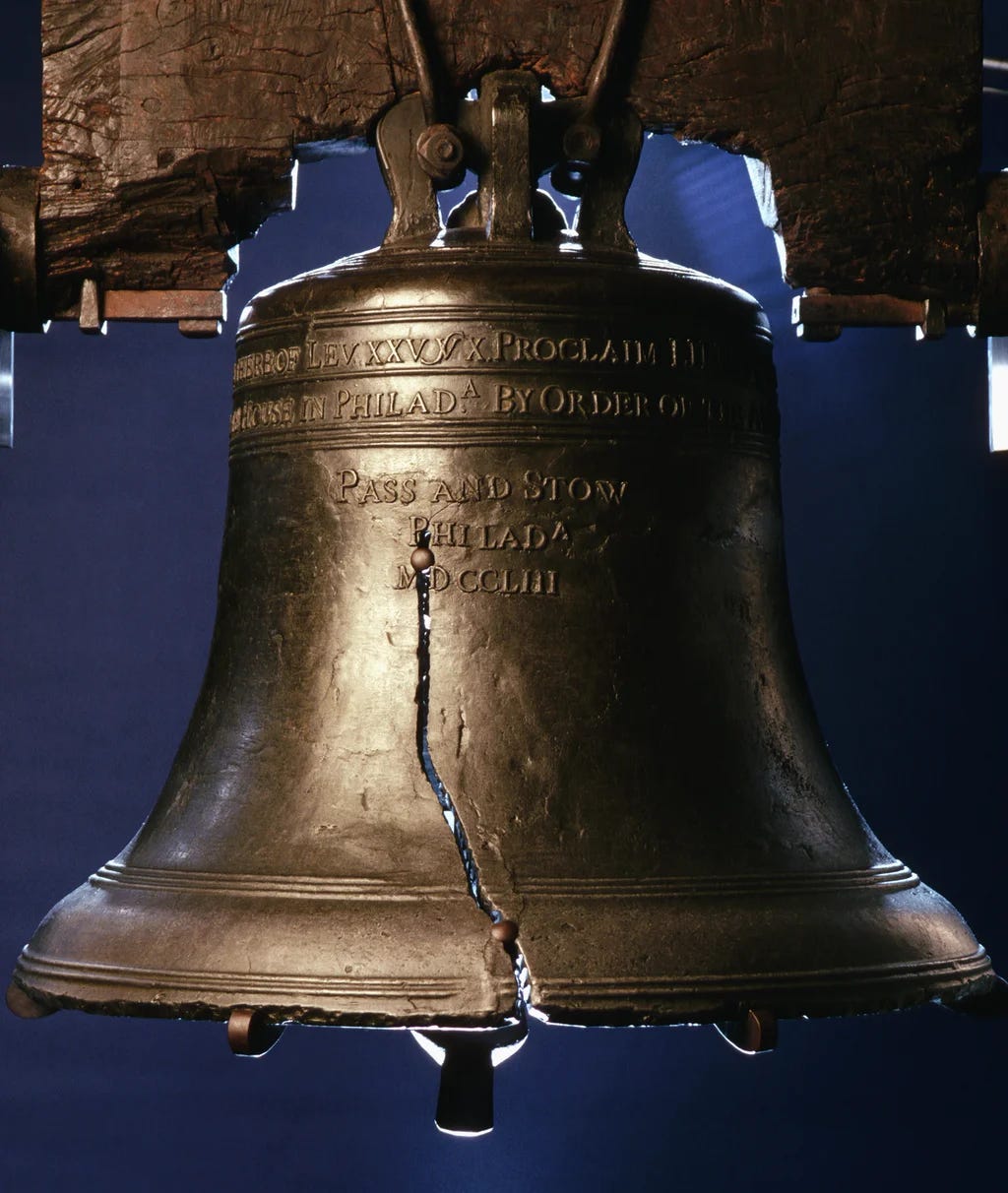
The bell was damaged following Washington’s birthday in 1846 and wouldn’t ring again. Though its sound is silenced, the bell still stands today as a symbol of America’s founding and the fight to make good on the Declaration of Independence’s words, “all men are created equal.” As a tourist destination, it attracts about 2 million visitors annually.
New Era’s cap faithfully re-creates the shape of the crack on the front, and the text on the side is actually a label that appears on the Liberty Bell about who made it, where, and when for its 1753 recasting. The words “Pass and Stow” reference metalworkers John Pass and John Stow, casters of the new bell; “Philada” is for Philadelphia; and “MDCCLIII” is 1753 in Roman numerals.
There are other Easter eggs designed into the cap, too. The year “1776” is stitched into the bottom of the bill, and on the inside of the cap there’s some funny, ahistorical artwork showing the Phillie Phanatic mascot at the signing of the Declaration of Independence. The furry, green, snout-faced mascot was voted the most-loved MLB mascot in a sportsbook’s national fan survey released last month.
New Era designed more than 500 hats and other products for America’s 250th anniversary, including sets that fill in team logos with stars-and-stripes patterns or a bald eagle carrying a U.S. flag in its talons. (Even the MLB’s lone Canadian team, the Toronto Blue Jays, got its own “USA 250” hat). None reference the country’s anniversary as cleverly or creatively as the Phillies Liberty Bell-inspired cap, though. For such a small shape, the crack on the front tells a larger story.
This story was first published in Fast Company.



How Maine Democrats are retrofitting their campaign logos
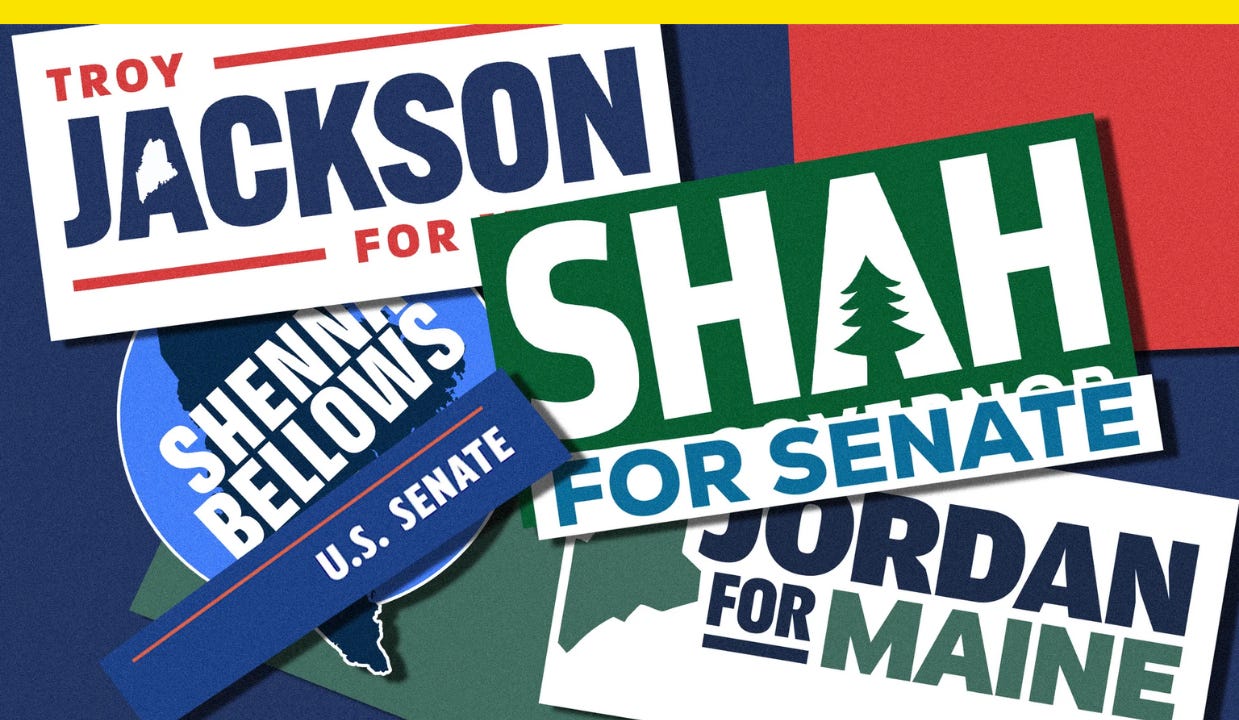
On July 10, after allegations of sexual assault and mistreatment of women, former nominee Graham Platner formally withdrew from the U.S. Senate race in Maine. To pick a last-minute replacement, Maine Democrats are holding a nominating convention on July 25 in time for a state deadline to put forward a new candidate who will face off against Republican Senator Susan Collins in November. With no time to spare, would-be nominees are retrofitting old logos for the new campaign.
Nirav Shah, a former director of the Maine Center for Disease Control and Prevention, was the runner-up in Maine’s Democratic primary for governor in June. He was the first candidate to collect enough signatures to enter this month’s Senate race; he’s keeping green and white as campaign colors and a logo that makes the letter A in his last name from a pine tree, a Maine state symbol.
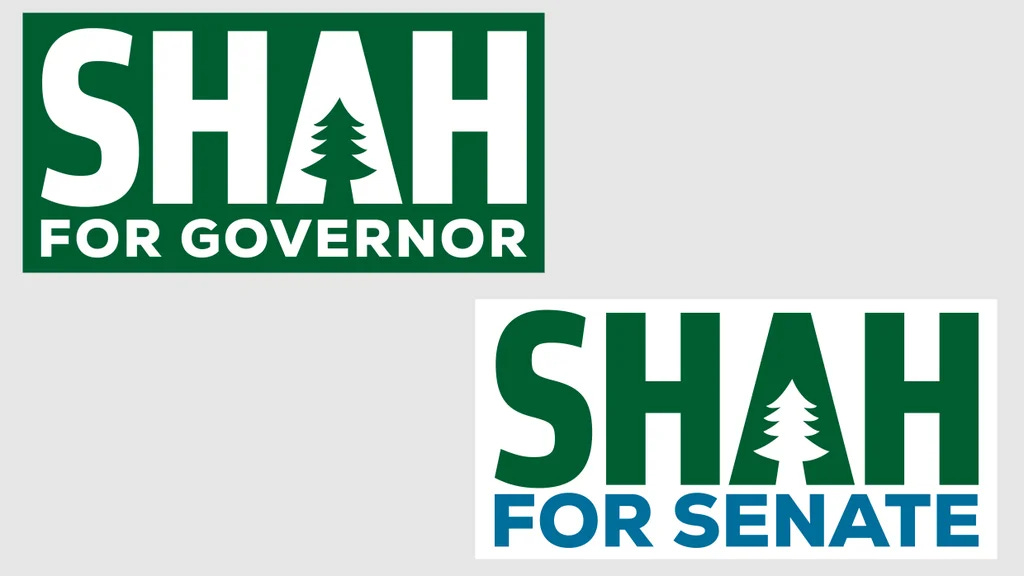
Shah’s supporters recently took scissors to his old stickers, cutting off the bottom half that said “For Governor.” According to NBC News, supporters are also retrofitting campaign signs by taping over his old signs to write in “Senate” instead of “Governor.”
Maine Secretary of State Shenna Bellows, who ran against Collins in 2014 and lost handily in a year less favorable to Democrats, dusted off her 12-year-old U.S. Senate campaign logo for another run. When Bellows ran unsuccessfully for the state’s governorship earlier this year, she used a logo that included a map of Maine and wrote out her name in a tall, sans-serif font.
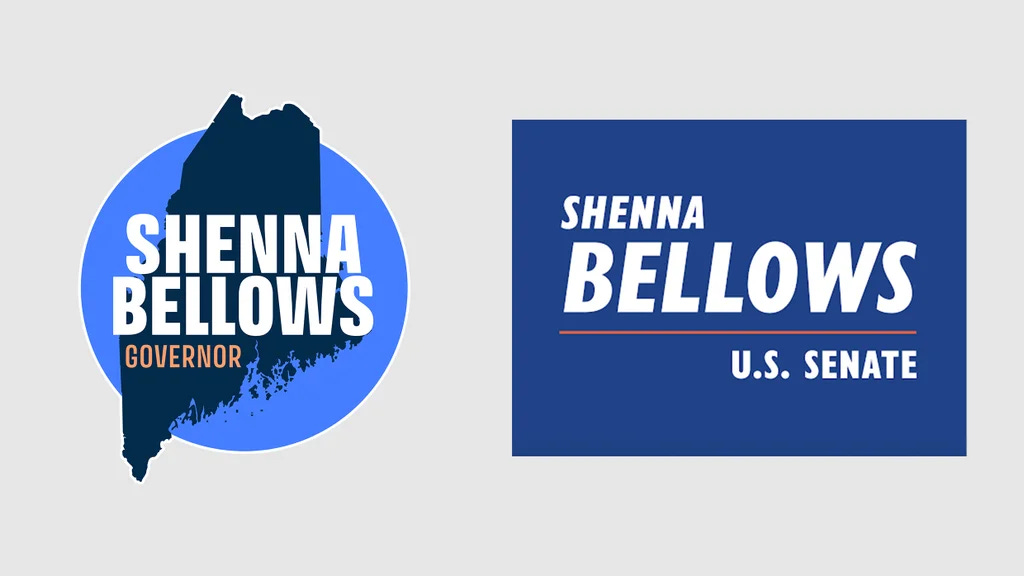
Her new Senate campaign logo is a retread of her 2014 mark: Her name is in all-caps italics in white on a blue background, with a thin, horizontal orange line underneath and “U.S. Senate” written below. It’s minimal and to the point. (Back in 2014, long before he became the mayor of New York City, Zohran Mamdani had a Bellows for Senate laptop sticker.)
Other candidates are able to reuse old logos because their designs were generic to begin with. Former Maine state Senator Troy Jackson ran for governor earlier this year with a red, white, and blue logo that filled in the counter of the letter A in his last name with a Maine state map. It said “Troy Jackson for Maine,” instead of for the office he was running for, so no edits are needed.
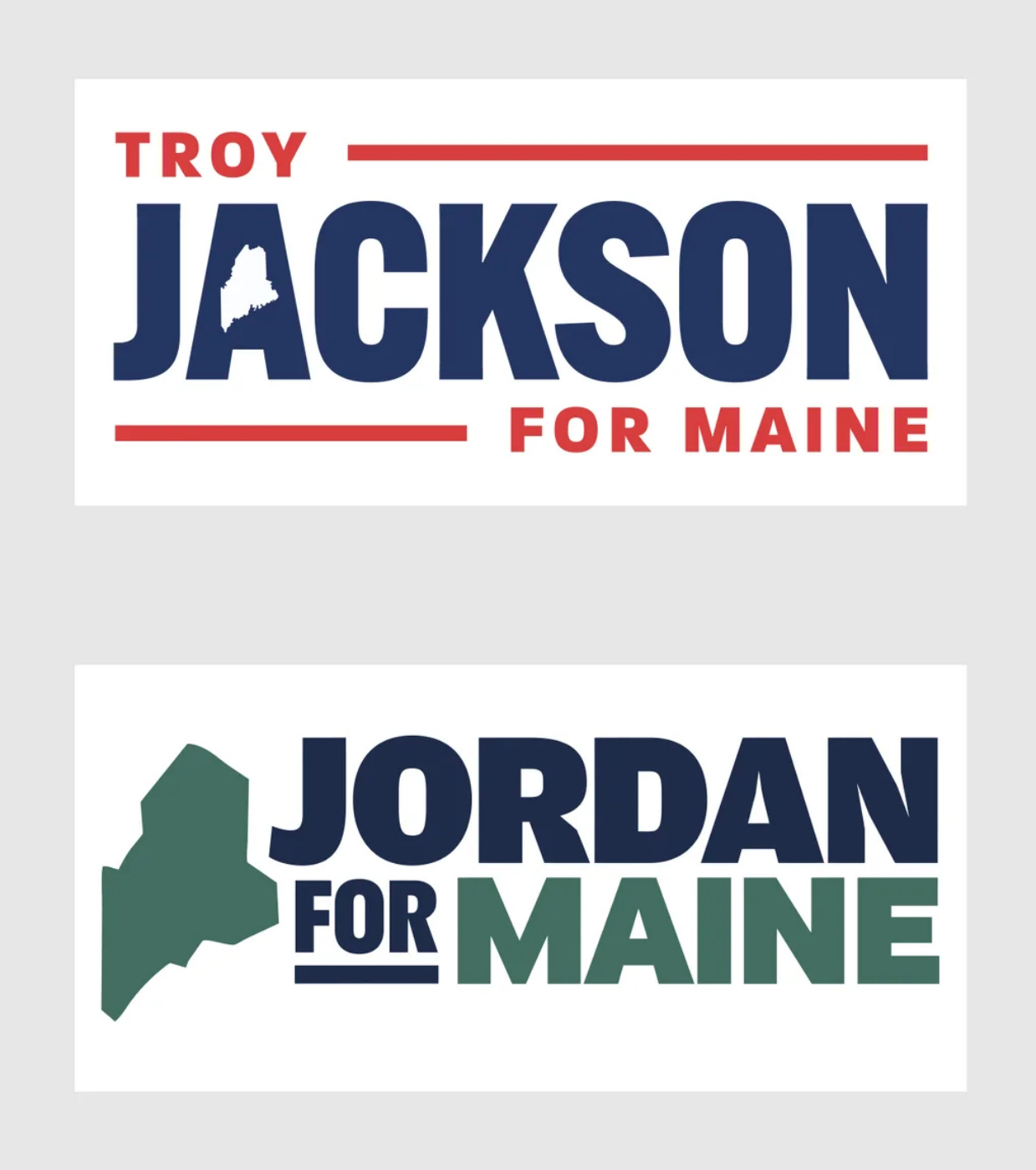
The same goes for Jordan Wood, a former staffer for Democratic Representative Katie Porter of California. Wood briefly ran for Senate before dropping out to run unsuccessfully for a U.S. House seat in Maine last month. Perhaps the third time’s the charm for the “Jordan for Maine” logo now that he’s running for Senate again.
“We were previously a candidate in the Senate race and are using our original campaign branding as a result,” a spokesperson for Wood’s campaign tells me
Democrats did something similar in 2024 when then-President Joe Biden dropped out of the race and then-Vice President Kamala Harris took his place. Supporters lopped off the top half of Biden-Harris logo yard signs or brought back old “Kamala Harris for the People” ephemera from her 2020 presidential bid until a new logo and merch could be designed.
Without time for a full-scale creative and brand design process, last-minute campaigns like those for Maine Democrats are inherently resourceful and makeshift. This is no time for a rebrand. You work with what you’ve got. Voters are now deciding among a field of candidates who already have campaign experience under their belts, and the branding to prove it.
This story was first published in Fast Company.
Have you seen this?
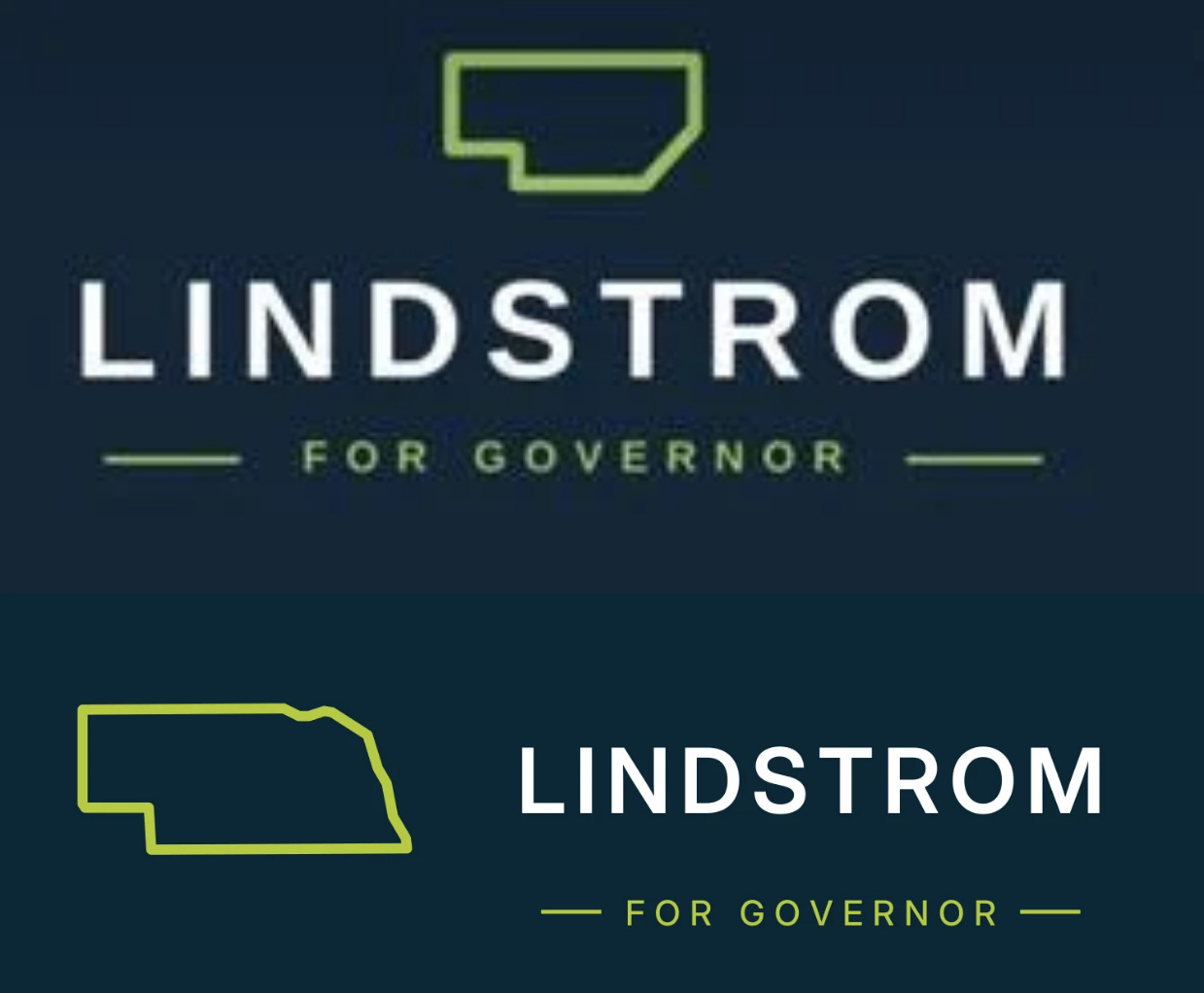
Logo blunder sparks instant backlash for Nebraska gubernatorial candidate. Less than 24 hours after Brett Lindstrom announced his nonpartisan bid for Nebraska governor, the former Republican state senator found himself under fire over a campaign logo featuring the shape of Nebraska with the southeast portion of the state lobbed off. The logo, which was used on a press release announcing his run, was replaced with a more accurate outline of the state on Tuesday. [Omaha World-Herald]
Fortune cookies have become the vessel for political messaging in Tennessee. A few days after Republican Sen. Marsha Blackburn released a now-viral campaign ad where she smashes fortune cookies by way of demonstrating her intention to “stop Communist China,” Mayor Freddie O’Connell released one, too. [The Tennessean]
U.S. Mint produces a $1 coin bearing Trump’s face. The final design for the commemorative coin, being released in the fall, was approved earlier this year by the U.S. Commission of Fine Arts, whose members were appointed by Trump. [Associated Press]
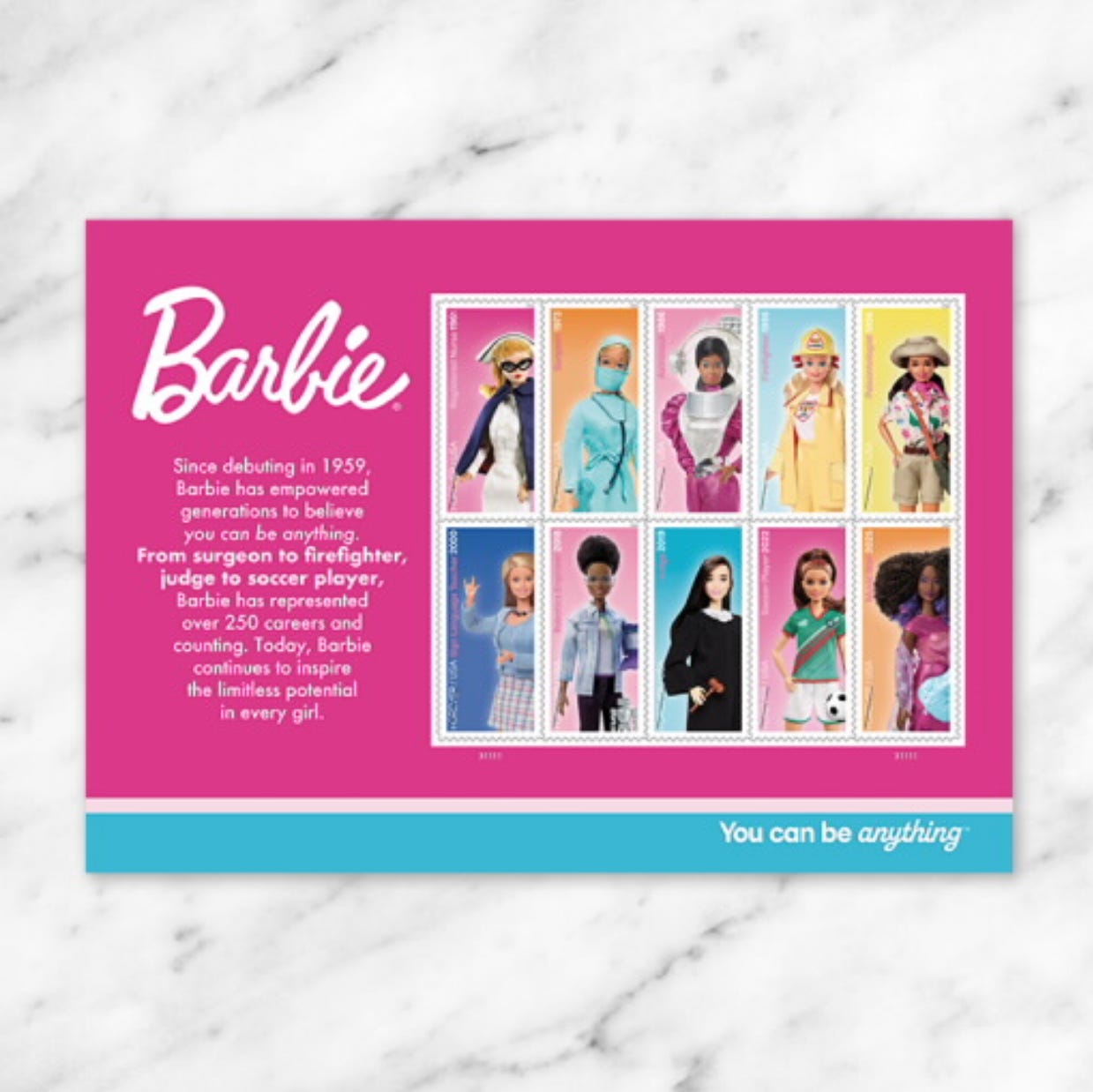
Barbie stamps make their debut. The stamps highlight the Barbie doll’s career journey, each featuring an era-appropriate doll dressed for a particular role: registered nurse, surgeon, astronaut, firefighter, paleontologist, sign language teacher, robotics engineer, judge, soccer player and musical artist. [USPS]