

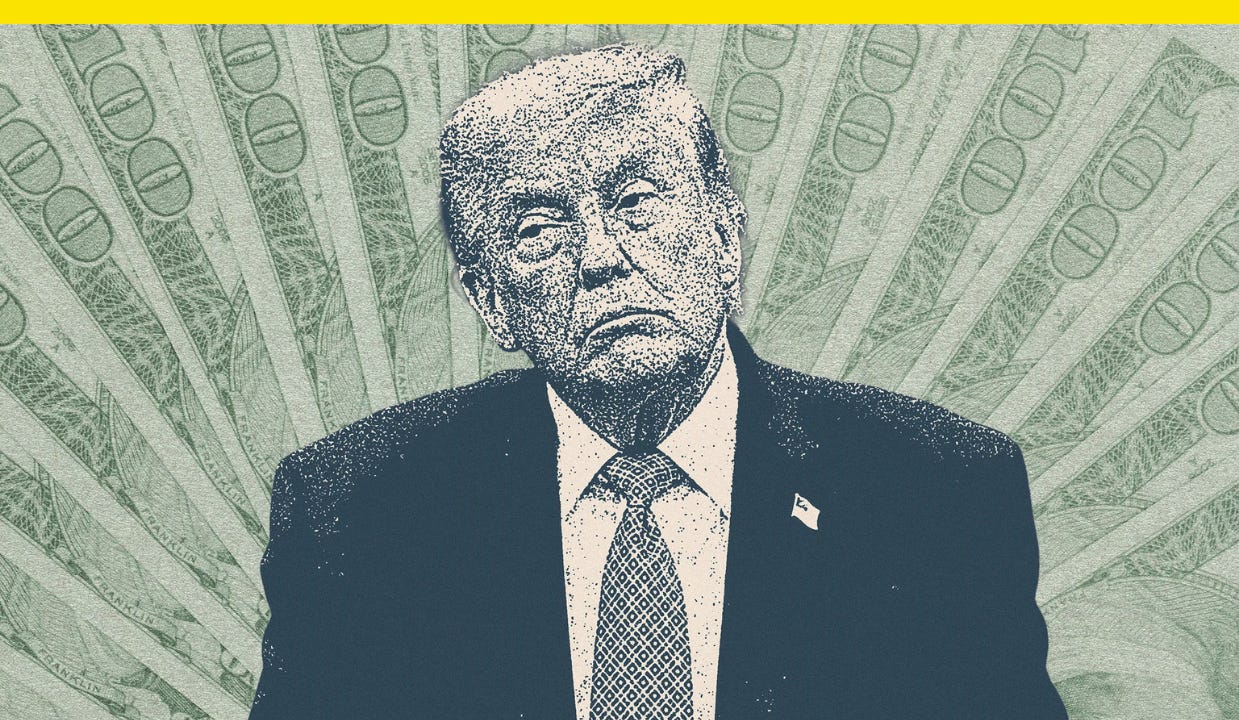
President Donald Trump’s name has never been less popular as a baby name than it is now, but he’s naming the next generation’s new savings accounts after himself anyway.
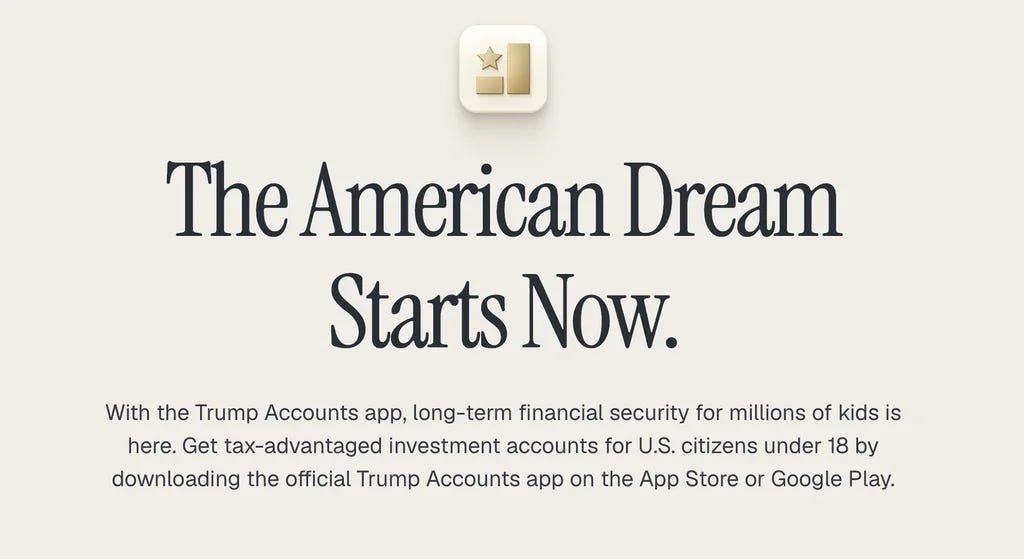
Fewer Americans named their children Donald in 2025 than any year in U.S. history going back to the 1880s, according to Social Security Administration data. But for kids born between 2025 and 2028, they’re now eligible for new tax-advantaged investment accounts for kids called “Trump Accounts.”Also known as 530A accounts, their official name in government communications and the law that created them is named for Trump, and that could prove to be a hindrance for parents turned off by the partisan association.
Just look to “Obamacare.”
After then-President Barack Obama signed the Affordable Care Act, or ACA, into law in 2010, critics of the healthcare law began calling it Obamacare as a pejorative, but the nickname stuck and eventually was adopted by proponents too.
“I have no problem with folks saying ‘Obamacares,’” Obama said during a 2011 town hall. “I do care. If the other side wants to be the folks that don’t care, that’s fine with me.”
But what you called the law mattered when pollsters asked. A 2013 Gallup poll found that when respondents were asked about the ACA, it had a 45% approval rating. When it was called Obamacare, though, its approval dropped to 38%.
Regardless of party affiliation, majorities of Americans support ACA provisions like prohibiting private health insurance companies from denying coverage because of a pre-existing medical condition or to pregnant women. Calling it Obamacare, though, connects the law by name with a president some don’t like. Since Obama left office and the daily drubbing of partisan politics, though, the law’s approval has soared, reaching a high of 66% last June, per KFF Health Tracking polls.
Research shows citizens use partisan cues or shortcuts to form opinions, and naming programs after presidents creates an immediate shortcut that might turn off voters of the opposite party, even if they might otherwise show support under a different name.
Democrats have put forward their own ideas for investment accounts for kids before. A “baby bond” program under the proposed American Opportunity Accounts Act cosponsored by Sen. Cory Booker of New Jersey would have been publicly funded and financially progressive, so the benefits wouldn’t most accrue to the wealthy who can most afford to fully fund the accounts to their maximum limits annually, as they can under the Trump administration’s program. (Though Booker’s proposal hasn’t passed, he has worked across the aisle with Sen. Ted Cruz (R-Texas) to urge CEOs to donate to the Trump administration’s new accounts.)
To get their own version of an account for kids passed under Trump, Republican lawmakers turned to flattery. An early proposal for the accounts called them “Money Accounts for Growth and Advancement” accounts to make an acronym for MAGA, but the accounts were renamed “Trump accounts” for the One Big Beautiful Bill Act passed last year.
Trump has long worked to take credit for government programs and spending (even if he had nothing to do with it), and the Trump accounts are the latest example. If he really wants them to have the best chance of success, though, the best thing he could do might be to rebrand the accounts by a less polarizing name. Parents aren’t naming their kids after Trump these days. Perhaps the federal government could follow.
This story was first published in Fast Company.



What if America 250 happened under a Democrat?
The opening of the Obama Presidential Center last month had an all-star lineup of performers, a bipartisan guest list, and speeches encouraging the country to rise to its highest ideals. On social media, some Democrats called it the real America 250.
In an alternate universe where President Donald Trump lost the 2024 race, and the East Wing tear down, tariffs, and Iran war never happened, America’s 250th anniversary would certainly feel much different. There were plans for a parade in Washington, D.C., a festival put on by the Smithsonian on the National Mall, and coins that were never minted.
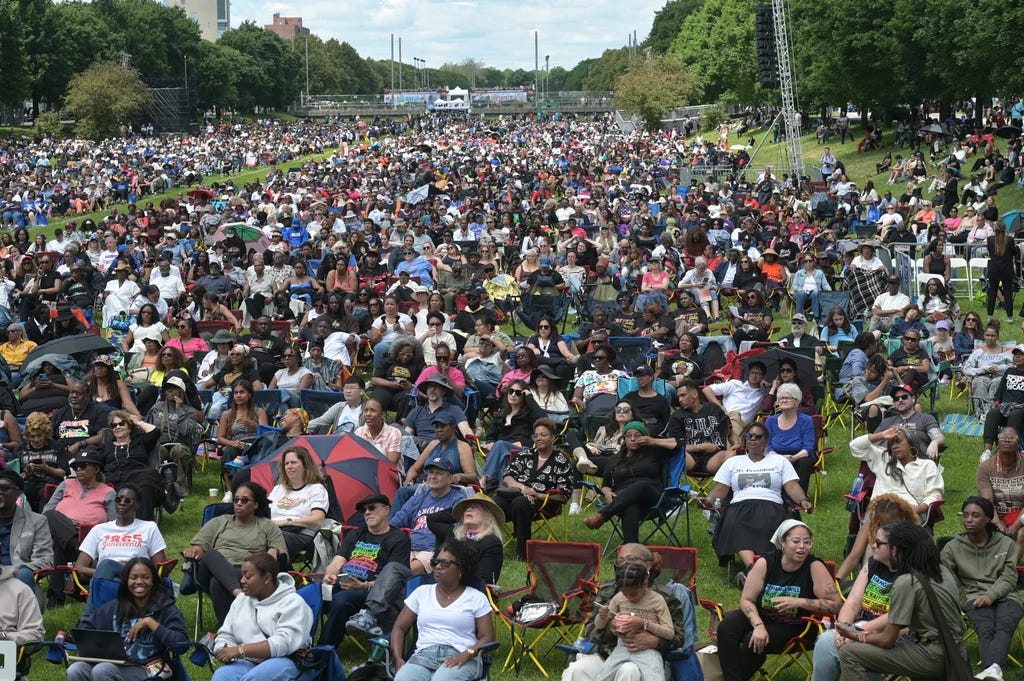
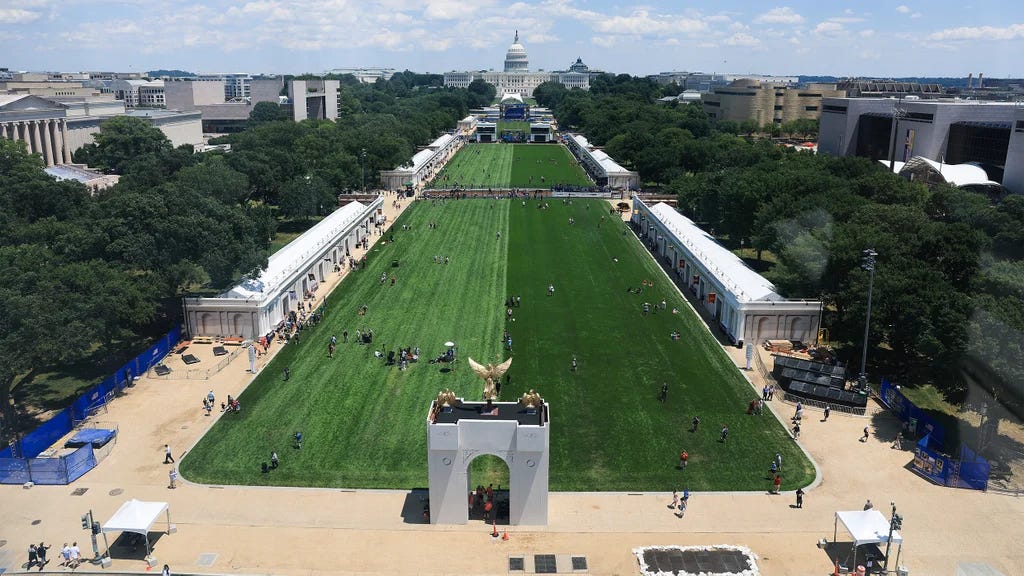
Instead, we got a UFC fight, Trump rally, and a fair that’s drawn negative attention for its soft attendance. Under a President Kamala Harris, it could have looked different, according to Democrats.
Imagine a Beyoncé concert for 1 million people on the National Mall
“You don’t have to squint real hard to see a Beyoncé concert for literally 1 million people on the Mall,” one Democratic professional who requested anonymity because of their work on the Great American State Fair tells me about what a Democratic America 250 might have been like. “It’s not hard to see how that could have been.”
Plans for America’s 250th anniversary celebrations began a decade ago when Congress created the United States Semiquincentennial Commission, which then-President Barack Obama signed into law in 2016. Since then, the non-partisan group has been rebranded once, and it’s lasted through to both Trump administrations and former President Joe Biden’s term. Plans have evolved and changed.
The Smithsonian Institution’s Folklife Festival, held annually in Washington, D.C., wasn’t able to be hosted on the National Mall this year as it was for the 1976 Bicentennial since Trump’s Great American State Fair booked the space. Called “Of The People: The Smithsonian Festival of Festivals,” it’s now on the road for a national tour in cities from Detroit to Tucson.
There were plans for a D.C. parade with “diverse floats” and marching bands, as well as concerts across the country that capture “the nation’s cultural diversity,” according to a September 2024 playbook created by America250 and obtained by Time.
At the U.S. Mint, which approved designs for coins commemorating civil rights during the Biden administration, Trump’s administration scrapped those plans for coins focused heavily on America’s colonial and Revolutionary War eras.
A more inclusive, accessible approach
Trump’s handling of the nation’s anniversary polarized the festivities at a time when his approval rating has never been lower. When artists dropped out of performing for the state fair, some said it was because they had assumed it was a nonpartisan event, when in fact it was the product of Freedom 250, Trump’s own parallel organization that’s been planning semiquincentennial events.
An America 250 under a Democratic president who hadn’t created their own parallel commission—or even a different Republican president—may well have been more rigorously nonpartisan and attracted more big-name corporate sponsors and cultural institutions for partnerships.
Trump’s sponsors have included the prediction market Polymarket for the UFC fight, while trillionaire donor Elon Musk’s SpaceX and Northrop Grumman, a defense contractor, are among the relatively few non-state exhibitors at the fair. Instead of national name brands looking to reach a broad audience for these Trump-affiliated events, it’s businesses that have business in front of the Trump administration.
Rep. Jared Huffman, a California Democrat who’s accused the Trump administration of corruption, white washing history, and platforming Christian nationalism with the anniversary, said Trump is attempting to “hijack” it.
“The administration seems to be usurping this special occasion, shifting it to a gilded tribute to the president and rewriting of our nation’s history—but America is so much more than that,” Huffman said in a statement.
A branding exercise for sitting presidents
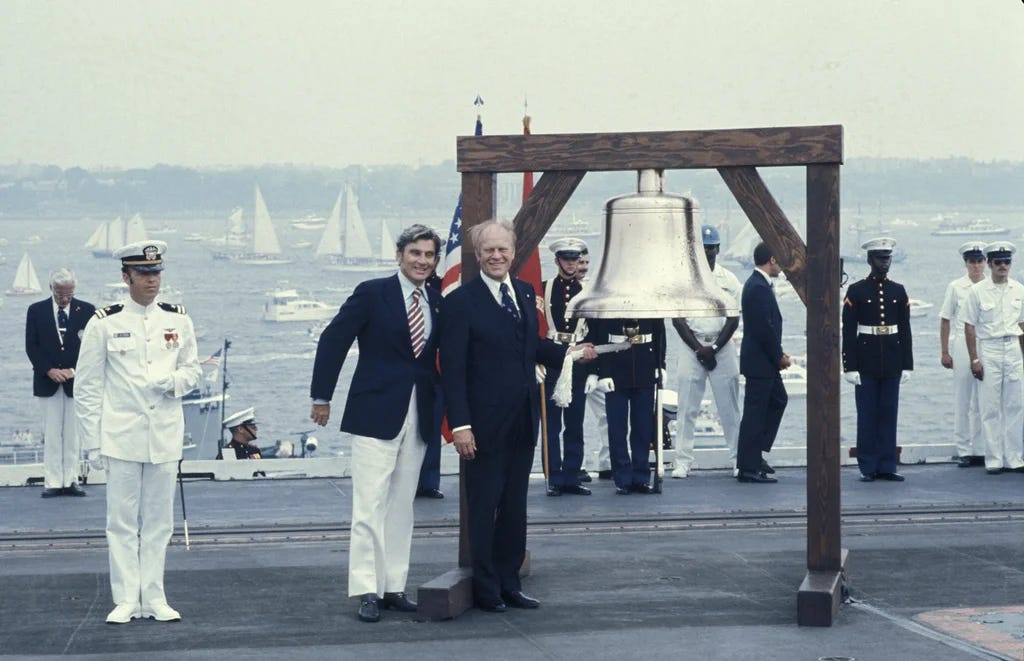
This isn’t the first time party plans for a big American birthday have changed from president to president. Ahead of the Bicentennial in 1976, Lyndon Johnson imagined a Worlds Fair to highlight Great Society and Model Cities policies and programming. When Richard Nixon succeeded him, his administration immediately tried to create a patriotic celebratory event that was targeted towards his constituency, says M.J. Rymsza-Pawlowska, an associate professor of history at American University. After Nixon resigned amid investigations into the Watergate break-in and cover-up, Gerald Ford ended up taking a less partisan approach to the celebration.
“What was different is that the American people really pushed back at this, leading Nixon to back off, so the final form of the Bicentennial, under Ford, was a decentralized grassroots affair,” Rymsza-Pawlowska says.
Presidential administrations typically view national commemorations as an opportunity to highlight their own policy and symbolically connect their administration to the direct legacy of the founding moment, she says.
Rather than bemoaning what could have been, many Americans are making the most of what they’ve got, more interested in how they’re celebrating America’s anniversary at home in their communities than what the president is doing in Washington.
Americans defining 250 for themselves
America250 says more than 1,200 grassroots celebrations are planned across the country, while “America Gives,” its nationwide service initiative, has racked up more than 38 million volunteer hours so far as part of an attempt to make 2026 a record-setting year of volunteer service.
And those concerts coast-to-coast that the Biden-era planning document called for? They still happened. Christina Aguilera was among the headliners at The One Philly: Unity Concert for America in Philadelphia, though she couldn’t perform due to the weather (which is shame, considering the outfits she and her dancers planned to wear) while the July 4th Benefit Show at the LA Memorial Coliseum featured Chris Stapleton and The Smashing Pumpkins. The Giving 4th Broadcast Benefit Show at One Times Square on Independence Day Eve also featured performers.
There might not be a Beyoncé concert on the National Mall. Still, the bipartisan America250 is carrying out its programming admirably, despite a funding shortfall and bad bad vibes (four in 10 Americans feel “proud” about the country’s anniversary, per an Associated Press-NORC Center for Public Affairs Research poll).
“We are grateful for all the support we’ve received from Congress, and from private organizations and individuals—and continue to work to raise the funds we need to complete our work on a celebration that is worthy of the anniversary it commemorates,” an America250 spokesperson says.
While Trump’s Freedom 250 has at times seemed to overshadow the bipartisan efforts to mark the occasion with spectacle, America’s 250th anniversary doesn’t have to be defined by programming catering to one man and his political base. At local block parties and service projects across the country, Americans defined the anniversary in their own communities for themselves by connecting with others and looking outwards.
This story was first published in Fast Company.
Have you seen this?
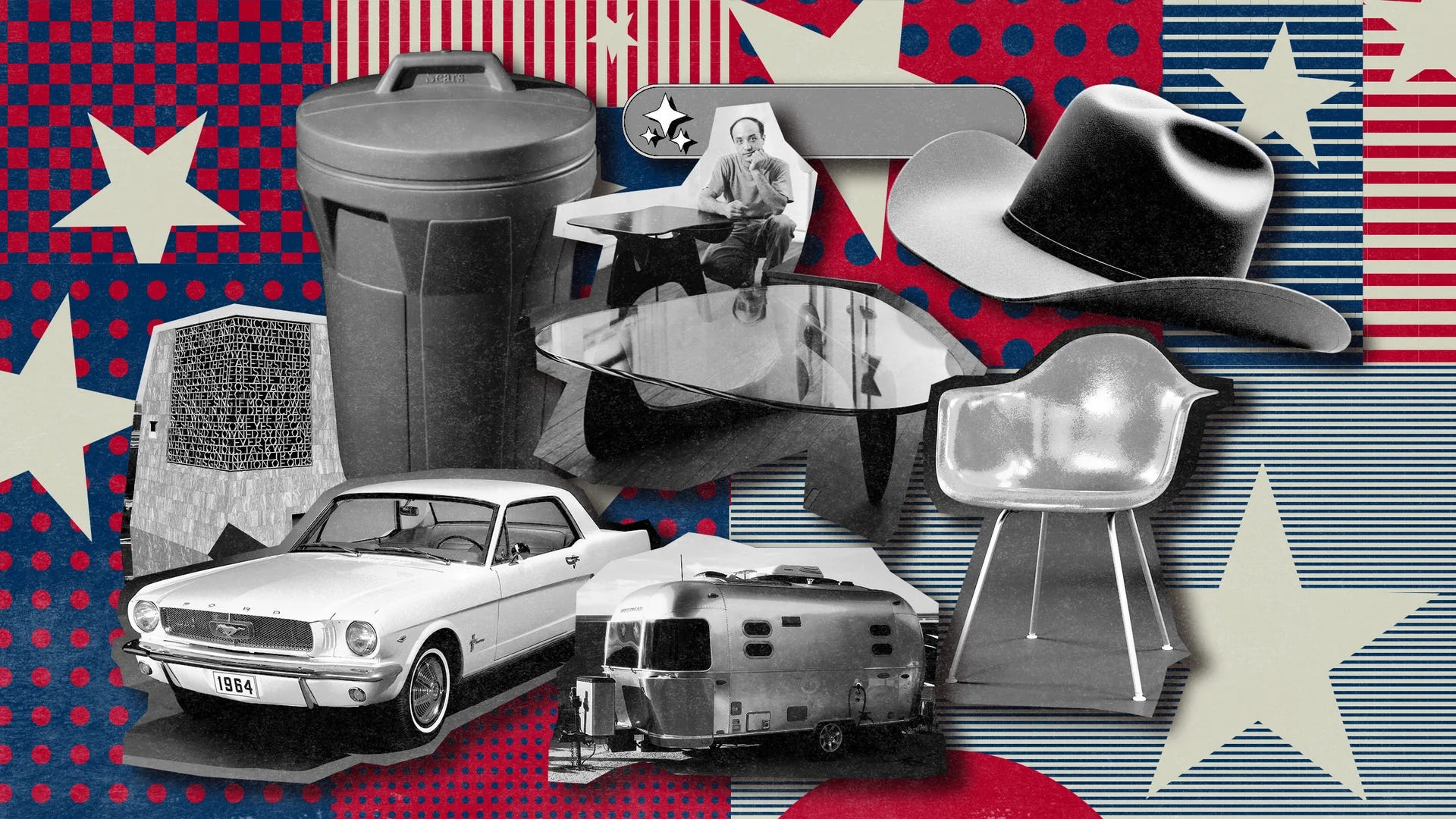
The designs that defined America. More than 30 designers tell Fast Company what objects, ideas, and images define a country that’s constantly in flux, including “We The People,” the Coca-Cola logo, and the Empire State Building. [Fast Company]
New White House report alleges “anti-white” bias at Smithsonian. The 162-page broadside focuses on the National Museum of American History, while taking shots at key art institutions. [Artnet News]
Interior secretary says Trump administration will use the same company to repair Lincoln Memorial Reflecting Pool damage. The administration has faced scrutiny for awarding a multimillion-dollar, no-bid contract to a company that previously worked on Trump properties. [NBC News]
