want to reach young voters? try texting in lowercase
Plus: This memorial was designed to honor every U.S. veteran from the Revolutionary War to today

Few groups are as hard to reach as young voters, but maybe you’re just texting them too loud.
An experiment conducted during the 2024 campaign in Virginia by State Navigate, a nonpartisan nonprofit the provides the public information about state legislatures, found lowercase texts had a higher response rate among the youngest recipients than sentence case, where the first word of each sentence is capitalized.
The group was polling for a Virginia election survey and sent texts using three different versions of the SMS copy to its youngest response groups.
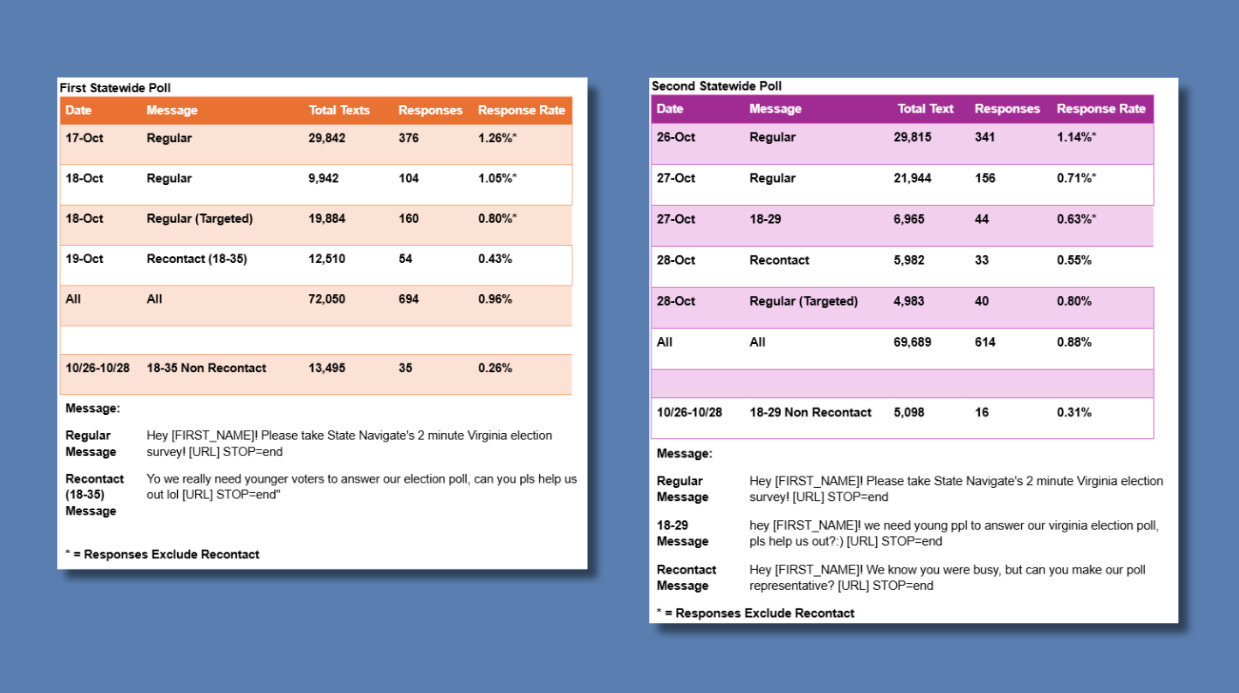
The first text was sent as part of a statewide poll between October 17 to 18, 2024 asking all recipients regardless of age to take the survey. It read, “Hey [FIRST_NAME]! Please take State Navigate’s 2 minute Virginia election survey! [URL] STOP=end.”
The second, sent on October 19, 2024, retargeted those ages 18 to 35, and it was less formal, but it also read like a Baby Boomer trying talk slang: “Yo we really need younger voters to answer our election poll, can you pls help us out lol [URL] STOP=end.”
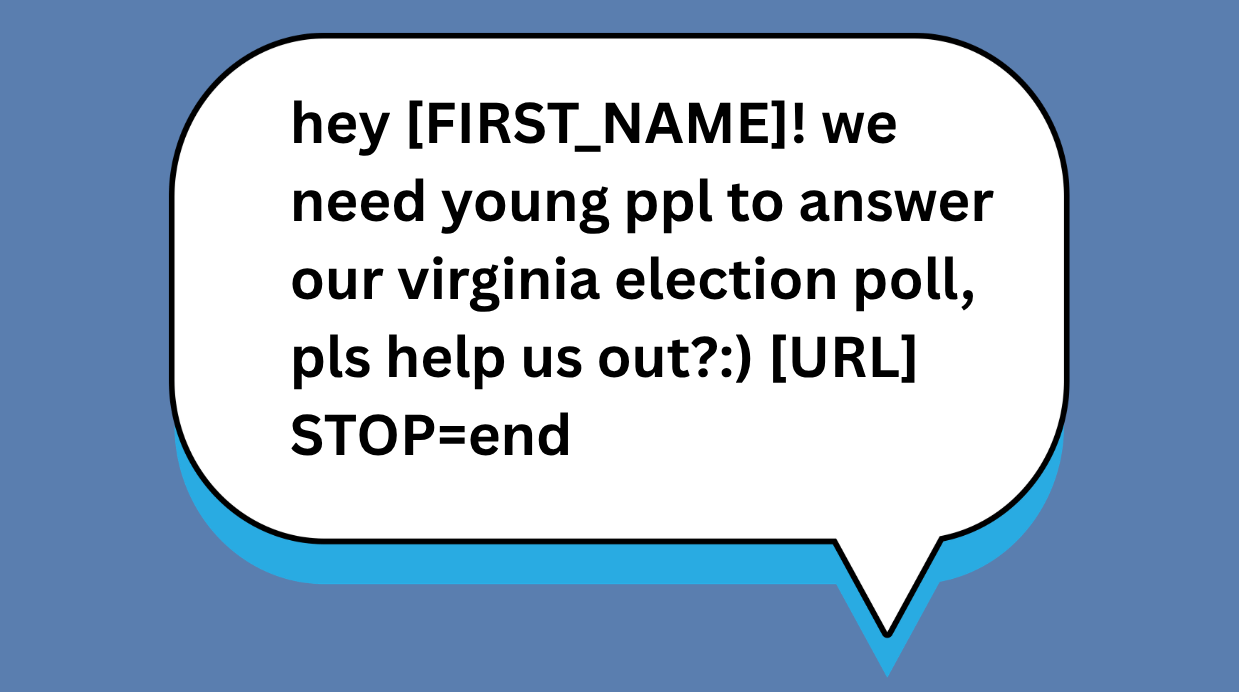
The third message was tested during a second statewide poll just over a week later, on October 27, 2024. It used SMS copy that didn’t seem as if it was trying quite as hard. It used shorthand abbreviations, all lowercase letters, and ended with a smiley. “hey [FIRST_NAME]! we need young ppl to answer our virginia election poll, pls help us out?:) [URL] STOP=end.” Only the recipient’s name was in uppercase.
The actual percentage increase for the response rate here might not seem all that great — most people don’t respond to these texts, after all — but it was meaningful enough for their surveys, which all too often undercount young respondents. Their response rate grew from 0.26% in the first text to 0.43% in the second to 0.63% in the third, according to the group. The result was a survey that was more representative.
State Navigate executive director Chaz Nuttycombe wrote on social media that the lowercase text increase its sample of 18 to 29 year olds from 1% to 9%.
Capitalization’s role in political communication has come to the fore in the Trump era thanks to President Donald Trump’s use of all-caps and unconventional capitalization in his social media posts for words and phrase like Impeach, Wall, Witch Hunt, and Complete and Total Endorsement.
For Trump, his irregular capitalization is “only for emphasis, not b/c they should be capitalized,” he’s said, and an analysis of his tweets in his first term confirmed he speaks more informally online than traditional politicians. That’s been interpreted as more unfiltered and authentic than the standard, staid style of traditional political communication.
While random capital letters may seem more authentic for Boomers, for Gen Z, it’s lowercase letters that read as more casual and authentic. Sentence case can feel too formal for a generation that turns off auto-capitalisation on their phones, while artists have used lowercase song titles in their music, like Ariana Grande, who’s styled her songs that way since 2018 for every single from “no tears left to cry” to “petal,” pushing the trend in pop culture.
State Navigate said in a blog post that targeting hard-to-reach younger voters in their language works. For voters who text in all lowercase letters, that might mean ignoring the rules of grammar :)



This memorial was designed to honor every U.S. veteran from the Revolutionary War to today
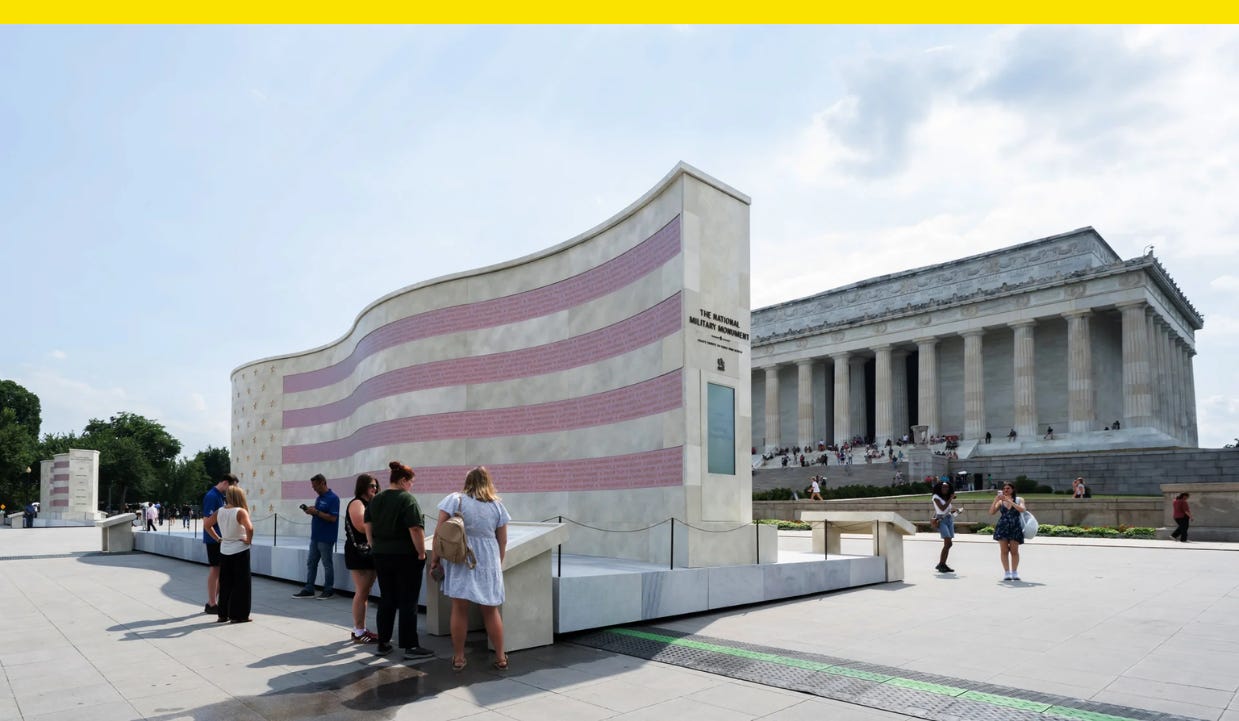
War memorials on the National Mall commemorate those who fought in one conflict at a time. A new temporary memorial that’s gone up on the steps of the Lincoln Memorial covers all of them.
The National Military Monument, an installation from the financial services company USAA for military members and spouses, is dedicated to all of the more than 41 million Americans who’ve fought in every war from the Revolutionary War to the conflicts of the 21st century. USAA installed the work to mark the 250th anniversary of America’s founding, and it was designed to mix the look of traditional monuments with cutting-edge tech.
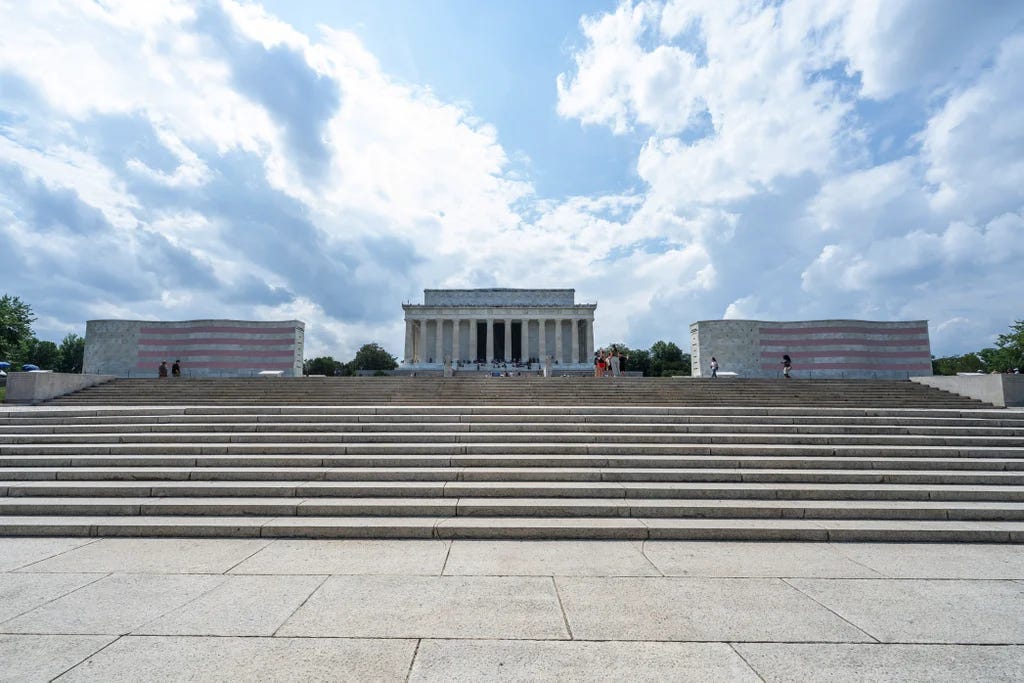
The memorial is made up of two double-sided structures designed to look like fluttering U.S. flags. Each is positioned on either side of the steps leading up to the Lincoln Memorial. Each section is 18 feet tall and 62 feet wide, and the blocks used to make it were painted to resemble Indiana limestone, the stone used to build the Lincoln Memorial walls and columns.
Embedded in the structure are 528 LED screens that act like the stripes on the flag, and they display the names of U.S. service members, with each name separated by stars. It was designed by Atomic Designs, an event production company that’s designed staging for events like Jingle Ball and World’s Strongest Man.
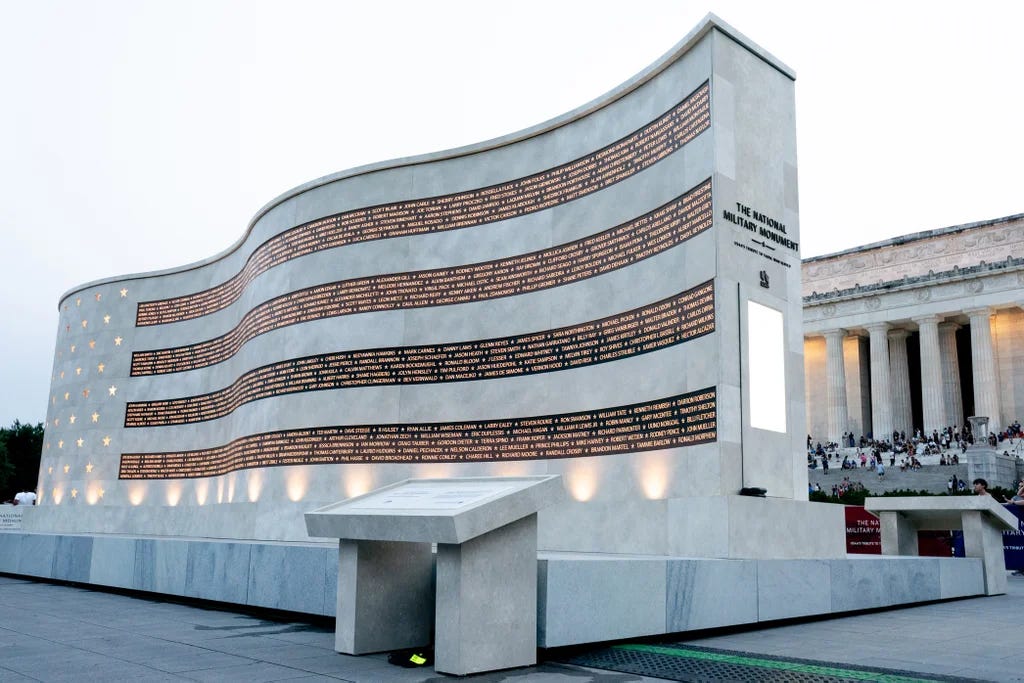
With no single historical record of every American who’s served in the armed forces, USAA compiled its own list of veterans from sources including the National Parks Service, WWII Army Enlistment, POW lists, veteran service organizations, and USAA members who opted in.
There are currently nearly 41 million names being displayed. George Washington was the first name displayed for its public opening on July 28, and the Unknown Soldier will be the last. “John Smith” is the most common name in the installation, appearing 4,487 times.
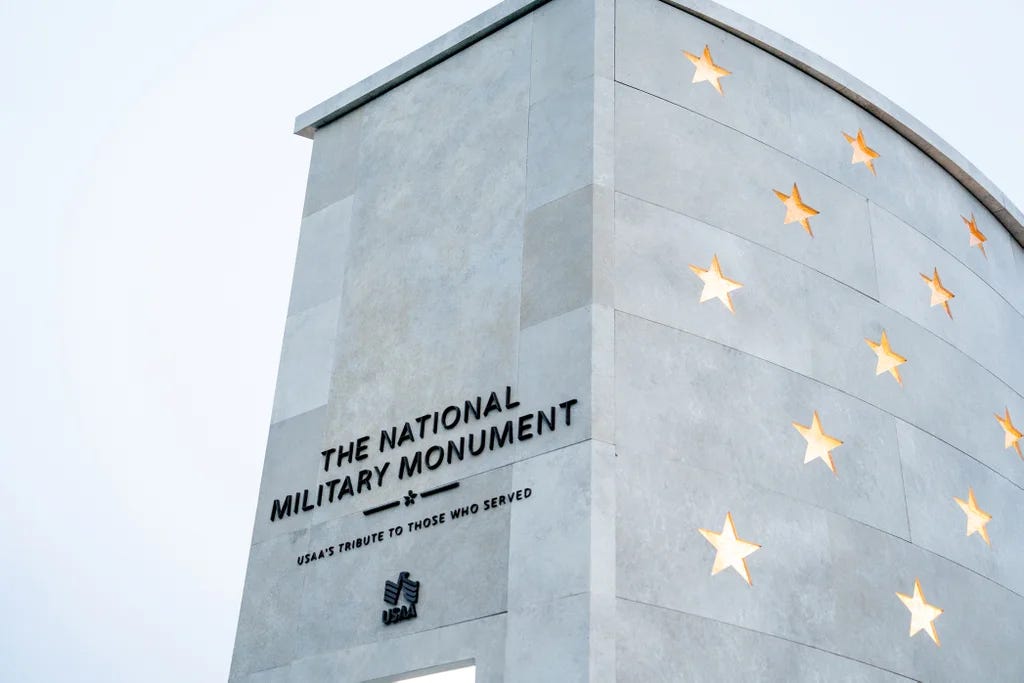
It’s a living memorial. There’s an online portal and kiosks at the installation people can use to search for loved ones and submit the names of those who aren’t included. It can display as many as 2.54 million names a day for 45 seconds each, which means it would take about 16 days to go through every name.
A permanent memorial with as many names wouldn’t fit as neatly on the National Mall. By mixing the look of traditional monuments with video screens and public participation, though, the National Military Monument shows that it doesn’t take a permanent monument set in stone to make a big impact.
This story was first published in Fast Company.
Have you seen this?
Trump won his own golf tournament again and we’re so, so proud of him. U.S. allies are worried we’re headed for a strategic defeat in Iran, but at least our president won his own golf tournament over the weekend. Plus: What Tate McRae said about being branded MAGA. [Whig by Hunter Schwarz]
The MAGA media machine is fracturing. Once united in support of President Trump, right-wing influencers are embroiled in feuds and losing viewers, creating a problem for Republicans in the midterm elections. [The New York Times]
The Trump administration’s latest MAGAslop is screens upon screens. The A.I.-generated video is supposed to parody Nicole Kidman's AMC Theatres ad, but it looks like someone’s about to rob the White House before they stumble upon screen in the White House that just plays clips. [WhiteHouse/X]