
The designer behind Calibri,the font the State Department is ditching, speaks out
Plus: Trump wants the U.S. to build tiny cars

Calibri and Times New Roman have been at war for years. And now the two fonts are once again pitted against each other after the U.S. State Department declared it will be swapping its current official typeface, Calibri, for Times New Roman. It’s a full-circle moment, considering the State Department ditched Times New Roman for Calibri in just 2023.
Secretary of State Marco Rubio wrote that switching to Calibri was “wasteful” and “achieved nothing except the degradation of the department’s official correspondence” in an internal department memo obtained by Reuters and The New York Times.
The type designer behind the sans-serif font Calibri tells me Rubio’s decision is “hilarious and regrettable.”
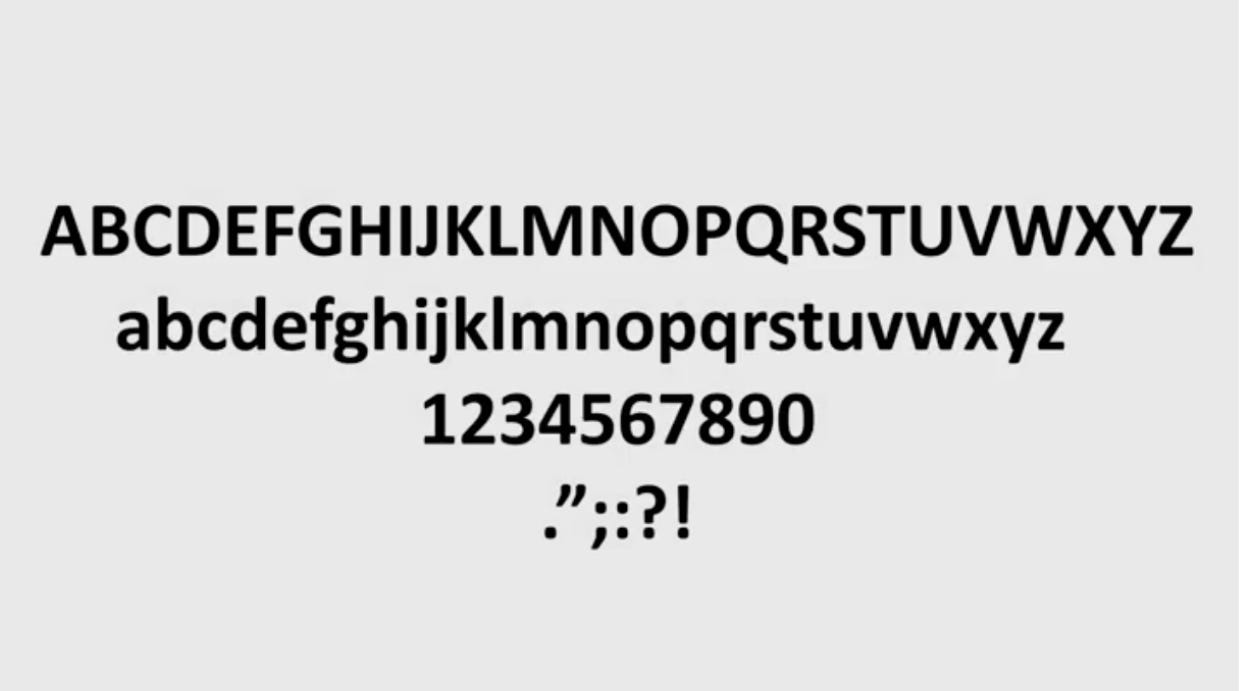
Lucas de Groot designed Calibri in 2007 specifically for readability on computer screens. The width and curvature of its simple letterform was optimized to be easy to read, and it replaced Times New Roman as the default font in Microsoft Office in 2007 before being replaced by Aptos in 2023.
In 2023, the State Department decided to replace Times New Roman with Calibri for all official communications and memos. It was a bid for greater accessibility throughout the organization. At the time, then-Secretary of State Antony Blinken said that Times New Roman “can introduce accessibility issues for individuals with disabilities who use Optical Character Recognition technology or screen readers.”
Not everyone was happy about the decision, but de Groot believes it was the right choice.
“There were sound reasons for moving away from Times,” de Groot tells me in an email. “Calibri performs exceptionally well at small sizes and on standard office monitors, whereas serif fonts like Times New Roman tend to appear more distorted.”
A DEI typeface
In the memo, sent with the subject line “Return to Tradition: Times New Roman 14-Point Font Required for All Department Paper,” Rubio called Calibri “informal” and said it “clashes” with State letterhead. He also criticized it as a “radical” diversity, equity, inclusion, and accessibility initiative.
Blinken, Rubio’s predecessor, made the 2023 change to Calibri at the recommendation of the department’s office of diversity and inclusion due its accessibility and ease to read for people with disabilities. Now it’s getting swept up in Trump’s wider “war on woke.”
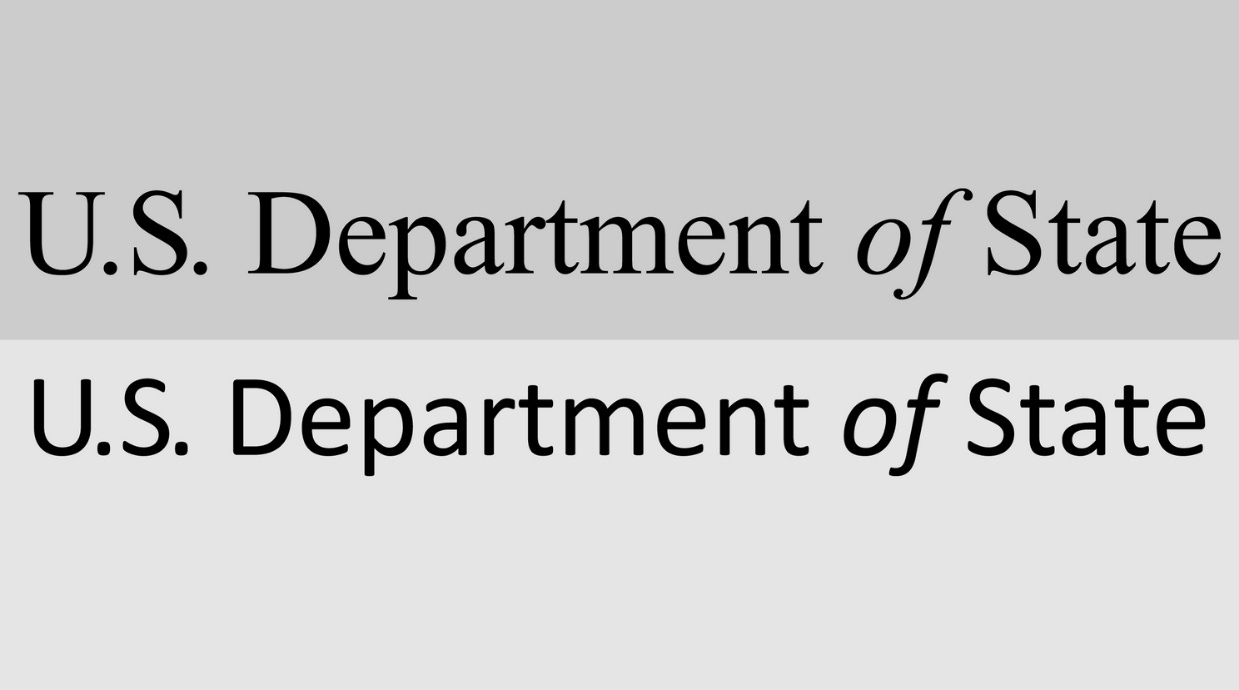
Serif typefaces, with their small feet, or serifs, on the letterform, are sometimes perceived to be more conservative. Meanwhile, some believe that sans serifs read as more modern and progressive, though that’s far from a hard-and-fast rule. After all, Trump loves a sans-serif font, and Sen. Bernie Sanders (I-Vt.) has used serif typography for his campaign logos.
“Serif fonts are often perceived as more traditional, but they are also more demanding to use effectively,” says de Groot, noting that the spacing is noticeably inconsistent in all-capital-letter Times New Roman in words like “Chicago,” and the font appears too thin and sharp when printed at high quality.
For many readers, though, font preference has less to do with politics than it does personal taste and what they’re used to seeing. There were interoffice complaints when the State Department switched to Calibri that sound an awful lot like normal office grumblings when one has to switch from Slack to Teams for messaging.
“I think the idea that a typeface is woke is kind of ridiculous,” says type designer Jonathan Hoefler, who designed the Biden-Harris typography and is the co-creator of Gotham, a typeface that’s now been used by presidential candidates of both parties.
Typefaces aren’t good or bad, Hoefler says. They are simply designed to solve different problems. Times New Roman was designed for newspaper text, and Calibri was designed for a screen.
“None of these are bad typefaces; they’re just designed around their circumstances,” he notes.
This story first appeared in Fast Company.
Trump wants the U.S. to build tiny cars
American Kei cars in a K-shaped economy?

Cars are more expensive than ever, and Trump thinks smaller cars are the solution. Speaking last week about small Japanese Kei cars, Trump said, “They’re very small, they’re really cute,” and in a social media post on Friday, he said small cars were now approved to be built in the U.S.
While minicars such as Kei (pronounced like “kay”) cars are popular in Europe and Asia, state and federal laws have prevented them from being registered to drive on public roads in the U.S. Automaker Stellantis announced Monday it would make its electric two-seat Fiat Topolino (Italian for “little mouse”) in the U.S., but don’t expect others to rush in, as building out the infrastructure to manufacture them domestically would take time, and generally, American consumers don’t buy tiny cars.
The cheapest car in the U.S. went extinct earlier this year after the last new car available for under $20,000, the Mitsubishi Mirage, sold out, and soaring costs associated with cars and other goods are contributing to a sour mood on the economy. A Reuters/Ipsos poll last month found just 26% of Americans approve of Trump’s handling of the cost of living.
Trump’s solution to build smaller cars is in line with his wider approach to affordability by encouraging Americans to make do with less. “You can give up certain products,” Trump said Tuesday at an event about affordability in Pennsylvania. “You can give up pencils… You know, every child can get 37 pencils. They only need one or two, you know. They don’t need that many.” He also said daughters need just two or three dolls, not 37.
The new Kennedy Center Honors medal was designed by Tiffany & Co.
The White House called the old awards designed by Ivan Chermayeff “tacky.”
Sometimes I wonder if all this *waves hands around* could have been avoided if we just let this diva host the Golden Globes or something.
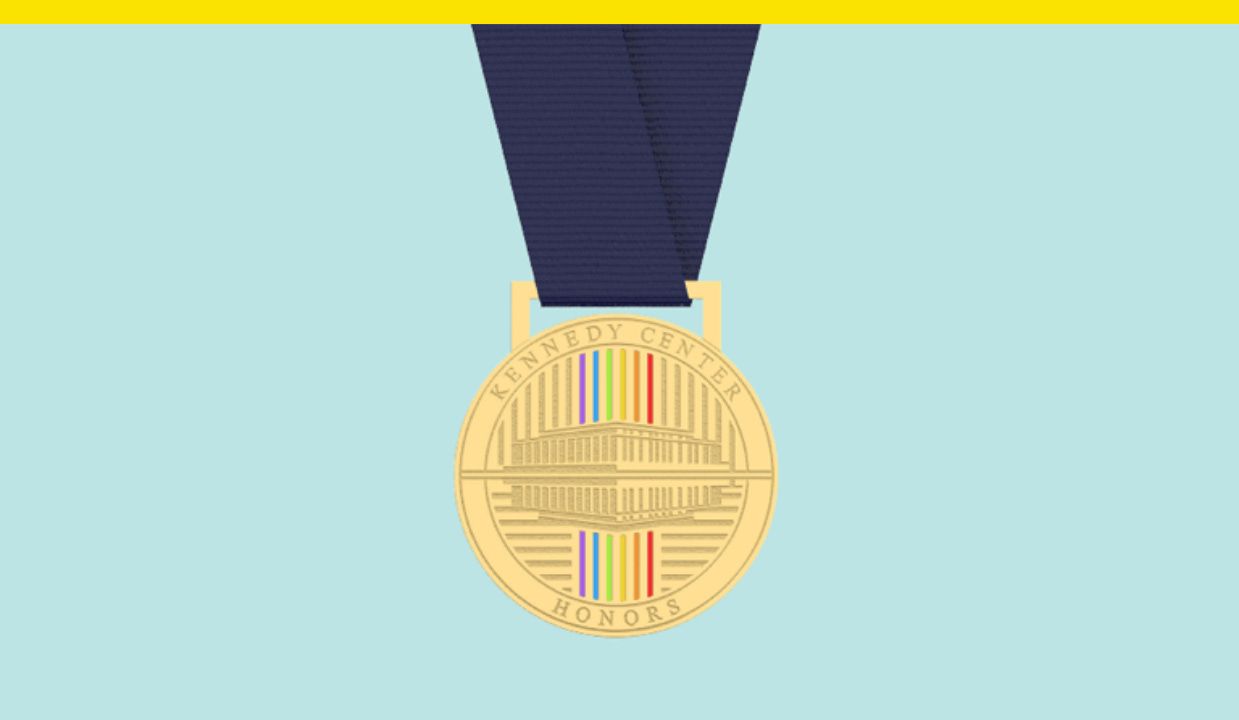
Trump became the first U.S. president to host the Kennedy Center Honors on Sunday, and the honorees were the first to receive new medallions designed by Tiffany & Co. The medallion shows an etching of the Kennedy Center and a rainbow’s worth of colored lines as a callback to the original awards, which were rainbow laurels that the White House called “tacky” on social media.
The old rainbow laurel was used since 1978 and designed by the late, famed graphic designer Ivan Chermayeff, whose work includes logos for National Geographic, PBS, the NBC Peacock, and more. Chermayeff told the Washington Post in 2008 that the colors represented the “spectrum of many skills within the performing arts. Singing, dancing, and so on.”
Dolly Parton, who received the honor in 2006, had her white Oscar de la Renta dress for the ceremony designed specifically for the award, something Chermayeff said he didn’t envision. “Making a selection about what you’re going to wear is challenging and difficult enough. And to have an Oscar de la Renta design it? That’s something,” he said of Parton’s dress.
Have you seen this?

Type artist who created the font the White House now uses says “f*** Trump.” “It makes me proud to see other people use [the fonts] in ways that are enriching. But I don’t love that the White House uses it at all.” [Jezebel]
Frank Lloyd Wright didn’t just design buildings—he invented fonts too. Wright’s letterforms have survived, not just on his architectural drawings, but in the form of digital typefaces based on his letters. [Artnet News]
Scientists are increasingly worried A.I. will sway elections. A.I. models can meaningfully sway voters on candidates and issues, including by using misinformation, and they are also evading detection in public surveys according to three new studies. [404 Media]
New fundraising platform ignites MAGA cash clash. The new platform — called Impact — will compete with the party’s dominant small-dollar fundraising partner, WinRed, for supremacy over the GOP gold mine. [Axios]
