Inside America's official design encyclopedia
Plus: Here’s what actually happens to a politician’s fundraising numbers when they get mean

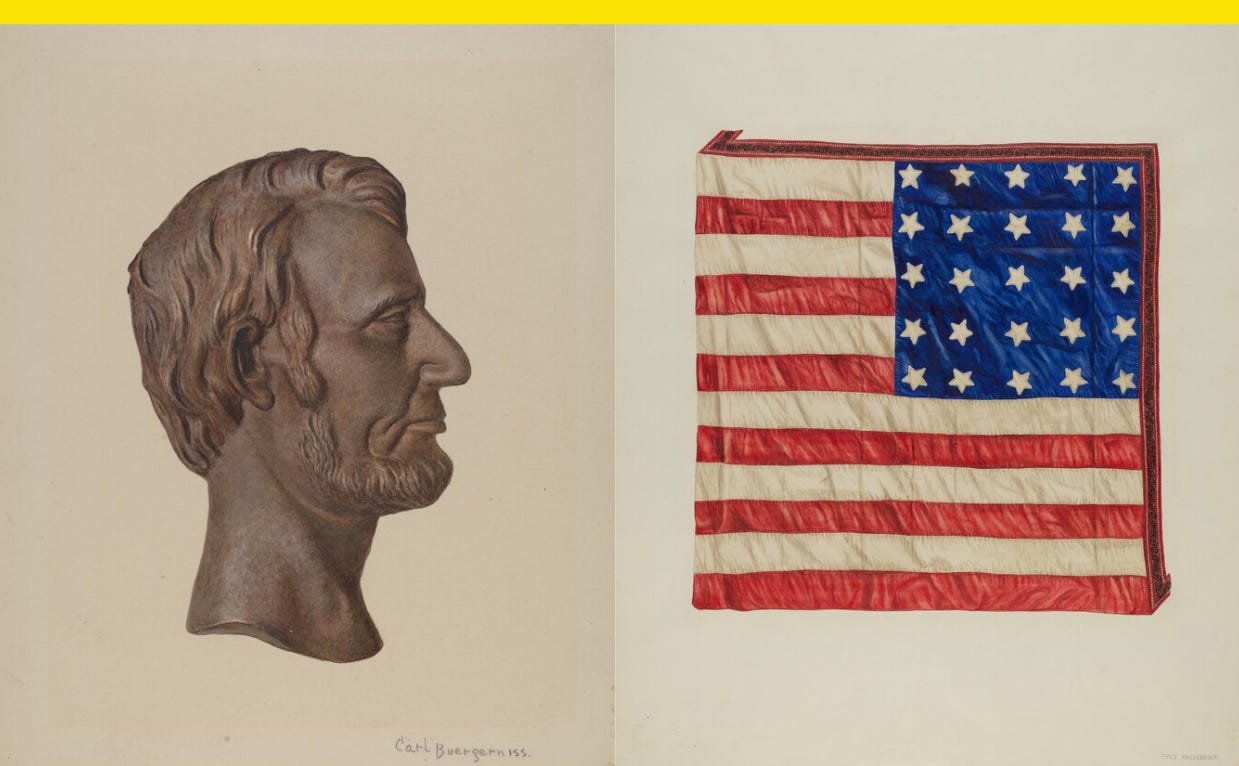
What is American design? More than 1,000 artists worked to answer that question on a scale never before attempted nearly a century ago by producing a handmade visual encyclopedia of U.S. material culture called The Index of American Design. It’s a national treasure.
The index is extensive, made up of more than 18,000 watercolor drawings plus photos of objects including textiles, toys, furniture, clocks, clothing, dish wear, decor, and weather vanes from colonial times through the 1800s. Today, it’s available as an online resource for learning about early American design and a testament to the American heritage aesthetic.
The Index of American Design was part of the Federal Art Project, the U.S. government’s Great Depression-era New Deal visual arts program, and it started in 1935 after a conversation between textile designer Ruth Reeves and New York librarian Romana Javitz about the difficulty in finding examples of traditional American craftwork. Though the fashion magazines of their day showed clothing and designs from Europe and the upper class, they left out the material culture of American every-men and -women, like the American sunbonnet, which was cut uniquely.
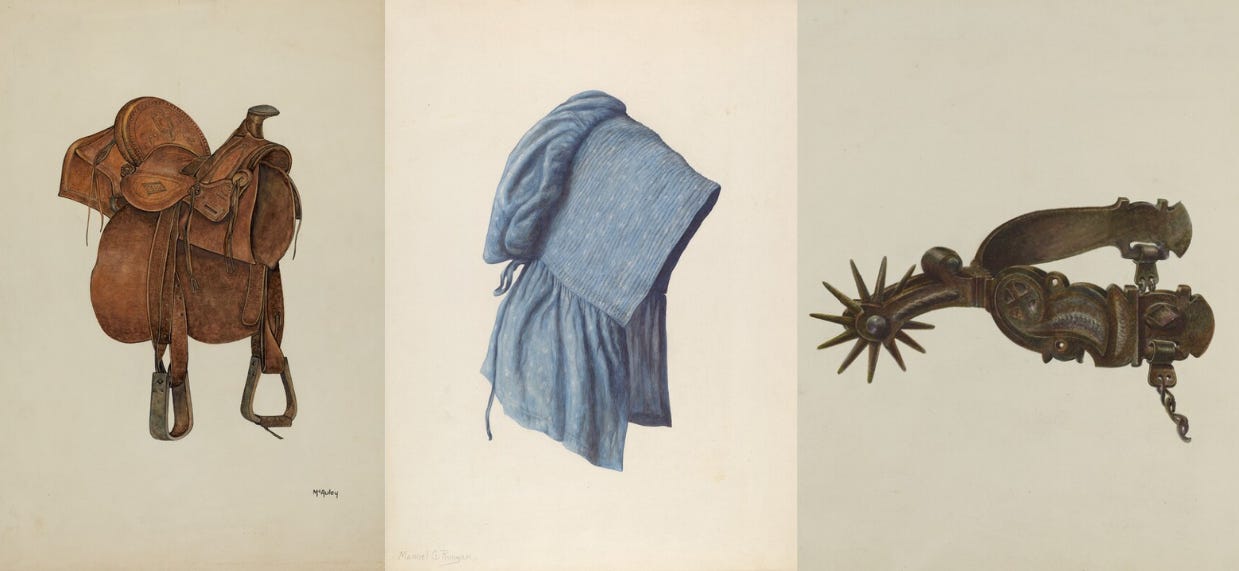
“I couldn’t find decent pictures of sunbonnets,” Javitz said in 1965 in an interview for the Archives of American Art. “We had any amount of material on society because of… Harper’s Bazaar and Vogue and Vanity Fair, all those magazines… We can give you what a society woman would wear in the Riviera, and what her dog looked like in South Hampton. But we couldn’t find a sunbonnet.”
Reeves proposed the idea of an American design index to officials, and the resulting project eventually included offices in 34 states and D.C. It employed state administrators, artists, and researchers cataloging and drawing entries, according to the Smithsonian’s National Gallery of Art, or NGA, where The Index of American Design is housed today and makes up some 12% of its entire collection.
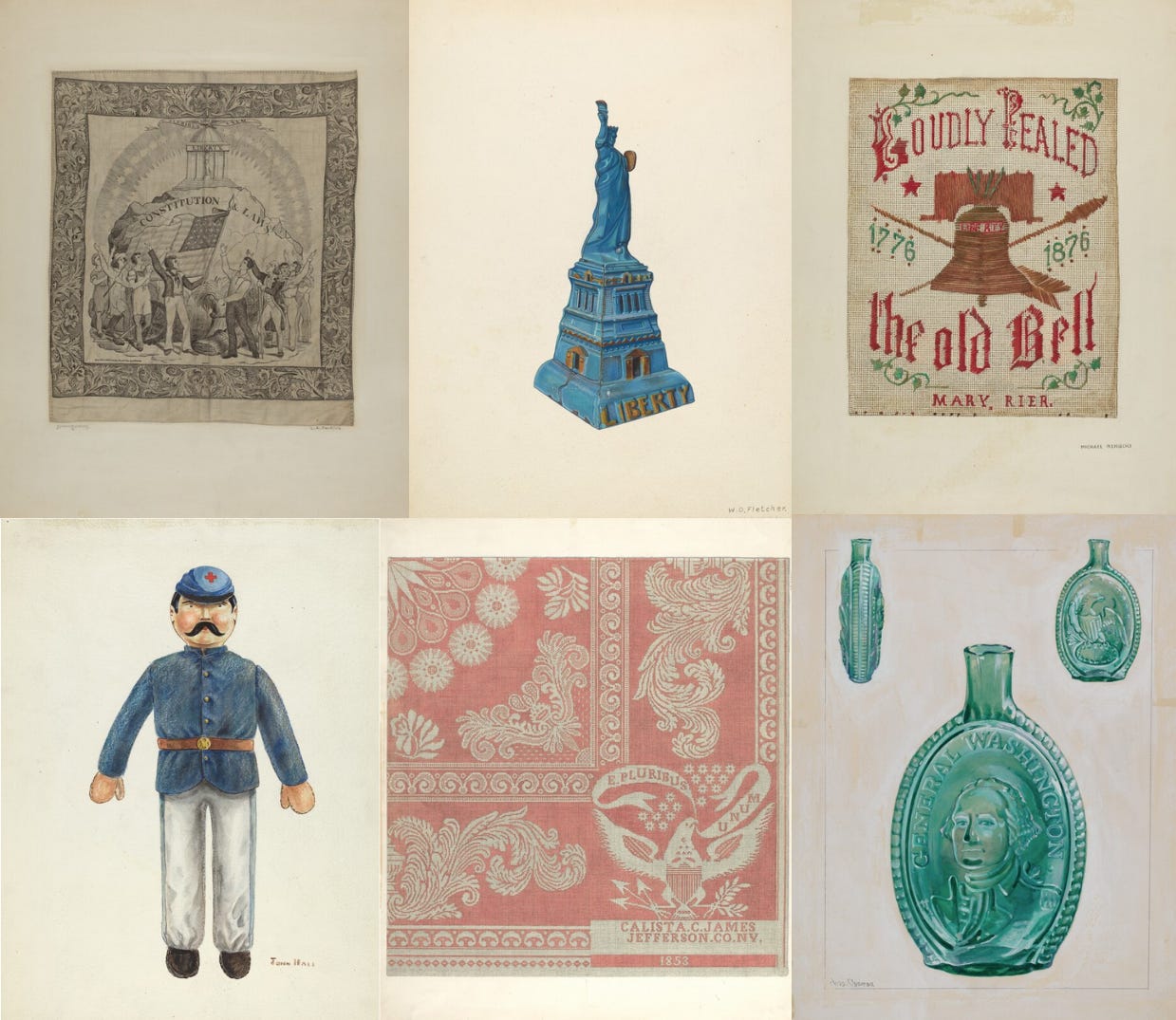
Objects were collected from antique shops, homes, churches, and elsewhere, but it omits include work from Indigenous, African American, and Asian American people and in fact, the index was never fully completed, per NGA.
Funding was cut in 1939 when about half of the drawings were created, and plans to produce physical volumes of the index, or “portfolios,” to distribute to schools, libraries, and museums were never realized. Workers began digitizing the index during the Obama administration in 2013, and today there are more than 1,500 searchable webpages worth of results that NGA says is still a resource for students, researchers, and designers almost 100 years later.
“We did not have any museums of folk art then,” Javitz, the librarian, said. “I mean, you would talk about American weather vanes and this and that, but there was nothing, nothing, nothing, and it's from that was born The Index of American Design.”
It used to be impossible to find examples of early American weather vanes and sunbonnets. Thanks to the artists behind the index and those who digitized their work, there’s gorgeous handmade watercolor illustrations of all that and more, and it’s all free and in the public domain.
You can’t put a living president on U.S. currency. Here’s what happened the last time a president tried.
The last time a living president was on a coin, it didn’t work out so well.
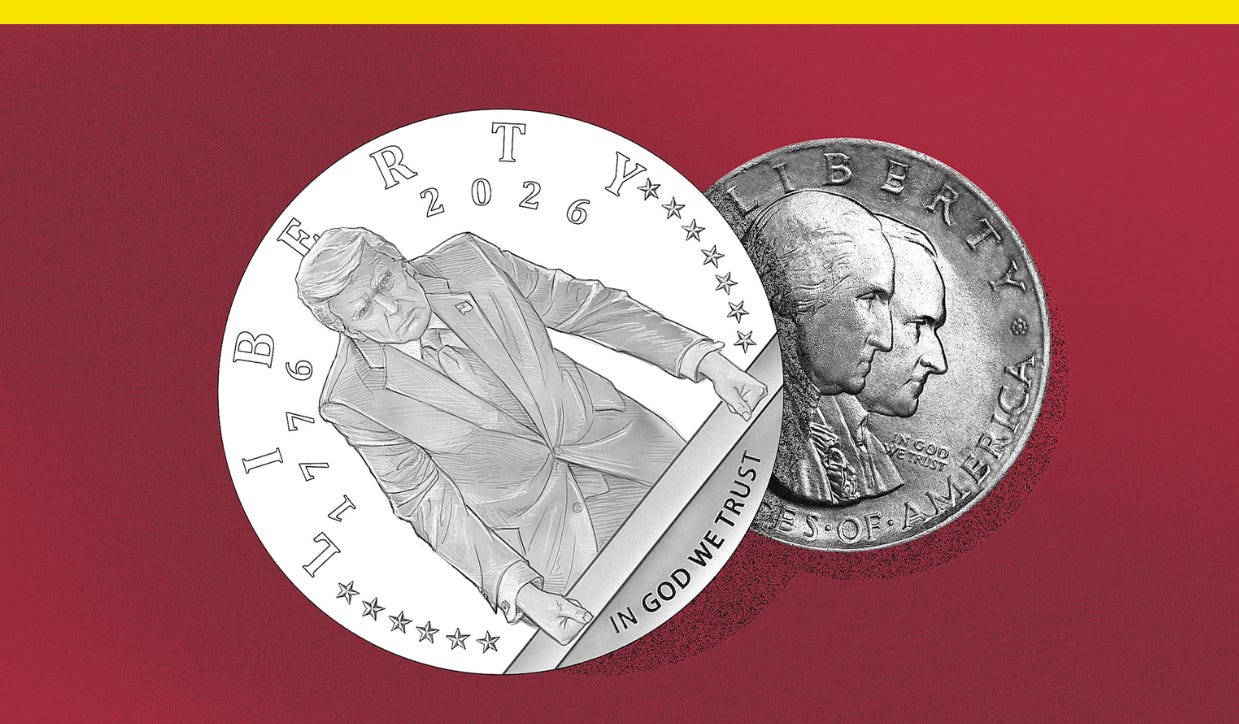
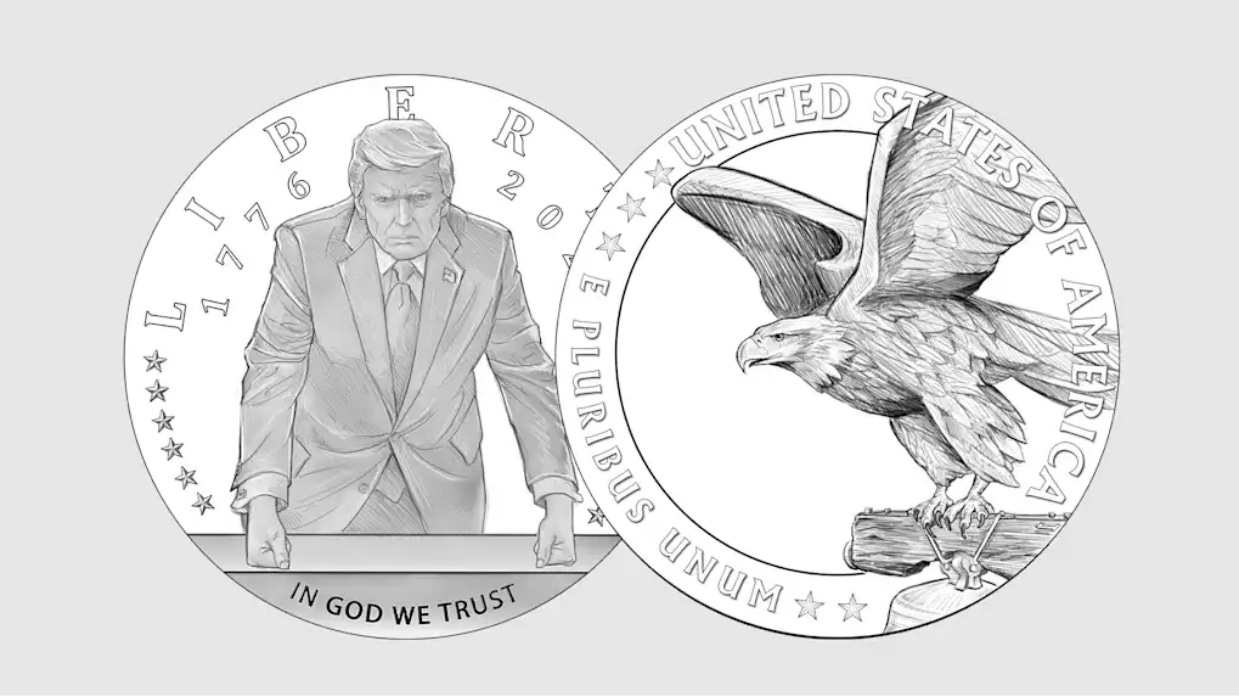
On March 19, the U.S. Commission of Fine Arts voted to approve a commemorative gold coin that flies in the face of the law. On one side of the coin, President Donald Trump is seen scowling as he leans with his fist on a desk; on the other, a bald eagle carries the Liberty Bell.
Designed for the United States’ semiquincentennial, the coin would break a long-standing U.S. tradition established via an 1866 law that bans living presidents from appearing on currency. Only one other living president in history has appeared on a coin. That was 100 years ago, when then-President Calvin Coolidge’s profile was depicted alongside George Washington’s on the 1926 Sesquicentennial half dollar, to mark the 150th anniversary of the U.S.’s founding.
How the Trump coin got approved
Last year, Trump fired the Commission of Fine Arts board and replaced it with his own nominees who could rubber-stamp his design agenda. This is the commission who approved the coin’s design.
The president and administration have taken unprecedented action to stamp his name and likeness across the federal government in a way that mirrors propaganda campaigns of foreign authoritarian regimes.
The Mint has provided a work-around to get Trump on a coin by saying the Treasury secretary is authorized to mint and issue new 24-karat gold coins. They also might be trying to exploit a technicality in the law that allows commemorative coins to be minted for the 250th anniversary of the U.S. founding this year. The Circulating Collectible Coin Redesign Act of 2020 specifically prohibits the portrait of a living person on the reverse (tails) side of a coin, but there is no mention of the front of a coin. Trump’s likeness will be on the obverse (heads) side.
There’s no word on the size or production run of the Treasury’s commemorative Trump coin, but architect James McCrery II, who is a Fine Arts Commission member and former ballroom designer, said, “I think the president likes big things.” A Mint official said the run would be “very limited,” according to The Associated Press.
The Coolidge effect
Trump’s desire to stamp his likeness on a coin might not have the ending he’s hoping for. Like the Trump coin, the Coolidge coin was commemorative and not for general circulation. Its design was also selected by the U.S. Commission of Fine Arts. The coin was produced to defray costs for the Sesquicentennial Exposition in Philadelphia, and though the design reportedly inspired some criticism, The New York Times reported at the time, it was ultimately met with indifference because no one really wanted it.
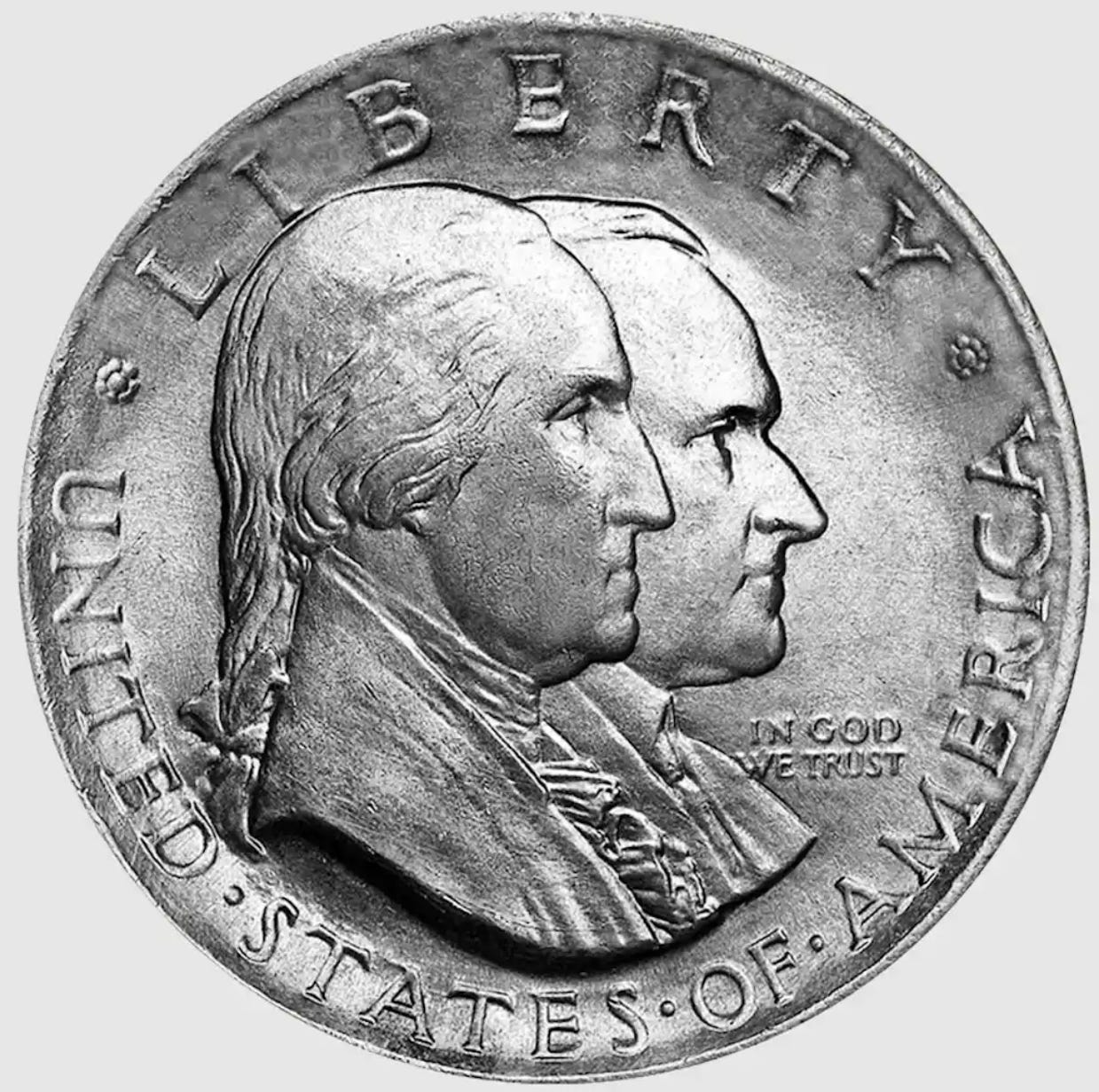
Of the 1 million Coolidge half dollars that were produced, 86% ended up being returned and melted, according to the American Numismatic Association, an educational nonprofit dedicated to coin collecting.
Whether a future Trump coin receives the same reception as Coolidge’s remains to be seen—but Trump’s track record in other currency-inspired collectibles hasn’t had great returns thus far. His cryptocurrency crashed while still netting him $1.2 billion. And while Trump’s likeness has long been a fixture of commemorative medals and coin-like keepsakes, such as the ones they sell on Fox News, coin dealers recommend buyers collect them for fun, not as an investment.
This story was first published in Fast Company.
Here’s what actually happens to a politician’s fundraising numbers when they get mean
Personal attacks get attention, but that’s mostly it.
The biggest flame throwers in politics really just do it for the attention.
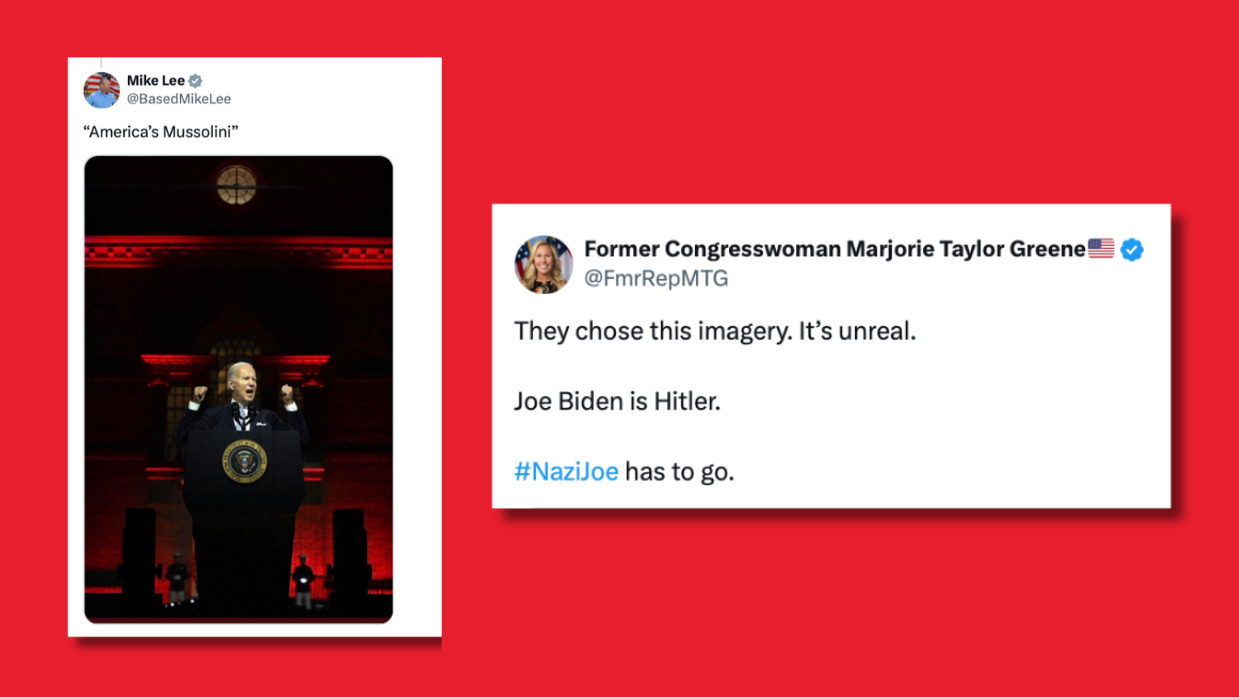
It’s no secret lawmakers who engage in personal attacks generate media coverage for their rhetoric, but it turns out that divisiveness in public speech doesn’t similarly translate into better fundraising, higher vote margins, or a more successful legislative record.
A review of 2.2 million public statements made by members of the previous 118th Congress (2023 -2025) found a vocal minority of members dubbed “conflict entrepreneurs” get outsized mentions on cable news for their antics. That doesn’t improve outcomes elected officials typically pursue, however like increased campaign contributions. Instead, the authors of the study’s findings published this month in PNAS Nexus suggest this new class of politician optimizes for fame.
Researchers from the University of Notre Dame, University of Pennsylvania, and Dartmouth College fed lawmakers’ social media posts, floor speeches, newsletters, and press releases into an LLM that looked for personal attacks, which they defined as criticism directed towards a person or group that attacks their personal characteristics, motivations, or integrity rather than policy positions.
The way criticism was worded mattered in the study. As an example, the study’s authors said criticism of a lawmaker over their actions on Jan. 6, 2021 could be worded as “Senator X’s vote to reject certified election results undermined democratic institutions” just fine, but if they instead said, “Senator X is antidemocratic,” it would get flagged as a personal attack. Even if there’s merit to the attack, criticizing a specific claim is different then name calling.
The research found:
personal attacks are more likely to come from Republicans than Democrats, although the majority of Republicans prioritize policy over personal attacks (the study doesn’t mention it, but since it took place during then-President Joe Biden’s administration, that could also say something about why Republicans were especially peeved at the time, Brandon Derangement Syndrome and all)
personal attacks are three times more common on X than the House or Senate floor, go figure
the more a lawmaker engages in personal attacks, the less they talk about policy
attacks are mainly aimed at nationally well-known figures and organizations: Biden (48%), then-Vice President Kamala Harris and Trump (each at nearly 17%), followed by Democrats and Republicans generally (less than 5%), and others likes Minnesota Gov. Tim Walt and Elon Musk.
Researchers looked into whether negative attacks correlated to an increase in personal wealth and found no link, though they noted accruing celebrity capital could be valued further down the road post-Congress with work like cable news host. Lawmakers who engage in more personal attacks also seem to be taken less seriously by their peers. In the House, they receive fewer assignments to prestigious committees and they co-sponsor less legislation.
With no real political benefit to ̶b̶e̶i̶n̶g̶ ̶a̶ ̶t̶u̶r̶d̶ ̶o̶n̶ ̶t̶h̶e̶ ̶i̶n̶t̶e̶r̶n̶e̶t̶ divisive personal attacks that degrade the quality of our national political conversation (sorry, I’m working on elevating my political speech), conflict entrepreneurs really seem to be doing it for the love of the game, tracking for key performance indicators like cable news mentions and retweets like it’s their job instead of legislating, logging out, and touching grass.
Voters can disincentivize conflict entrepreneurs by voting them out of office. Or maybe elected officials will just grow up and out of it. Former Rep. Marjorie Taylor Greene (R-Ga.), whose coworkers once tried to censure her in part over some of her most divisive tweets, realized last fall “that I’m part of this toxic culture” inspired by Trump’s approach to political fights.
“You just keep pummeling your enemies, no matter what,” she told The New York Times. “And as a Christian, I don’t believe in doing that.”
Have you seen this?
FLOTUS plans a summit. The First Lady is hosting representatives from around the world this week to the White House to talk about kids, technology, and education (there was a robot) while over on Capitol Hill, Kim Kardashian just endorsed a piece of legislation she was moved to support following the Los Angeles fires. [Whig by Hunter Schwarz]
Inside Trump’s daily video montage briefing on the Iran war. The montage, which typically runs for about two minutes, has raised concerns among some of the president’s allies that he may not be receiving the complete picture of the war. [NBC News]
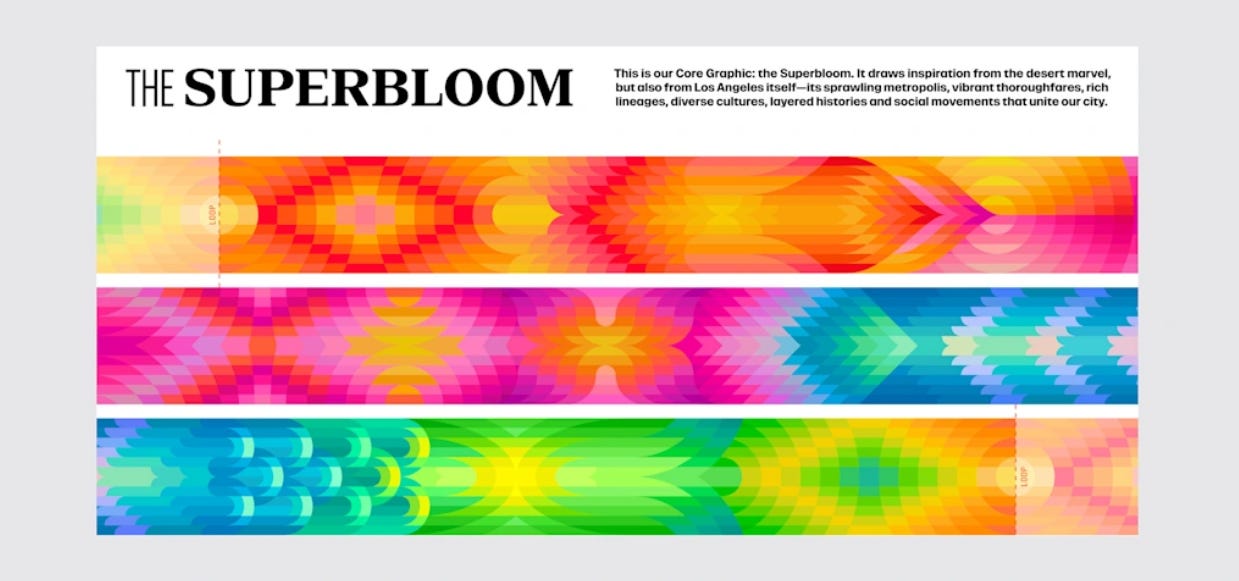
A first look at the vibrant branding for the 2028 Los Angeles Olympics. The designers behind LA28 reveal the superbloom-inspired look that’s coming to TV screens, stadiums, and L.A. streets. [Fast Company]