An ad blocker for political ads? One study tried it.
Plus: Trump’s getting architectural redesign recommendations he didn’t even ask for now


To test the effectiveness of digital political ads, researchers removed them completely for tens of thousands of Facebook and Instagram users in the U.S. in the weeks before an election to see what would happen. It turns out an ad blocker for political ads didn’t do much, but it could be because of who sees the most political ads online.
Participants in the study, which was published this month in Nature Human Behaviour, included nearly 37,000 Facebook users and nearly 26,000 Instagram users. All of them opted into the study knowing that their feeds may be modified in some way, but they weren’t told how. What they didn’t know was Meta blocked all political ads for them for six weeks before the 2020 election to test for measurable traits like political knowledge, campaign donations, and turnout.
The study was part of Meta’s 2020 Facebook and Instagram Election Study (a previously published paper from the study looked at what would happen when people were paid to log off Facebook and Instagram altogether) and it gives an inside look at how campaigns use the social media giant’s biggest apps.
The study found something surprising: removing political ads from users’ feeds had no detectable effect on the tested outcomes like turnout, donations, political knowledge, candidate favorability, or polarization. If a feed without political ads doesn’t change behavior, though, it might have something to do with the fact that those who see them the most are among the most partisan and politically engaged already.

The average user over the study period was served 72 unique political ads on Facebook with a total of 132 political ad impressions, since some were shown more than once. Ads were shown more heavily among a few specific groups, though.
Most ads on Facebook and Instagram are shown to co-partisans, the study found, which is to say Democrats were mostly shown Democratic presidential ads and Republicans were mostly shown Republican presidential ads. Meanwhile independents were shown the fewest ads while undecided voters saw fewer ads than those who already had their minds made up. Users in swing states or who voted in the previous presidential election also saw more ads than people who didn’t fit those conditions. These ads are going after partisans and regular voters the most.
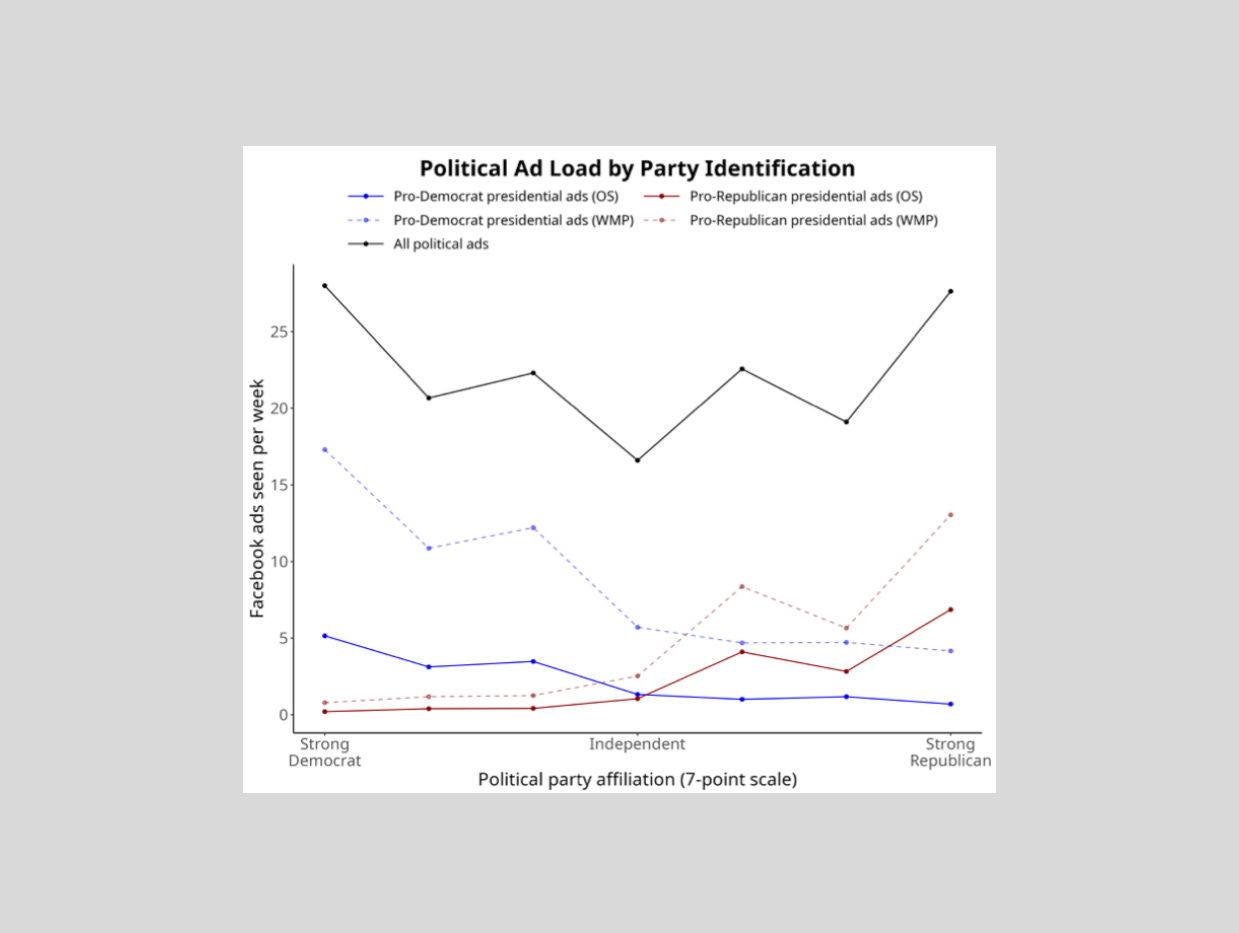
The picture that emerges of digital political advertising from the research isn’t one of persuasion, but of preaching to the choir and passing around a collection plate. The study found 46% of presidential ads were seeking donations, while 26% were persuasive (these were the ads more aimed at out-partisans), 17% were seeking user information, and 5.5% were for merchandise sales.
While much of digital campaign advertising is fundraising, researchers said seeing political ads over the study period didn’t increase donations by more than $2.50 per person, nor did it increase the probability of someone making a campaign contribution. The effects on contributions weren’t zero, but they also weren't much, and the study’s authors say it suggests that people who donate make contributions, just not through donation ads. Still, don’t expect campaigns to abandon paid platforms like Meta ads altogether if professionals still see value in reaching voters there.
“Digital ads let campaigns speak directly to voters with precision, not guesswork,” Sandra Cardenas, vice president of the Colibri Collective, a marketing agency that’s worked with clients like the Arizona and Georgia Democrats, tells me in an email, and it’s how campaigns can target and test winning messages.
“If you're not communicating with your supporters, misinformation will,” she says. “Digital ads ensure voters hear accurate information first, stay engaged, and turn out.”
Even if you block digital political ads, the fact they’re seen most often by the most partisan and engaged users means these people will just get their politics elsewhere. Blocking digital ads doesn’t prevent social media users from seeing political ads on other channels, nor from seeing other non-paid political content in their feeds. No platform is a silver bullet.
Kash Patel’s garish custom shoes weren’t customized by Nike
The FBI director’s style is a departure for a job that once was represented by a strict professionalism in dress.
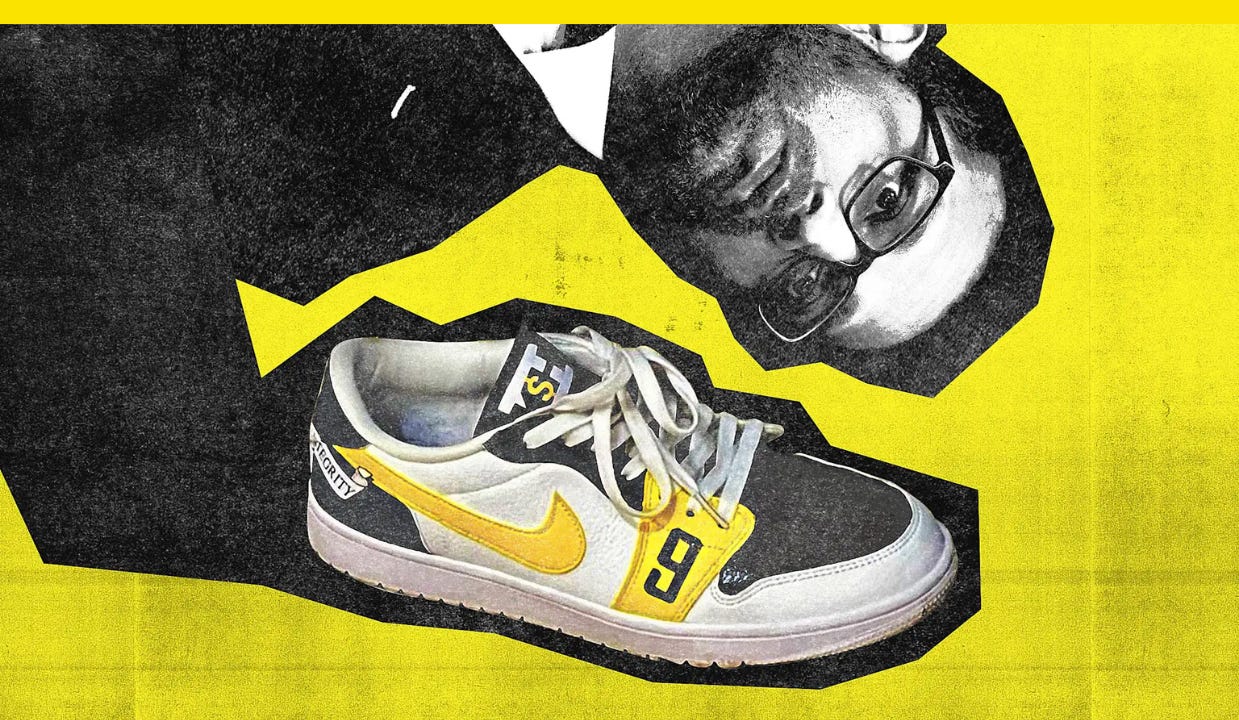
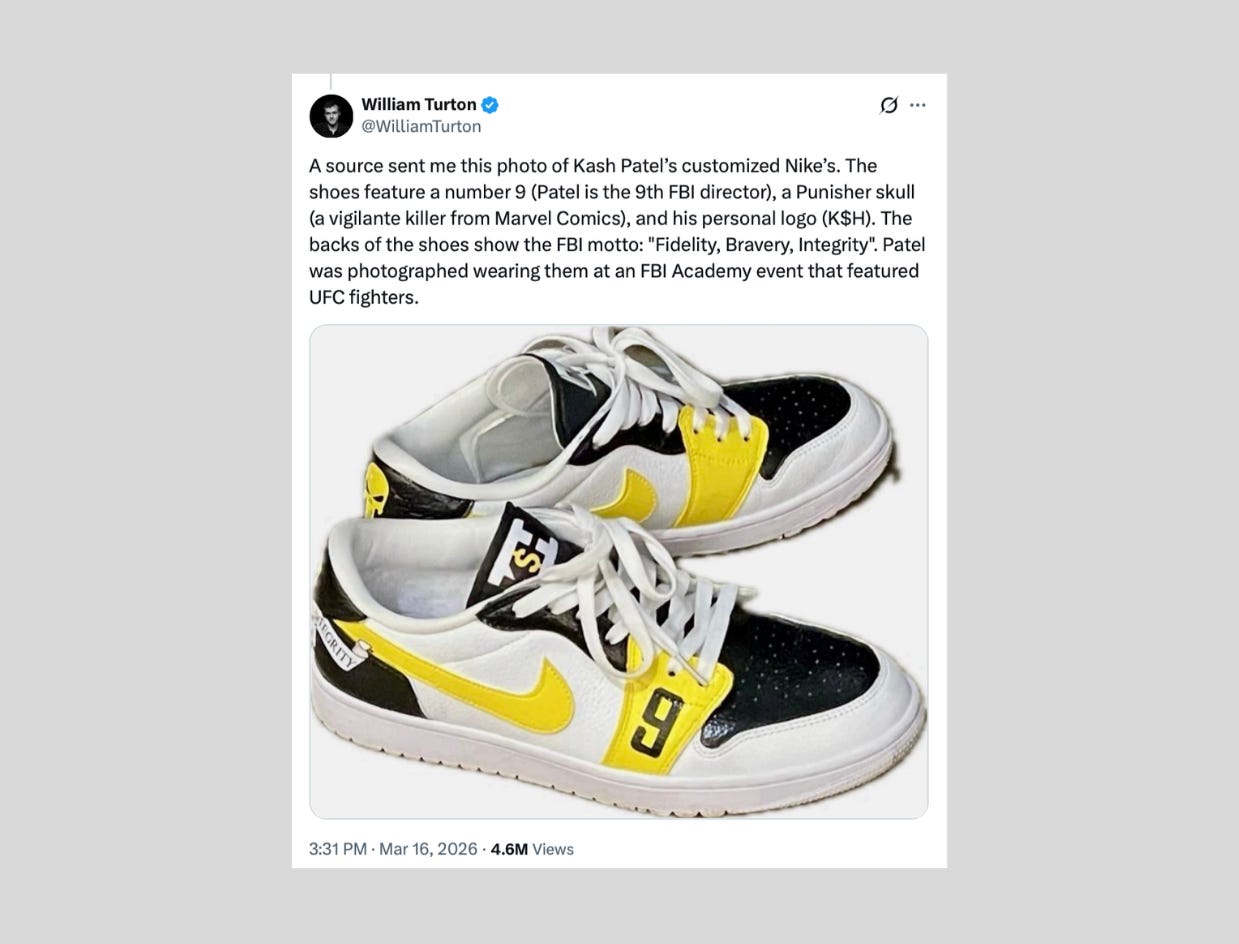
When FBI Director Kash Patel arrived at a joint training session with the mixed martial arts league UFC over the weekend at the FBI Academy in Virginia, he was wearing a custom pair of Nike sneakers that past directors wouldn’t have dared to step out in.
Patel’s bespoke shoes were black, white, and yellow, and featured a number 9 on the side to signify that he is the bureau’s ninth director. A “K$H” logo on the tongue is Patel’s personal logo (FBI directors have personal logos now), and a skull from the Marvel character Punisher appeared across the back of the shoe, along with the FBI’s slogan “Fidelity, Bravery, Integrity,” according to images that a source sent to William Turton, a reporter for ProPublica who covers federal law enforcement. However, Nike didn’t design or produce the customized embellishments, I can confirm.
A photo from a LinkedIn post that’s no longer public showed Patel color-coordinating his Nike shoes with a matching black-and-yellow hoodie and hat. The casual outfit was typical for Patel, who sold branded merch like hats and socks before taking his current job, and who showed up to the Winter Olympics in a team jersey, like one of the guys. It’s a stark departure from how his predecessors dressed, though. The FBI’s dress code, as set at the top of the organization, once symbolized strict professionalism. Now it screams podcaster-occupied government.
When former FBI Director Robert Mueller served under former Presidents George W. Bush and Barack Obama, not only did he not stray from his uniform of dark suits, white shirts, and red or blue ties, but he would chide aides who ever wore shirts that were pink or blue, according to Garrett M. Graff, author of The Threat Matrix, about the FBI under Mueller.
Trump’s getting architectural redesign recommendations he didn’t even ask for now
Could the White House columns get a makeover to match the other branches?