The Trump-approved Board of Peace logo has a major flaw
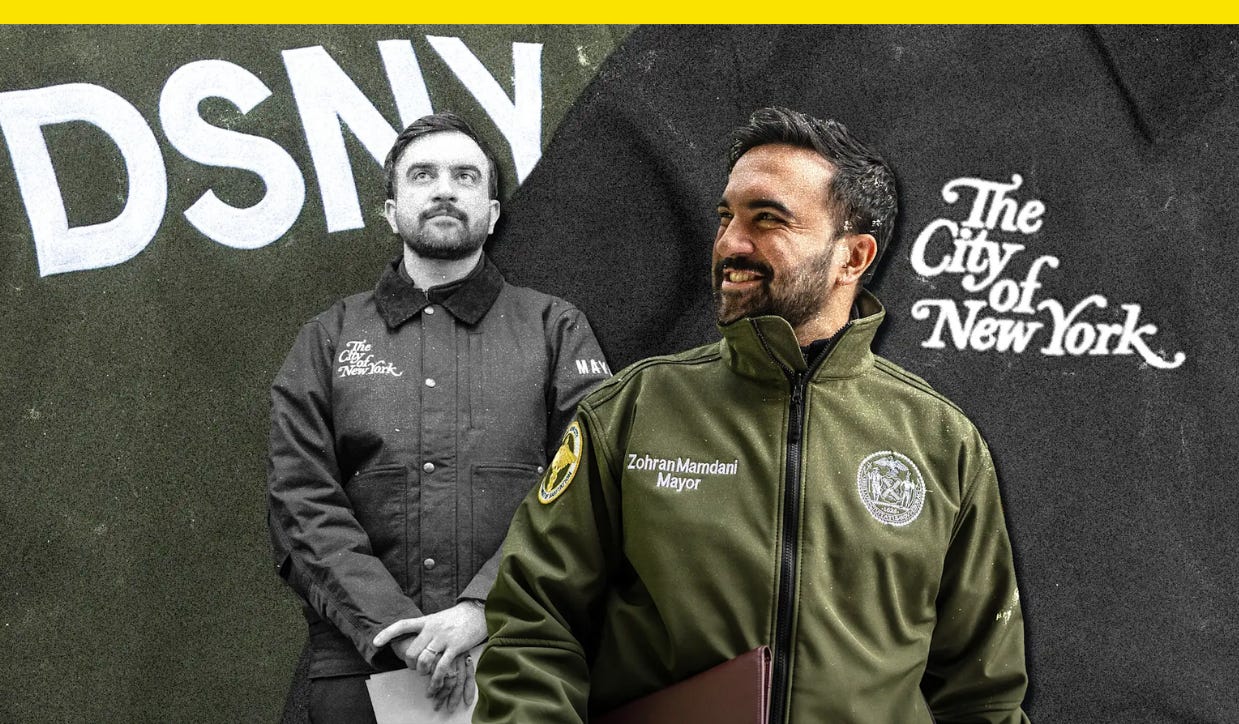
Plus: The typography behind Mamdani’s “The City of New York” jacket is inspired by municipal history

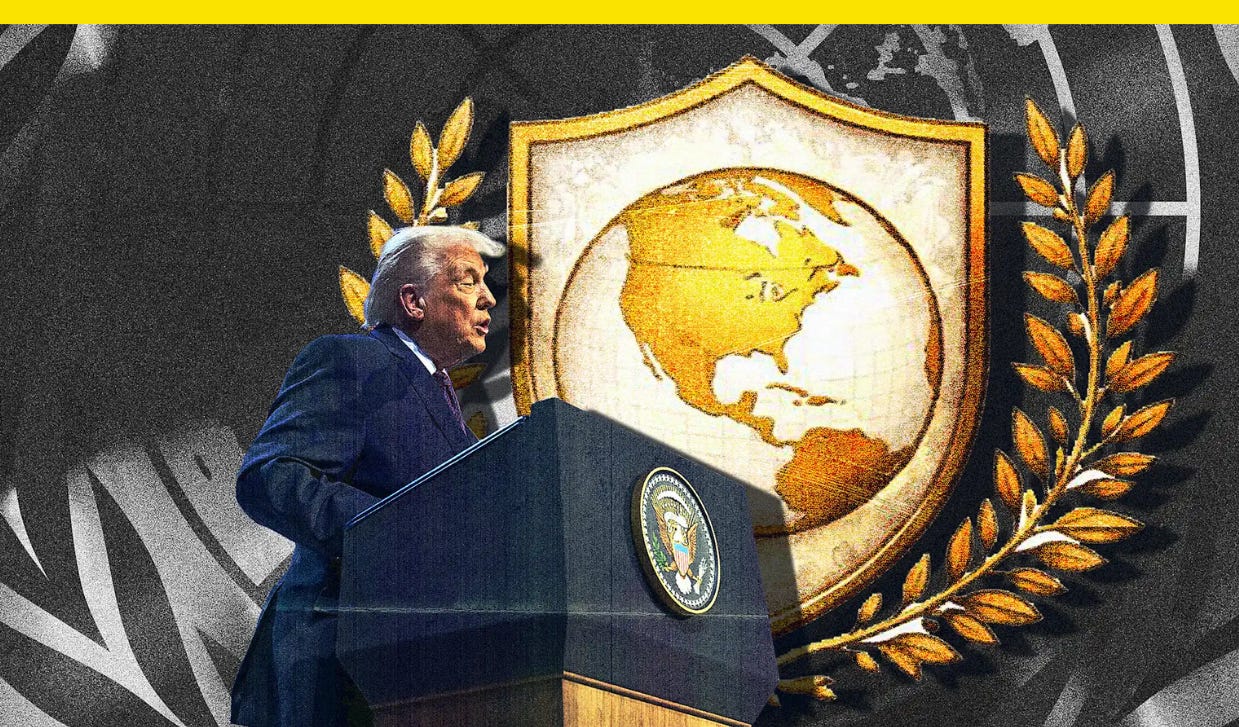
On Jan. 22, President Donald Trump unveiled the logo for the Board of Peace, an international coalition his administration is forming to oversee the reconstruction of war-torn Gaza and address other global conflicts. There’s just one issue: The logo leaves out half the world.
Trump initiated the effort last year, but has expanded its scope since then, imagining an organization that he leads personally and that member countries pay at least $1 billion to remain a part of.
Longtime allies and NATO members including Canada, France, Italy, Norway, Sweden, and the U.K. are not members, while member nations include authoritarian countries or illiberal democracies like Saudi Arabia and Belarus that the nonprofit Freedom House rates as “not free.”
It’s “like if Law & Order: SVU starred Diddy,” Saturday Night Live’s Colin Jost joked about the board’s membership during SNL’s “Weekend Update” segment. Yet the group’s logo leans on the visual tropes of global peace to suggest a much different story.
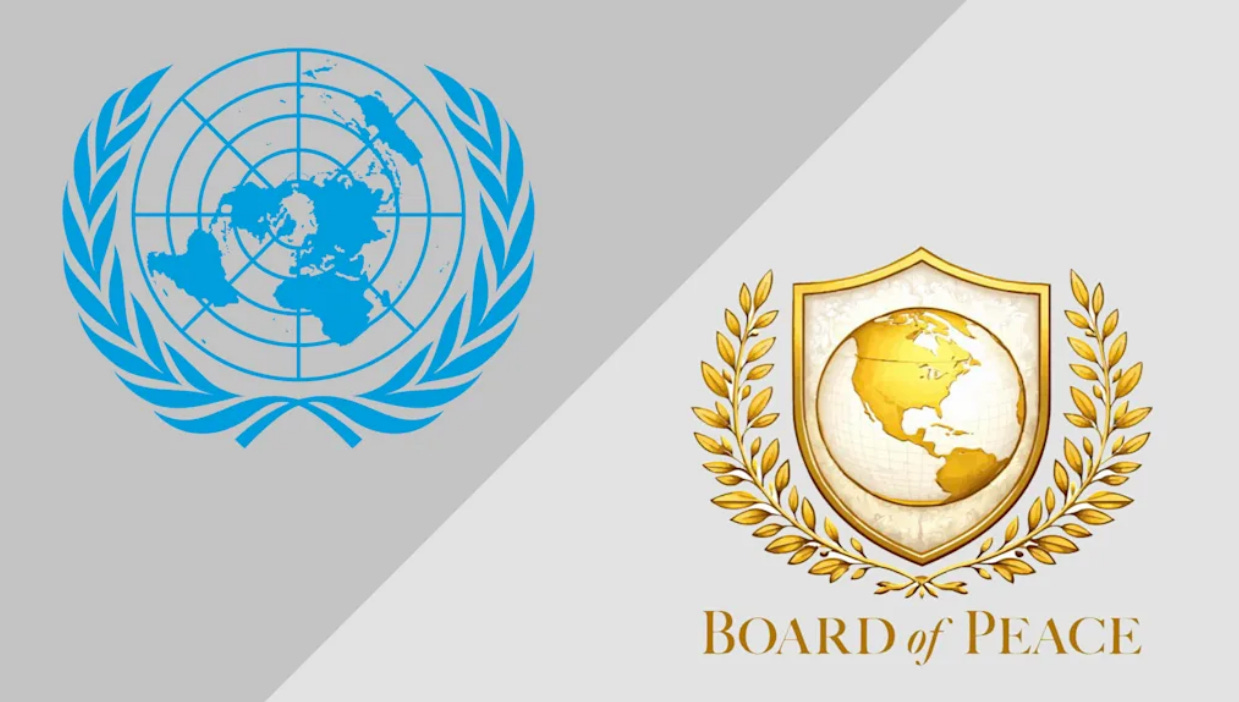
The logo for the group riffs off the U.N. emblem, but in typical Trump fashion, it’s gold—and cuts off more than half the rest of the world from the United States. Reaction online has been similar to the reaction to the board itself: negative.
A team led by American designer Oliver Lincoln Lundquist created the United Nations emblem in 1945. Lundquist was a World War II veteran who also designed the blue-and-white Q-Tip box and was on the team that designed the Chrysler Motors Exhibition at the 1939 New York World’s Fair, according to his 2009 obituary.
For the U.N., Lundquist and his team designed a mark showing the globe centered on the North Pole and encircled by a laurel wreath for the official badges worn by conference delegates. That mark was later modified to the current U.N. emblem by spinning it around so Alaska and Russia are on top of the world, and it’s now zoomed out to include more of the globe, as the original badge mark cut off Argentina and the bottom of South Africa and Australia. The U.N. Blue color used by the organization was chosen because it’s “the opposite of red, the war color,” Lundquist said.
Trump’s board logo is presumably gold because it’s Trump’s favorite color, and it centers roughly on the U.S. sphere of influence as Trump sees it, from Greenland to Venezuela, though Alaska is cut off and Africa peeks out. The logo is housed inside a shield instead of a circle.
A version of the logo initially shared by the White House X account has been criticized as made by AI (among its inaccurate details: a U.S.-Canada border that cuts off a big chunk of Ontario). A modified version of the logo that appeared onstage during the Board of Peace signing ceremony in Davos, Switzerland, was shinier and used a different map that covers roughly the same area.
Curiously, the logo’s map doesn’t include the very place the coalition was created to oversee. That means slides shared by the White House showing a nebulous timeline for a development plan of Gaza are all stamped with a logo that shows the U.S., but not Gaza.
Trump said at the signing that the Board of Peace represents the first steps to “a brighter day for the Middle East.” That’s not the story his logo tells.
This story first appeared in Fast Company.
Homeland Security Secretary Noem has a history of weird PSAs
Noem once defended her state’s “Meth. We’re On It.” campaign and starred in an ad last year praising Trump.
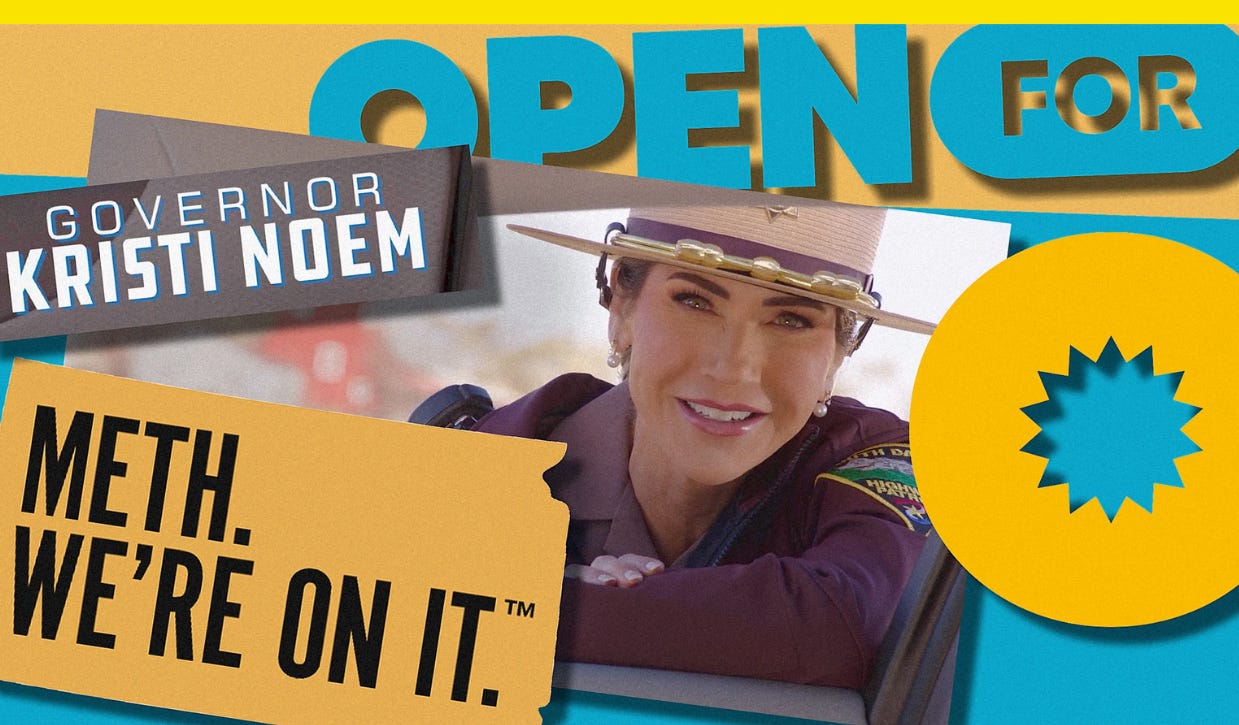
As governor of South Dakota, one of the least populated states in the U.S., Kristi Noem still made an outsize name for herself nationally using public service announcement campaigns designed to capture attention. The topics of her PSAs have changed dramatically since then.
Before assuming her current Cabinet post as secretary of Homeland Security, the former state lawmaker and member of the U.S. House of Representatives served as South Dakota’s governor from 2019 to 2025. In her first year as governor, the state ran a widely mocked anti-drug campaign called “Meth. We’re On It,” followed by “Freedom Works Here,” a workforce recruitment campaign in which she was featured prominently.
Once elevated to DHS secretary, Noem continued to utilize public funds for commercials promoting her particular brand of political communication, including a 2025 campaign in service of Trump and his border and immigration policies.
The nearly $1.4 million “Meth. We’re On It.” campaign ran on TV, billboards, and online (via the now defunct website onmeth dot com), and it caught plenty of grief for its ambiguous tagline. Noem defended it at the time, writing on social media, “Hey Twitter, the whole point of this ad campaign is to raise awareness. So I think that’s working.”
“Meth. We’re On It.” was made to combat a real problem in the state, as South Dakota ninth graders tried meth at twice the national average, according to the creative brief for the campaign. Ultimately, it saw some success. By 2020, 1,072 people had clicked the “find treatment” link on the campaign’s website, 184 people called or texted the campaign’s help line, and 44 were referred to treatment. “Meth. We’re On It.” would become a finalist in the public health category for the Shorty Awards, a social media and digital advertising industry awards ceremony.
The typography behind Mamdani’s “The City of New York” jacket is inspired by municipal history
The type comes from old city letterhead.