The story that exposed voters to how presidential candidates are really sold
Plus: The next generation of emoji give me language for feelings I don’t even think there are even German words for yet

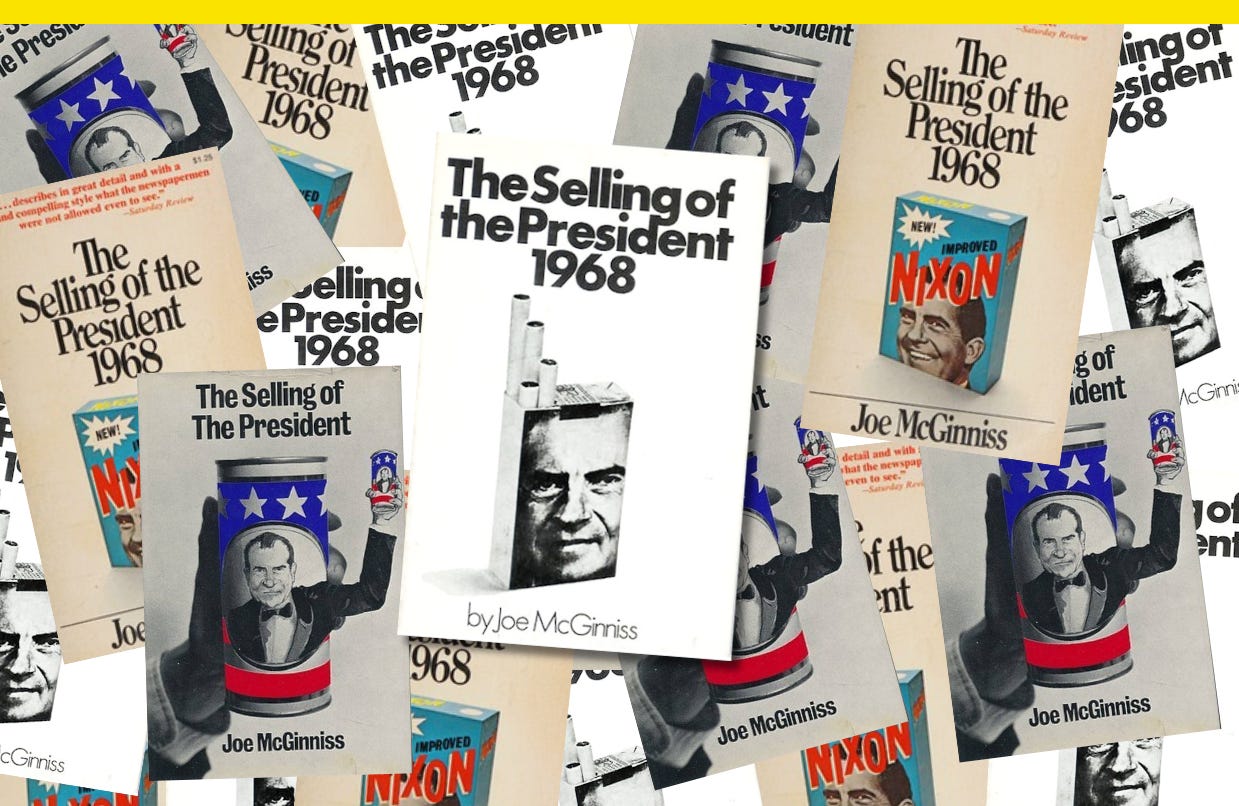
In his book Damaged People published late last year, author Joe McGinniss Jr. writes about what it was like growing up the son of a famous author.
The year before McGinniss was born, his dad published his first book, The Selling of the President 1968, about the image-making machine behind Richard Nixon’s comeback campaign to win the presidency. The book introduced readers to figures like Roger Ailes, Nixon’s campaign media advisor who would go on to become the CEO of Fox News, and it popularized for the first time the idea that consumer television advertising methods were being applied to a presidential campaign. The book was groundbreaking and popular, spending 31 weeks on the New York Times bestseller list, and it made its author a star.
“No one had examined television and the visual medium and its impact on politics,” Joe McGinnis Jr. tells me. “It had never been done before.”
Nixon’s 1968 campaign came following his loss to JFK in the 1960 race, which was shaped by television’s growing influence. To try again eight years later, Nixon structured his campaign around TV. He hosted a traveling televised question-and-answer show, let a documentary filmmaker produce his ads, and made a cameo on a sketch comedy show, paving the way for decades of presidential candidate appearances on Saturday Night Live.
McGinniss’s dad documented his view of it all from inside the campaign itself after convincing Nixon’s team to let him embed with them, and the era of showbiz politics the book helped define continues to this day even as TV viewing time has given way to more social media, streaming platforms, and user generated content. In future books, his dad would cover other politicians and true crime stories, and before his death in 2014, his publisher pitched him on a book that was never written about the rise of right-wing populism in Arizona and what it said about the country. “I think that would have been a brilliant book,” McGinnis says.

McGinniss calls his Damaged People “an inside look at the cost of passion and obsession and addiction” through a father figure who found fame at a young age and didn’t know how to process it. Ultimately, it tells a universal story about loving and learning from a flawed, human parent.
“He came from a very difficult childhood emotionally,” McGinniss says, but still, “he figured out a way to parent differently. Now, not well, but differently. Better than he had experienced.”
His dad passed down a love of politics after coming back from a reporting trip for Rolling Stone with campaign paraphernalia, and he once called in a favor to get Ailes to go to his son’s college class on race, ethnicity, and public policy at the liberal Swarthmore College where students did their best to try and stump and expose him. “My professor was just giddy,” McGinniss says. “He was like, ‘This is hilarious.’”
McGinniss writes about a father who put his writing first and got close to those he wrote about. For his dad’s final book, 2011’s The Rogue: Searching for the Real Sarah Palin, he moved next door to the book’s subject in Wasilla, Alaska, after a neighboring rental property became available. And for 1983’s Fatal Vision about Jeffrey MacDonald, a U.S. Army captain convicted of killing his wife and kids who claimed innocence and sought out his dad to write his story, his dad lived with MacDonald.
“He would go as far as he had to go to get that access, to get to the emotional truth of someone, to bring that to the reader” McGinniss says.
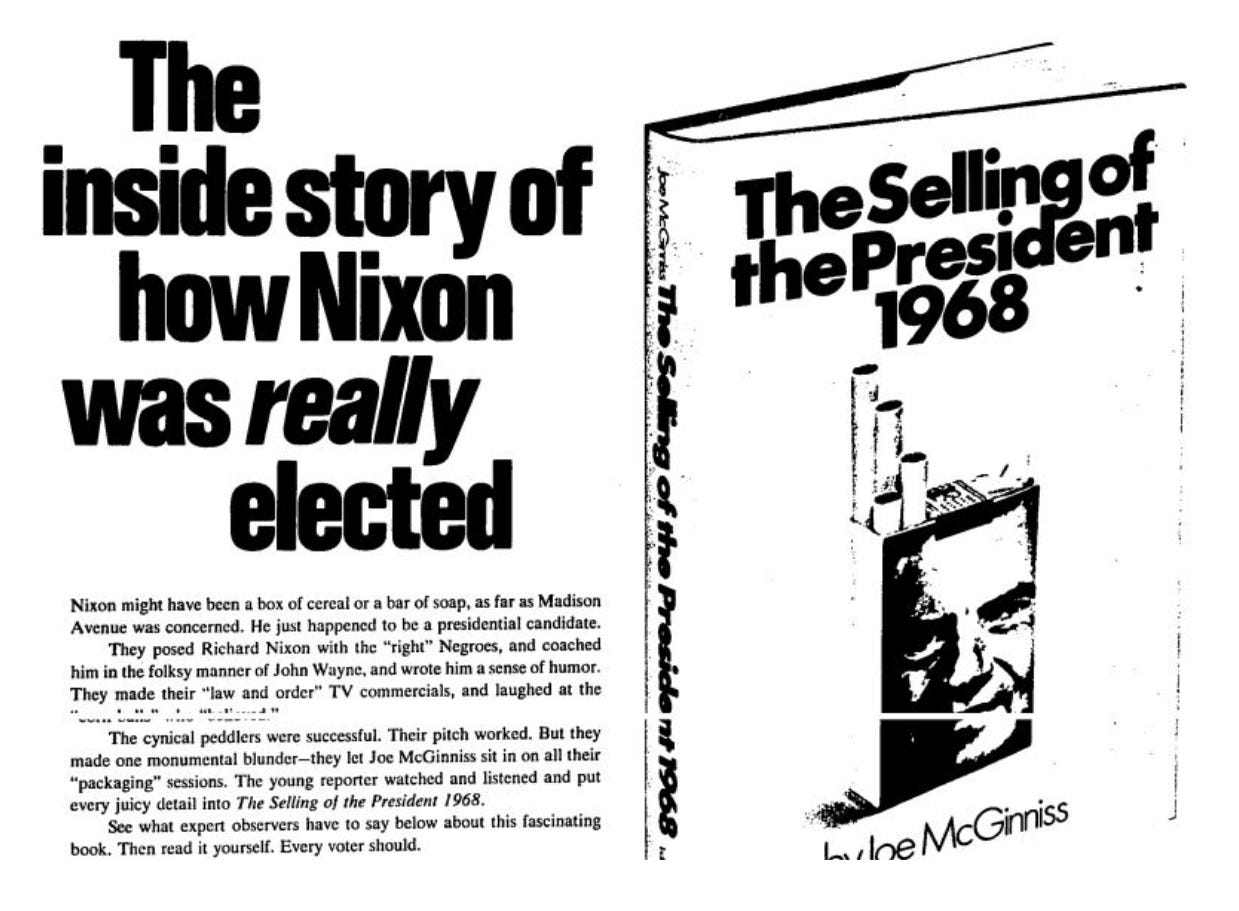
The cover of the first edition of The Selling of the President 1968 was designed by graphic designer Lawrence Ratzkin, who also did Joan Didion’s Slouching Towards Bethlehem. It spells out the title and author name in Futura and shows Nixon’s face on the front of a carton of cigarettes during a time when cigarette ads were legal on TV. Nixon would go on to sign a ban on cigarette ads on TV in 1970 and use Futura as his 1972 reelection campaign font.
The cigarette cover visually reinforces the takeaway from the book about the health hazards of modern marketing techniques and political TV ads to the body politic. It’s a message that could leave readers deeply disillusioned. Yet McGinniss describes his dad as a “cynical optimist.”
“He understood that everybody was sort of bought and paid for,” he says. “He understood that so much of it was just lowest-common-denominator communication and packaging.” Still, “he could definitely sniff out the authentic ones,” he says.
Nixon’s 1968 ads were well produced but misleading. They sold the candidate who would go on to escalate war as a peacemaker and presented a future president who would be named an unindicted co-conspirator as a bringer of law and order. They were paranoid and fearmongering. But Nixon’s decision to master the leading communications technology of his day obviously worked.
Political marketing is often dismissed as manipulative or a con game, but at its heart, it’s a promise to voters that a better future is possible. It’s how Ronald Reagan convinced America it was morning again and Barack Obama showed hope and change were within reach. That’s not to say it’s always true or fair. All too often it’s not.
At its best, though, political advertising and communications can reach voters where they are and speak truthfully with a message that resonates and inspires. The real lesson of The Selling of the President 1968 wasn’t that political ads are bad. It’s that political ads should be honest.
In its end-of-year spending, the DOD bought some new Herman Miller chairs
In the Defense Department’s defense, they need a lot of chairs, and Herman Miller has a long history with the federal government.
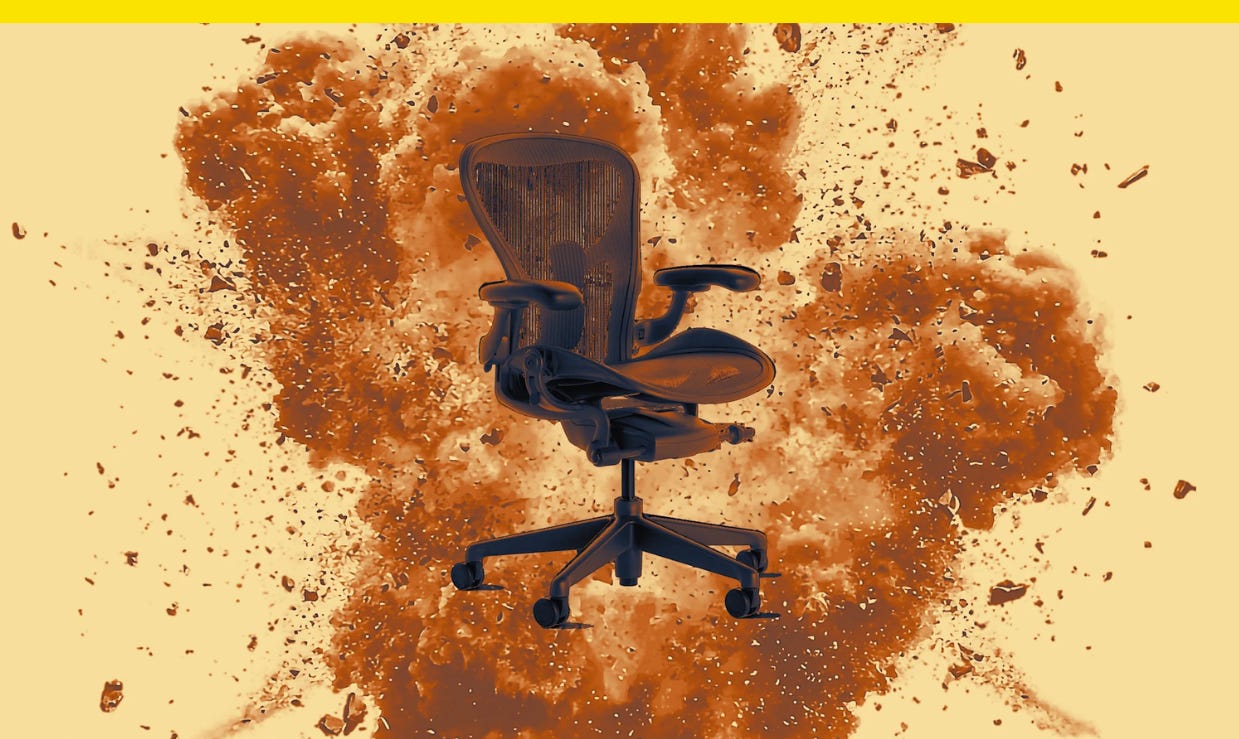
During an end-of-the-fiscal-year spending spree last year, the Department of Defense, or DOD, dropped some dough on new Herman Miller furniture.
The DOD spent $60,719 for chairs from the Michigan furniture manufacturer last September, according to the report from the watchdog group Open The Books, including at least one $1,844 Aeron Chair, the brand’s popular, ergonomic, fabric-meshed office chair.
The Herman Miller purchases were just a small fraction of the record $93 billion detailed in the report, which was more than the DOD has spent in a single month since the group’s data goes back to 2007. For Herman Miller, its share was peanuts, considering the company is the longest holder of a federal government contract for office furniture, at more than 40 years (Herman Miller did not respond to a request for comment by publication).
The DOD goes on an annual spend-it-or-lose-it buying spree every fall no matter the president or party, Open The Books found over a decade of tracking it. The group called on Defense Secretary Pete Hegseth to rein in the use-it-or-lose-it approach the agency takes to its budget. Instead, 2025’s spending was a record.
While some line items highlighted in the report seem like clear attempts to run up expense reports before the time runs out, like $98,000 on a Steinway & Sons grand piano and $2 million on Alaskan king crab, office furniture purchases at least make practical sense.
With nearly 3 million military and civilian employees, the DOD is one of the largest employers in the U.S. That’s a lot of butts in seats, which means a big budget for chairs and other office furniture. Open The Books found furniture purchases spike 564% every September over the monthly average across the other 11 months of the year. Last year, the DOD spent $225.6 million on furniture in total.
The next generation of emoji give me language for feelings I don’t even think there are even German words for yet
In the proposal for the new Distorted Face emoji, proponents say it fills a cartoonish gap in the emoji keyboard.